

Latest InSights
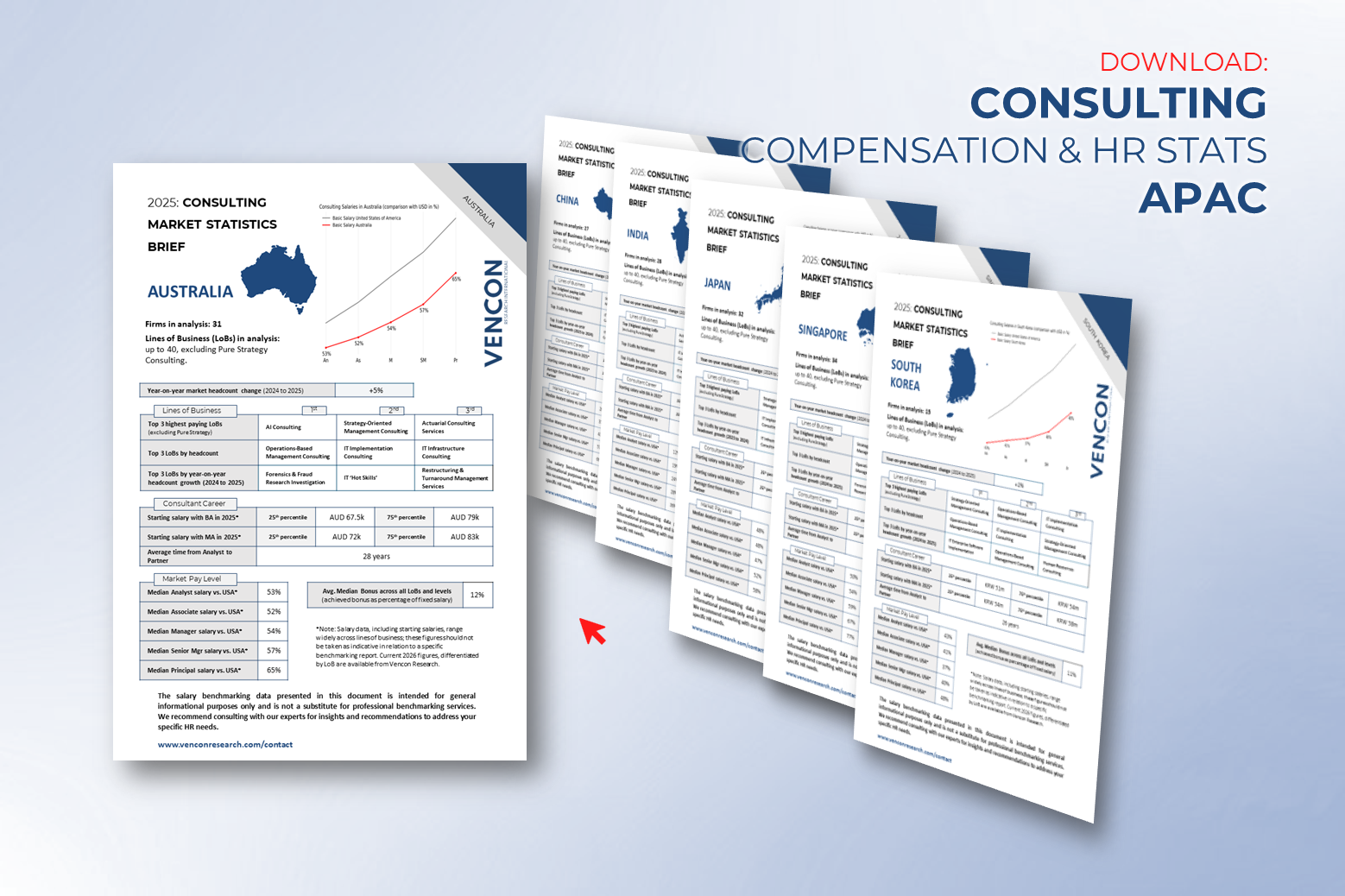
Key HR indicators for the consulting industry
This collection of market statistics briefs highlights key consulting market statistics across six countries in the Asia-Pacific (APAC) region: Australia, China, India, Japan, Singapore, and South Korea. It offers insights into various key factors, such as the highest paying lines of businesses, market growth, starting salaries, career progression, and market pay level.
Download: 2026 APAC Consulting Market HR Statistics

By Shukhrat Iskandarov - Client Solutions Manager
If you follow discussions about AI hiring, it's easy to conclude that the market has become a pure salary race.
Stories about multi-million-dollar compensation packages for elite AI researchers receive a great deal of attention. They are real, but they describe a very small part of the global talent market.
For consulting firms, the more relevant question is different: what AI capabilities create value for clients, and how should firms reward those capabilities in a sustainable way?
That distinction matters. Most consulting firms are not competing for a handful of frontier AI researchers. They are competing for professionals who can help clients apply AI effectively in real business settings.
Demand for AI Skills Has Changed Hiring Priorities
AI has moved from experimentation to implementation. Consulting clients increasingly expect support with areas such as generative AI adoption, process automation, analytics modernization, responsible AI governance, and AI-enabled operating models.
This has increased demand for consultants who combine technical understanding with industry knowledge and client-facing skills.
Recent labor market research shows that demand for developers with AI-related skills has grown far faster than demand for traditional software development skills, and AI capabilities now appear in a significant share of technical job postings. The direction of travel is clear: AI skills have become a mainstream hiring consideration rather than a niche specialty.
For consulting firms, however, demand alone does not determine compensation.
AI Is Not a Single Skill
One of the most common mistakes in AI hiring is treating all AI experience as equivalent.
A consultant who has helped clients deploy AI solutions into production, manage model performance, redesign business processes, and establish governance frameworks brings a very different level of value from someone who has only experimented with AI tools.
In consulting, the strongest performers are usually those who can answer three questions clearly:
- What problem is being solved?
- How will the AI solution improve the client's business?
- What risks, costs, and implementation challenges need to be managed?
Technical knowledge matters, but client impact matters more.
Compensation Is About More Than Base Salary
Base salary remains important, but consulting firms increasingly compete on the overall employment proposition.
Experienced AI consultants often look for:
- access to meaningful client work,
- opportunities to build new capabilities,
- exposure to senior decision-makers,
- clear career progression,
- flexibility in where and how they work, and
- participation in high-impact transformation programs.
As a result, total compensation may include performance bonuses, profit sharing, equity participation in some firms, learning support, and accelerated promotion opportunities.
The mix varies significantly by firm type. A technology-focused consulting boutique may emphasize growth opportunities and variable pay, while a large global consulting firm may compete more on brand, career development, international mobility, and the scale of client engagements.
The Market Premium Reflects Scarcity
The largest compensation premiums are generally associated with skills that remain relatively scarce.
In consulting, these often include:
- leading enterprise AI transformations,
- integrating AI into core business processes,
- designing responsible AI frameworks,
- managing AI-related regulatory and risk issues,
- building AI operating models, and
- translating technical capabilities into measurable business outcomes.
The premium is not for having "AI" on a résumé. It is for having a track record of helping clients achieve results.
Geography Still Matters
AI compensation is not a single global market.
A senior AI consultant in New York, London, or San Francisco may command a very different package from a consultant with a similar title in another country. Differences in client demand, talent supply, billing rates, and cost structures continue to influence compensation levels.
This is why consulting firms need market-specific benchmarking rather than headline figures drawn from a few high-profile technology companies.
At Vencon Research, our consulting compensation benchmarking work covers more than 75 countries, 500+ consulting firms, and over 650,000 consulting professionals worldwide. The data consistently shows that AI-related premiums vary materially by geography, consulting segment, and level of seniority.
A More Balanced Market Is Emerging
As AI capabilities become more widespread, compensation is likely to become more differentiated.
A small number of exceptional researchers and technical specialists will continue to attract extraordinary packages. For most consulting professionals, however, long-term market value will depend on a broader combination of capabilities:
- technical literacy,
- commercial judgment,
- industry expertise,
- communication skills,
- change management, and
- delivery experience.
Consulting clients ultimately pay for outcomes, not for familiarity with a particular model or tool.
The Practical Question for Consulting Leaders
For consulting firms, the central challenge is not whether AI talent is expensive. It is whether compensation structures accurately reflect the value that different AI capabilities create for clients and for the firm.
Firms that reward proven client impact, delivery capability, and leadership are more likely to build sustainable AI practices than firms that simply react to headline salary stories.
In that sense, AI compensation in consulting is becoming less about chasing the highest number and more about identifying the capabilities that genuinely strengthen client service and long-term firm performance.
Benchmarking AI-Related Consulting Skills
As AI continues to reshape consulting roles and skill requirements, reliable compensation benchmarks can help firms understand where the market is moving and how their pay compares.
Vencon Research provides compensation benchmarking for consulting firms across 75+ country markets, covering AI-related and other specialist consulting skills. Contact us to learn more about our compensation surveys and benchmarking data.
AI Talent Compensation in Consulting: Beyond the Salary Headlines

By Gunjan Kalwani - Rewards Intelligence & Insights
The consulting industry is constantly evolving in response to changing client needs. Traditionally focused on strategic advice delivered by small, specialized teams, consulting firms are now increasingly responsible for implementing large-scale transformations, building technology platforms, and operating data-driven systems.
At the core of this shift is the expanding role of delivery centers. These are centralized hubs supporting projects through analytics, tech development, research and knowledge management. Once seen primarily as a support function, they are now integral to a consulting firms’ global operating models.
As their role shift, firms are placing greater emphasis on compensation for the delivery center workforce to maintain productivity, competitiveness and scalability.
Redefining the Delivery Center
Delivery centers have evolved from limited support functionality into integrated capability hubs that combine analytics, engineering, research, and knowledge management within a single operating layer. Their remit now extends far beyond slide production or background research.
They play a direct role in hypothesis testing, model development, platform buildout, and increasingly, in client implementation. In parallel, they underpin internal capability building—maintaining knowledge assets, supporting proposal development, and enabling cross-office collaboration at scale.
Firms such as Accenture and the Big Four have long operated global delivery networks and are constantly expanding. Strategy firms such as Boston Consulting Group and Bain & Company have also expanded their capability networks to support more technical and research driven engagements.
Geographically, these networks continue to concentrate in markets such as India, Poland, the Philippines, and Mexico. However, location strategy is becoming more nuanced—balancing cost with specialization, attrition risk, and proximity to key client markets.
From Support Function to Operating Model
The novelty of the delivery center model lies in how it reshapes the economics of consulting.
Historically, leverage was driven by pyramidal team structures within a single geography. Today, leverage is increasingly driven by the interaction between client-facing consultants and distributed capability pools. This creates a dual workforce model: one optimized for client engagement, the other for scalable execution.
This shift introduces new complexities:
- Role fragmentation: Traditional consulting roles are being decomposed into more specialized skill sets (e.g., data engineering, machine learning, UX design).
- Blended team structures: Project teams now span multiple geographies and cost bases, requiring tighter coordination and clearer role definition.
- Different productivity curves: Output is no longer measured purely in billable hours, but in throughput, reusability of assets, and speed of delivery.
In effect, delivery centers are not just supporting consulting work—they are redefining how it is produced.
Compensation Design in a Distributed Workforce
As delivery centers mature into a core part of the consulting operating model, compensation can no longer be managed as a simple extension of traditional consulting pay structures. The underlying workforce is fundamentally different—more specialized, more location-sensitive, and more exposed to external talent markets beyond consulting.
This requires a shift from benchmarking as a periodic exercise to compensation design as an ongoing, structured process.
Two challenges stand out:
- Role definition and comparability Delivery center roles often sit at the intersection of consulting, technology, and operations. Standard job titles rarely map cleanly to external benchmarks. Without precise job matching, compensation decisions risk being anchored to the wrong talent markets, leading to either overpayment or retention challenges.
- Location-sensitive pay structures Geographic arbitrage remains a factor, but it is no longer the sole driver. Talent scarcity, skill depth, and attrition risk vary significantly within and across locations. Effective compensation design needs to reflect these nuances, rather than applying broad location-based discounts.
In this context, benchmarking becomes an input into a broader set of decisions: how roles are structured, how pay bands are defined, and how progression is managed across both consulting and delivery center career paths.
Firms are increasingly using this data to answer more strategic questions—where to build capabilities, which roles to prioritize, and how to maintain a coherent employee value proposition across a globally distributed workforce.
The result is a more deliberate approach to compensation: one that reflects the complexity of the delivery center model rather than forcing it into legacy structures.
Implications for Consulting Firms
The rise of delivery centers introduces a more industrialized layer to consulting—one that requires the same level of rigor in workforce planning as seen in technology or operations-heavy industries.
Firms that treat delivery centers as a homogeneous, cost-driven function risk underinvesting in critical capabilities or mispricing their services. Conversely, those that actively manage these workforces—through precise role definition, targeted benchmarking, and continuous capability assessment—are better positioned to scale without eroding margins.
This is particularly relevant as demand for advanced analytics and AI-related work continues to accelerate. The competition is no longer just between consulting firms, but with technology companies drawing from the same talent pools.
Closing Thought
Delivery centers have moved beyond their original mandate. They are now a defining feature of how consulting firms operate, compete, and grow.
The challenge is no longer whether to build these capabilities, but how to manage them effectively within a global, multi-layered workforce. That requires a more sophisticated approach to benchmarking—one that reflects the reality of hybrid roles, distributed teams, and rapidly evolving skill demands.
Firms that get this right are not just optimizing costs; they are reshaping their delivery model to align with where the industry is heading.
As delivery center models continue to evolve, firms need a clearer understanding of how roles, capabilities, and pay structures compare across markets. Vencon Research supports consulting firms with targeted benchmarking and advisory, helping ensure compensation frameworks reflect the realities of a distributed workforce. Get in touch to discuss how this applies to your organization.
From Support to Core: The Rise of Delivery Centers in Consulting
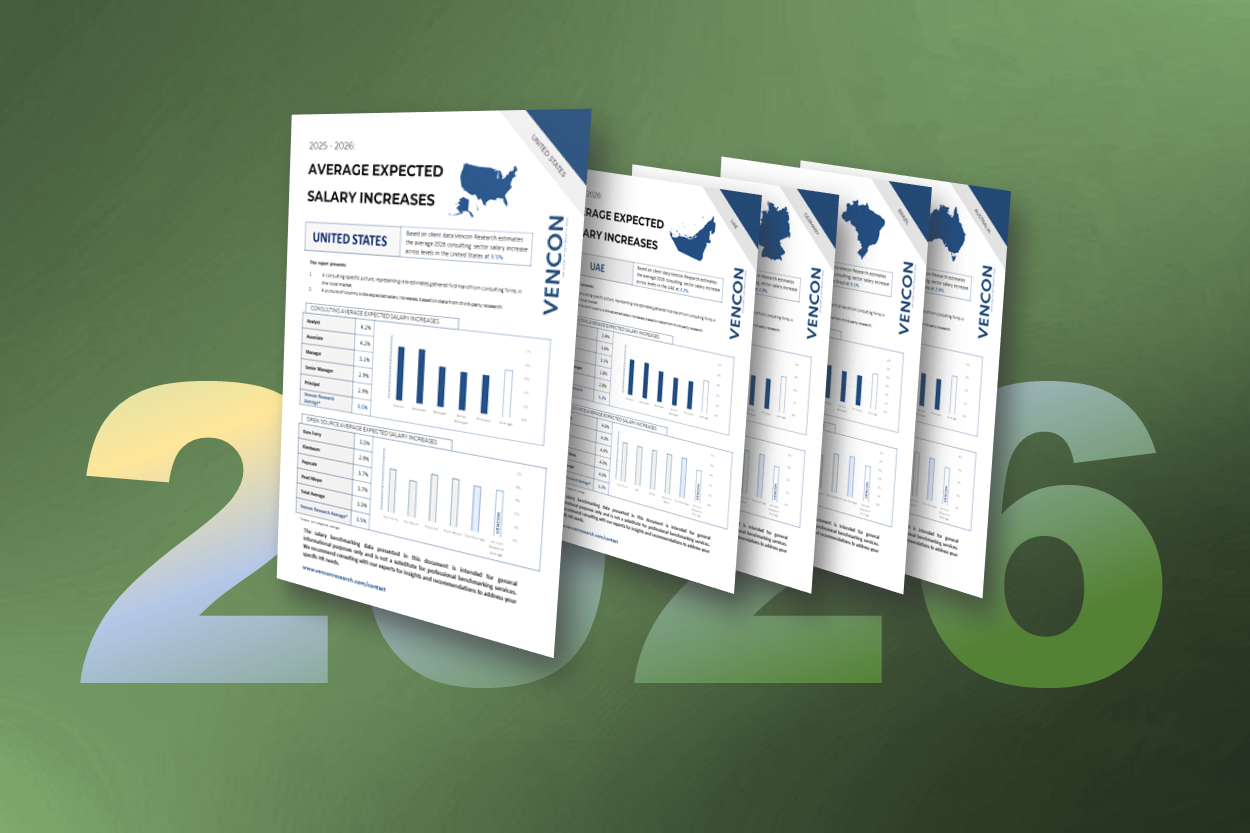
2026 Expected Salary Increases in the Consulting Industry
These concise overviews provide:
- A consulting-specific picture, representing real estimates gathered first-hand from consulting firms in the local market.
- A picture of country wide expected salary increases, based on data from third-party research.
Vencon Research conducts compensation benchmarking studies for over 70 countries worldwide. Should you require further information on the summaries included or additional data for different countries, please contact us.
Download: 2026 Expected Salary Increases in the Consulting Industry

The countdown to the transposition of the EU Pay Transparency Directive in June 2026 has already started. For many organisations, the most visible requirement is the obligation to report gender pay gap data and provide employees with access to certain pay information.
This has led to a common initial reaction: build the reporting. But reporting is not the system. It is the output of the system.
The directive was designed precisely to make pay discrimination easier to identify and enforce by linking transparency across several different mechanisms. Reporting sits at the end of that chain. Compliance depends on whether the underlying pay structure, decision logic, and governance framework can withstand scrutiny.
In practice, that means organisations must be able to explain why pay differences exist, how roles are compared, and which criteria determine pay progression. Without those foundations, reporting can quickly surface gaps that cannot be objectively justified neither towards officials nor to employees.
Vencon Research supports organisations’ readiness efforts for the directive across the full lifecycle: from initial diagnostics through structural design, operational implementation, internal communication and reporting.
Why the Directive Goes Beyond Pay Gap Numbers
The directive introduces a broader architecture of transparency obligations that work together.
These include:
- defining categories of workers performing the same work or work of equal value
- establishing objective criteria for pay-setting and pay progression
- providing employees with the right to request pay information
- ensuring salary transparency in recruitment
- producing gender pay gap reporting
- conducting joint pay assessments when unexplained gaps persist
Each of these elements relies on the others. For example, gender pay gap reporting requires organisations to calculate average pay differences between men and women within categories of workers performing equal work or work of equal value.
If those categories are poorly defined—or if job architecture is inconsistent—the resulting comparisons can be misleading or difficult to defend.
Similarly, when employees request pay information about their category, organisations must be able to clearly demonstrate how pay levels and progression decisions are determined.
In other words, transparency forces organisations to make their pay systems explicit, consistent, and auditable.
Many organisations are therefore starting with a structured readiness assessment to understand where their current pay systems may face challenges under the directive.
The Hidden Risk: Escalation Mechanisms
One of the most important aspects of the directive is what happens after pay gaps are identified.
If a gender pay gap of 5% or more appears within a worker category and cannot be objectively justified, employers may be required to carry out a joint pay assessment with employee representatives.
This introduces a form of escalation pressure. Organisations must be able to demonstrate:
- how pay decisions were made
- whether objective criteria were applied consistently
- what corrective actions are required if structural issues are identified
Preparing for these scenarios cannot happen once reporting is already underway. The underlying governance and documentation processes must already be in place.
Preparing early for these escalation scenarios, both analytically and operationally, is becoming a core focus for organisations working toward directive compliance.
Why a Modular Approach Is Often Necessary
Because the directive touches multiple aspects of the pay system, organisations rarely face a single isolated problem.
Instead, they typically need to address several interconnected questions:
- Is the underlying HR and payroll data structured in a way that supports reliable analysis?
- Are job roles and levels defined clearly enough to enable meaningful equal-value comparisons?
- Are pay-setting and progression rules documented and consistently applied?
- Are HR teams and managers prepared to communicate pay ranges and criteria transparently?
- Is there a clear governance process for responding to information requests or investigating potential gaps?
- Which guidelines, policies and communication materials will have to be created, reviewed or changed?
Attempting to solve only the reporting requirement often leaves these questions unanswered.
For that reason, many organisations are beginning to approach the directive as a series of structured building blocks rather than a single compliance project.
Vencon Research works with organisations to design pragmatic implementation roadmaps that address these elements step by step while aligning with the directive’s timelines.
Building the Foundation: Data and Diagnostics
The first step is usually establishing a reliable fact base.
Pay transparency requirements rely on the ability to combine data from several systems, including HRIS, payroll, organisational structure data, and job information. In many organisations these datasets exist, but definitions and calculation rules differ across functions.
Creating a consolidated and auditable dataset allows organisations to:
- define pay components consistently
- standardise FTE and working-time adjustments
- segment employees into meaningful analytical groups
- reproduce calculations reliably for future reporting
Once this foundation exists, organisations can begin to assess the current state of pay equity. This typically involves analysing gender pay gaps across multiple segments—such as job families, levels, locations, or contract types—and distinguishing between structural drivers and potentially unexplained differences.
The purpose of this diagnostic is not only to measure current gaps but also to identify areas where the organisation may face higher scrutiny under the directive.
Vencon Research supports organisations in building auditable pay datasets and conducting detailed pay equity diagnostics aligned with directive requirements.
Defining “Work of Equal Value”
One of the most technically complex aspects of the directive is the concept of equal value comparisons.
Organisations must be able to compare roles across functions using gender-neutral criteria such as:
- skills
- effort
- responsibility
- working conditions
- contributions
In practice, this requires a coherent job architecture and job evaluation logic that allows roles from different functions to be assessed within the same framework.
For example, a marketing role and a finance role may be very different operationally, but the directive requires employers to demonstrate whether they represent comparable value in terms of responsibility, complexity, and required capabilities.
Without a structured job architecture, these comparisons become extremely difficult to defend.
Designing robust job architectures and evaluation frameworks is therefore a key step in preparing organisations for equal-value comparisons under the directive.
Embedding Transparency Into HR Processes
Even with a clear structure in place, transparency only works if the organisation’s day-to-day processes align with it.
This often requires reviewing how pay decisions are made across several areas:
- hiring and salary offers
- promotions and role changes
- annual pay reviews
- variable pay and allowances
Managers need clear guidelines on how pay ranges are applied and how exceptions are documented. Organisations also need to define how pay-setting and progression criteria are communicated to employees in a consistent and understandable way.
This is where communication and enablement become critical. Transparency requirements affect not only HR teams but also recruiters, line managers, and senior leadership.
Vencon Research supports organisations in embedding transparent pay governance into HR processes, policies, and manager decision frameworks.
Preparing for Reporting and Employee Requests
Once the underlying structure and processes are in place, organisations can build the reporting outputs required under the directive.
These typically include:
- gender pay gap calculations across defined worker categories
- documentation explaining the methodology used
- governance processes for reviewing and approving results
- templates for responding to employee pay information requests
Equally important is preparing for scenarios where gaps require further investigation or remediation.
Having predefined approaches for documentation, corrective action, and stakeholder involvement allows organisations to respond quickly if reporting results trigger additional obligations.
Vencon Research helps organisations establish repeatable reporting frameworks and prepare operational responses for employee information requests and potential joint pay assessments.
A Structural Shift in Pay Governance
The EU Pay Transparency Directive represents a shift in how pay systems are expected to operate.
Historically, many organisations relied on implicit practices and informal decision-making frameworks that worked reasonably well internally but were rarely documented in detail.
Transparency changes that expectation.
Pay systems must now be designed so that they can be explained, justified, and audited. This requires stronger data foundations, clearer role structures, and more explicit governance around pay decisions.
For organisations that address these elements systematically, the directive becomes manageable. Those that focus only on the final reporting step may find themselves dealing with much more complex questions once transparency exposes how their pay system actually works.
Organisations beginning their preparation now have the advantage of building these foundations in a structured way before reporting obligations come into force.
Preparing for the EU Pay Transparency Directive? Vencon Research supports organisations across the full preparation journey—from pay equity diagnostics and job architecture to governance frameworks and reporting readiness. Get in touch to discuss how we can support your organisation.
The EU Pay Transparency Directive Is Not a Reporting Exercise
By Deepali Bist, MBA - Client Solutions
In India, compensation is not constructed as a single consolidated salary figure. It is deliberately segmented into statutory-linked pay, structured allowances, and performance-related incentives. This layered design reflects regulatory requirements, tax considerations, and long-standing market practice.
For consulting firms, where compensation represents the largest operating cost and a central talent lever, benchmarking accuracy depends on more than headline numbers. It depends on whether remuneration components are defined and compared consistently. Selecting and standardising the right elements directly influences the reliability of market positioning conclusions.
Global benchmarking frameworks often rely on simplified compensation categories to enable cross-country reporting. While efficient at scale, these frameworks do not always align with the architecture of Indian pay structures. Without localisation, structurally different packages may be treated as comparable, affecting both external benchmarking and internal band calibration.
At Vencon Research, we observe that benchmarking quality in India is closely linked to how precisely remuneration components are interpreted within the local statutory and market context.
The Architecture of Consulting Compensation in India
In Indian strategy and management consulting firms, compensation typically consists of three principal layers:
- Basic Salary
- Allowances
- Performance Bonus
Each serves a distinct financial and regulatory function.
Basic Salary
Basic salary generally represents around half of fixed compensation. It serves as the statutory anchor for:
- Provident Fund (12% of Basic)
- Gratuity accrual (~4.81% of Basic)
Because these obligations are legally defined, the level and treatment of Basic pay have direct cost and compliance implications. Adjustments to Basic salary do not merely shift internal pay mix — they influence statutory exposure.
Allowances
Allowances typically form the remaining portion of fixed pay and may include House Rent Allowance (HRA) and other special allowances. While sometimes viewed as flexible elements, they are part of fixed cash compensation and materially affect take-home pay outcomes through tax optimisation.
In benchmarking datasets, allowances are occasionally treated inconsistently — particularly where global reporting templates do not distinguish between Basic and total fixed pay.
Performance Bonus
Variable pay is a meaningful component in consulting, particularly at post-MBA and senior levels. Performance bonuses link compensation to individual, team, and firm outcomes, and can represent a substantial share of Total Cash Compensation (TCC).
Employer Statutory Contributions
Employer contributions such as Provident Fund and Gratuity provisions increase Total Cost to Company (CTC) but do not affect immediate take-home pay. For benchmarking purposes, distinguishing between:
- Employee cash compensation, and
- Employer statutory cost
is essential.
Dearness Allowance (DA), while relevant in certain public-sector contexts, is generally not applicable in private-sector consulting firms and should not be assumed to form part of standard structures in this sector.
Why Component Definition Drives Benchmarking Accuracy
Inconsistent definitions of compensation elements can quickly distort market comparisons. A frequent issue arises around the interpretation of “base pay.” Some firms define base as Basic salary only, while others define it as total fixed pay (Basic + Allowances). Without normalisation, benchmarking outputs may misrepresent relative positioning.
Two firms may report different CTC figures while delivering similar employer cost structures and take-home outcomes. Conversely, similar headline figures may conceal materially different:
- Statutory exposure
- Bonus weighting
- Fixed-to-variable pay ratios
Without component-level clarity, these structural differences remain hidden.
Statutory alignment is equally important. If Basic pay is set at an unusually low proportion of fixed compensation, Provident Fund and Gratuity obligations may be understated. Alternatively, including discretionary or non-cash elements within total compensation figures can inflate perceived competitiveness.
These distortions typically arise not from error, but from applying simplified definitions to a market with structural particularities.
The Global–Local Translation Challenge
Multinational consulting firms operating in India often rely on centralised reward frameworks designed for global consistency. These frameworks usually categorise pay into a limited set of universal components — such as:
- Base Salary
- Variable Pay
- Benefits
In the Indian context, however, “Base” is not a single undifferentiated figure. It includes internal layers that carry statutory consequences. Allowances that are integral to fixed pay may be treated as peripheral benefits in global systems. Pension logic applied elsewhere may not align with India’s statutory 12% Provident Fund requirement.
Without translating global templates into Indian compensation architecture, benchmarking comparisons may appear aligned while concealing structural misinterpretation.
Ensuring Market Relevance in Indian Benchmarking
Compensation structures in India are shaped by:
- Tax legislation
- Labour and wage code frameworks
- Statutory contribution rules
- Market-driven take-home pay expectations
Accurate benchmarking therefore requires:
- Clear distinction between Total Cash Compensation (TCC) and broader CTC constructs
- Alignment with statutory definitions for correct employer cost modelling
- Normalisation of Basic, Allowances, and Variable Pay across participating firms
When remuneration elements are standardised appropriately, benchmarking data becomes materially more reliable and comparable across consulting firms.
Vencon Research’s Approach
Vencon Research’s benchmarking framework for consulting firms in India is built around component-level precision.
Compensation data is disaggregated into:
- Basic Salary
- Allowances
- Variable Pay
Employer statutory contributions are aligned with Indian legal definitions, and cash compensation analysis is separated from non-cash benefits benchmarking. All submissions are normalised into a unified Total Cash Compensation model, reducing distortions caused by inconsistent CTC interpretations.
This approach allows both domestic and multinational consulting firms to maintain global reporting consistency while ensuring local accuracy.
Structural Precision Enables Reliable Decisions
In the Indian consulting market, remuneration structure materially influences statutory exposure, employer cost, and perceived competitiveness. Benchmarking that does not account for these structural layers risks drawing conclusions from non-comparable data.
When compensation components are clearly defined, standardised, and normalised, firms gain a more accurate view of their market position and can make better-informed reward decisions.
Vencon Research supports strategy and management consulting firms in aligning global reward frameworks with Indian compensation architecture. If you are reviewing your salary benchmarking approach in India, we would welcome a discussion on how structural normalisation can improve the precision of your market insights.
India’s Unique Remuneration Structure: Considerations for Rewards Benchmarking

Analysis by Irina Kvirikadze - Rewards Intelligence & Insights
Research findings from Vencon Research indicate that salary increases in 2026 are expected to be more moderate compared with the high-inflation years of the recent past.
Organizations across the consulting industry are adjusting compensation strategies in response to easing inflation, ongoing economic uncertainty, and structural changes in workforce management such as AI-driven automation. Rather than broad base-salary increases, employers are increasingly emphasizing variable pay, promotion-driven adjustments, and holistic total rewards offerings.
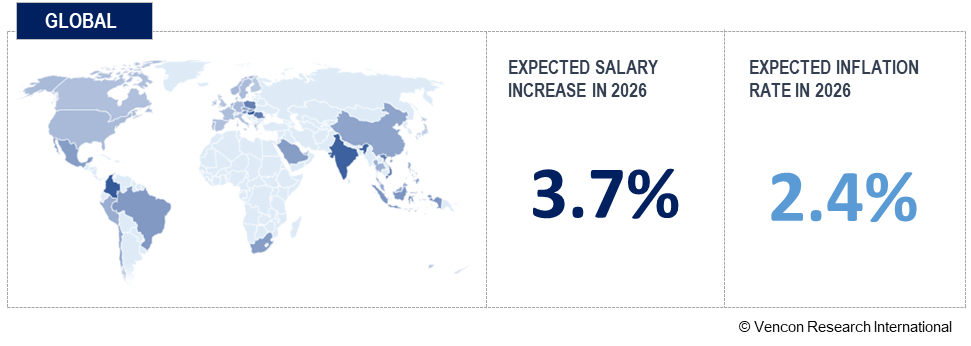
Globally, average salary increases in the consulting industry are projected at 3.7% in 2026, while inflation is expected to stand at 2.4%. This represents a clear slowdown compared with 2025, when salary growth was projected at 4.5%, reflecting a more cautious and targeted approach to pay management.
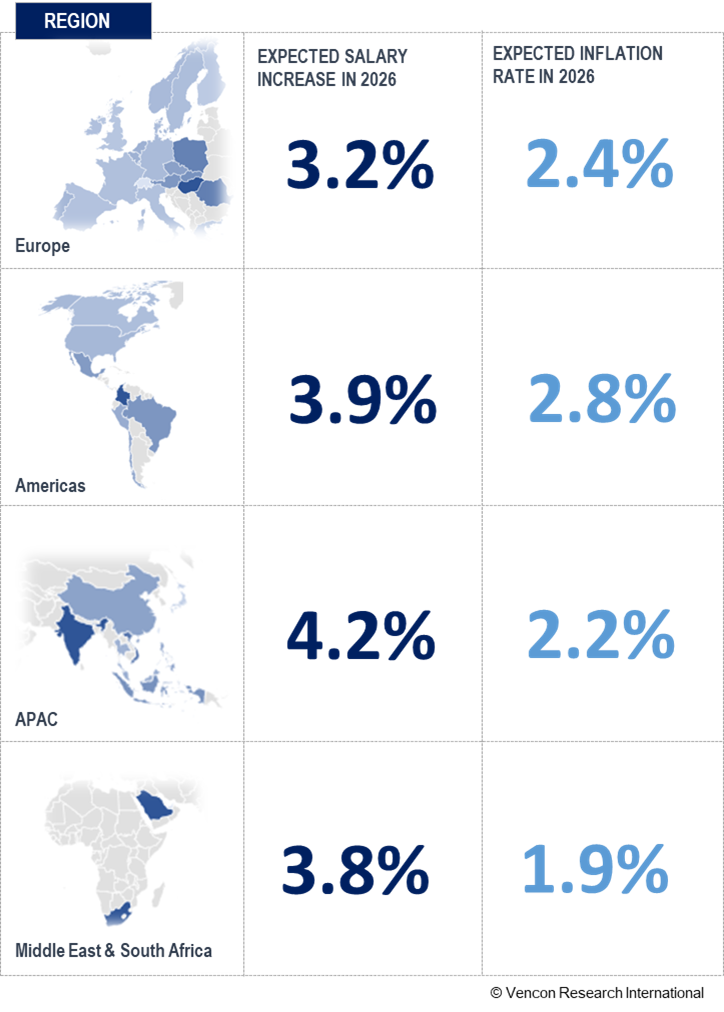
Regionally, the APAC region expects the highest salary increases, at 4.2%, while Europe is likely to see comparatively lower increases at 3.2%. Expected Inflation rates are highest across the Americas at 2.8%.
Expected Salary Growth: Europe
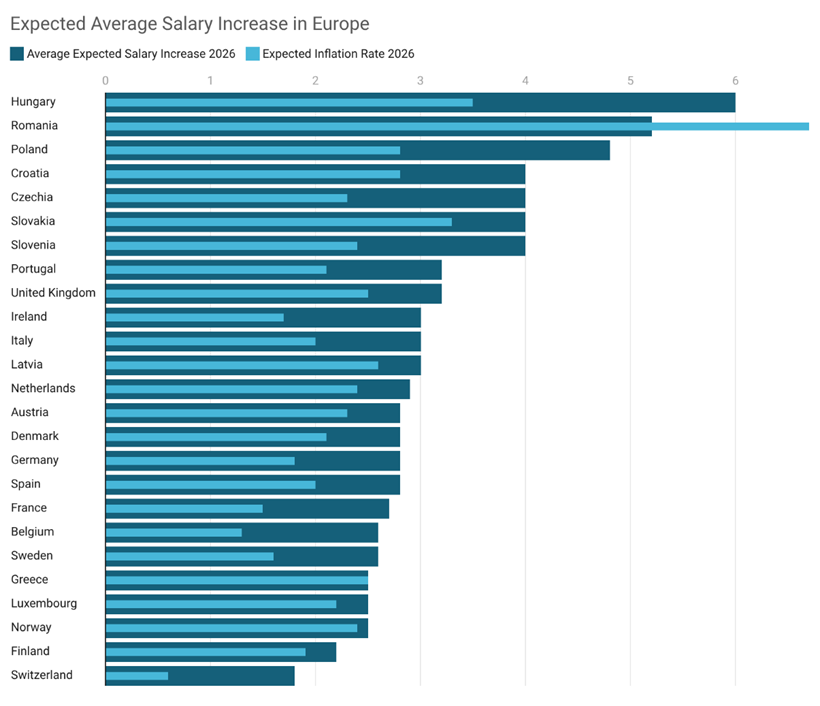
In Europe, salary increases are expected to range from 1.8% to 6%, broadly aligned with inflation levels that vary significantly by country. Core markets such as Germany, France, Spain, and the United Kingdom are projected to see moderate increases between 2.7% and 3.2%, while higher growth is anticipated in parts of Central and Eastern Europe, particularly Hungary and Romania, where inflationary pressures remain elevated.
Expected Salary Growth: Americas
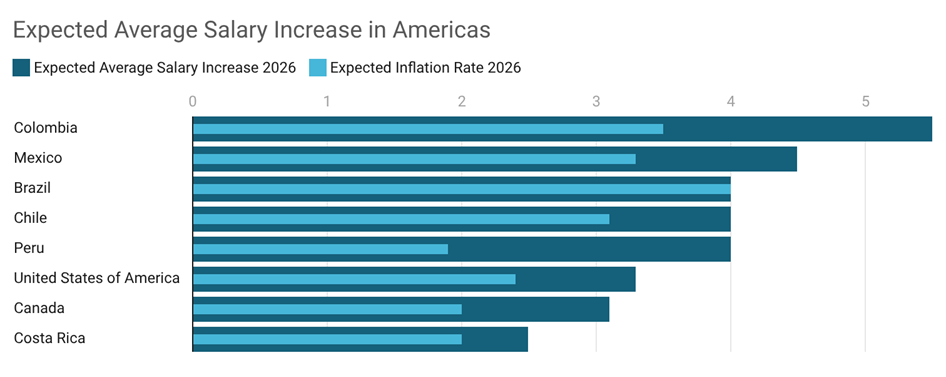
Across the Americas, average salary increases in 2026 are projected at 3.9%. Latin America continues to outpace North America, led by Colombia, Mexico, and Brazil, while salary growth in the United States and Canada is expected to remain moderate at just above 3%. Argentina has been excluded from regional averages due to ongoing inflation volatility.
Expected Salary Growth: APAC and MENA
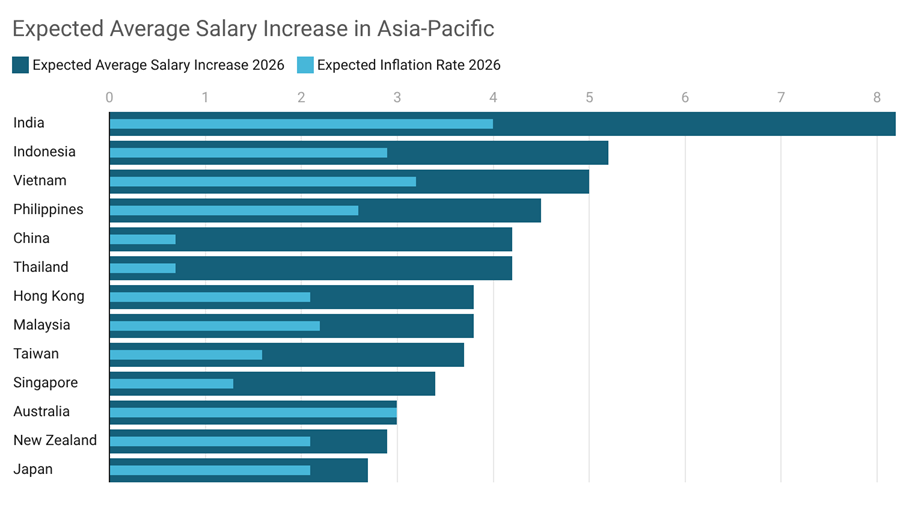
In APAC, salary growth is expected to remain robust and broadly in line with 2025 levels, ranging from 2.7% to 8.2%. India continues to stand out as the strongest growth market globally.
In the Middle East and Africa, salary increases are projected to soften compared with last year, with most major markets clustering around the low-to-mid 3% range.
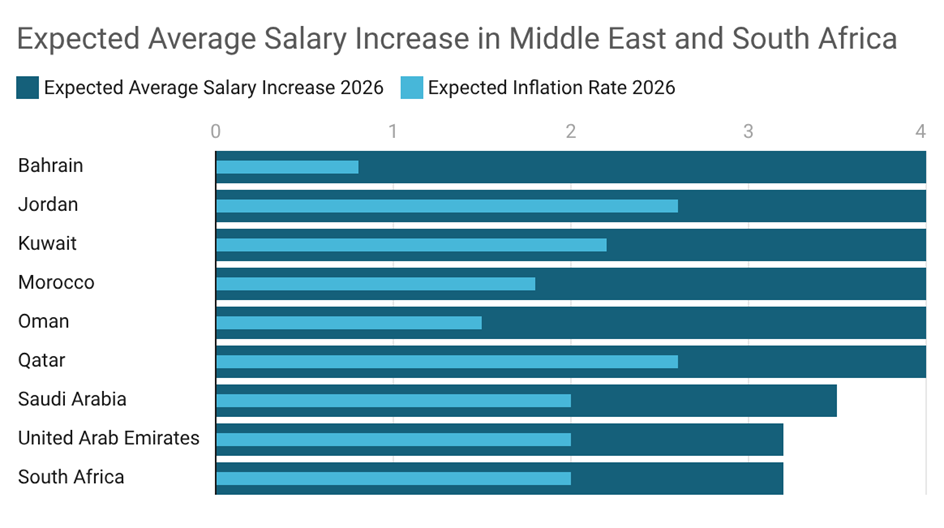
Overall, the 2026 outlook points to a return to more normalized salary growth, with employers prioritizing flexibility, performance differentiation, and total rewards optimization over uniform pay increases.
Vencon Research provides consulting firms with precise, industry-specific compensation benchmarking, ensuring they stay competitive in a rapidly evolving market. Our research includes further detailed insights into salary increases for 2025 by country, line of business, and career level, helping firms understand pay trends and make informed compensation decisions.
Learn more about how Vencon Research can support your firm’s pay strategy.
Expected Salary Increases 2026: Global Consulting Outlook

As consulting firms plan for 2026, HR leaders face a complex set of pressures. Economic uncertainty, regulatory change, persistent talent shortages and the practical integration of AI are all influencing how consulting firms design roles, manage costs and develop their people.
These challenges are cumulative rather than isolated. Pay and progression decisions are more transparent, workforce models are more varied, and expectations around productivity and performance continue to rise. HR strategy in consulting is increasingly central to sustaining competitiveness and executing business models.
Drawing on Vencon Research’s work with consulting firms globally, alongside selected external research, the following HR trends outline how people strategy in the consulting industry is evolving heading into 2026.
1. Pay Transparency and Regulation as Core HR Priorities in Consulting
Pay transparency is now a central consideration for consulting firms. Regulatory developments, including the EU Pay Transparency Directive and similar initiatives elsewhere, are accelerating the need for clearer pay structures, defined ranges and consistent progression criteria.
In practice, this places pressure on job architecture, levelling and job matching. Vencon Research frequently observes that transparency initiatives expose inconsistencies in role definitions that were previously less visible. For consulting firms operating across multiple geographies, aligning local practices with global frameworks adds further complexity.
As a result, pay transparency is shaping not only reward strategy, but also governance, communication and trust.
2. Workforce Planning in a Low-Growth, High-Volatility Consulting Market
Many consulting firms are entering 2026 with more cautious growth assumptions. Demand remains uneven across sectors and geographies, while cost discipline has become a sustained priority rather than a temporary response.
HR functions are placing greater emphasis on flexible workforce planning, redeployment and internal mobility. Hiring decisions are increasingly guided by near-term demand signals rather than long-range growth forecasts. Vencon Research sees firms investing more time in aligning capacity, skills and cost structures across practices.
Workforce planning is becoming a continuous, data-driven process rather than an annual exercise.
3. AI as a General-Purpose Capability in Consulting Firms
AI is increasingly embedded across consulting roles, grades and practices. By 2026, consultants are expected to use AI-enabled tools for research, analysis, drafting and insight generation as a standard part of their work.
This has implications for HR. Role profiles now assume baseline AI literacy, with differentiation driven by judgment, problem framing and client interaction rather than task execution. Vencon Research observes early incorporation of AI expectations into capability frameworks and performance evaluations.
AI is reshaping what effective consulting work looks like, even where job titles remain unchanged.
4. Evolving Consulting Operating Models Beyond the Pyramid
The traditional consulting pyramid is being supplemented by more diverse talent models. Core consultants increasingly work alongside subject-matter experts, delivery centres, contractors and alliance partners.
This evolution reflects both cost pressures and the growing need for specialised skills. However, it introduces challenges around performance management, engagement and equity. HR processes designed for homogeneous populations are being adapted to support differentiated talent segments without undermining cohesion.
Consulting firms are moving towards more modular and flexible operating models.
5. Rethinking Reward Beyond Utilisation and Billable Hours
Utilisation remains a critical metric in consulting, but it is no longer sufficient alone. As firms invest in intellectual property, platforms and reusable assets, they are exploring ways to recognise non-billable but value-creating contributions.
Vencon Research’s compensation benchmarking shows increasing variation in how firms reward asset development, reuse and broader client outcomes. These changes raise questions around measurement, attribution and fairness, particularly in team-based environments.
Reward strategy is becoming more closely tied to how firms create value, not just how hours are billed.
6. From Leveraged Labour to Asset-Enabled Consulting Models
Closely linked to reward is the shift towards more asset-enabled consulting. AI and automation accelerate this transition, but the underlying change is structural.
Roles increasingly combine client delivery with contributions to tools, methodologies and platforms. Vencon Research observes early differentiation between delivery-led roles and hybrid roles blending advisory, product and commercial responsibilities.
Over time, this trend will continue to influence career paths, grading structures and promotion criteria.
7. Reconfiguring Learning and the Consulting Apprenticeship Model
The widespread adoption of AI and digital tools has changed how junior consulting work is performed. Tasks traditionally used to build foundational skills are increasingly automated or augmented.
Consulting firms are rethinking how learning and development are structured, introducing more formal development pathways, earlier responsibility and clearer expectations around skill progression.
Preserving the strengths of the apprenticeship model while adapting it to new working patterns remains a central HR challenge.
8. Attracting and Developing Scarce and Interdisciplinary Talent
Skill shortages continue to affect consulting firms, particularly in areas such as data, technology, sustainability, risk and regulatory advisory. These roles often combine technical and strategic capabilities that do not align neatly with traditional consulting career models.
Vencon Research sees firms combining targeted hiring with greater emphasis on reskilling and internal mobility. Career frameworks are being adjusted to support deeper expertise alongside broader consulting development.
Talent strategy is increasingly shaped by scarcity rather than surplus.
9. Integrating Technology and AI Acquisitions into Consulting Firms
Acquisitions remain a key route for capability building, particularly in AI and digital services. Integration, however, remains challenging. Differences in culture, pace and reward expectations can create friction within partnership-led firms.
HR is playing a greater role in redesigning job families, performance frameworks and progression paths to accommodate hybrid consulting-technology roles. Organisational design is becoming as important as retention in determining success.
Integration is no longer viewed as a short-term issue, but an ongoing management challenge.
10. Governing AI as Part of Professional and Risk Standards
As AI becomes embedded in client delivery, consulting firms are formalising expectations around its use. Regulatory scrutiny, client expectations and reputational risk are driving clearer policies and accountability.
HR’s role includes embedding AI-related competencies into role profiles, supporting training and certification, and clarifying responsibility for appropriate use. In many firms, AI governance is treated as an extension of professional standards.
This reflects a broader shift towards explicit risk management in people strategy.
11. Leadership Capability in Hybrid and Distributed Consulting Firms
Hybrid working models are now well established, but their implications for leadership continue to evolve. Leading distributed teams requires new capabilities around performance management, coaching and engagement.
Research from organisations such as Gartner consistently highlights leadership development as a priority for CHROs. In consulting, effective leadership is increasingly linked to productivity, retention and culture.
Leadership capability is a critical lever in sustaining performance.
12. Re-Anchoring Culture and Learning in Hybrid Consulting Environments
With less reliance on physical proximity, consulting firms are taking deliberate steps to build culture and support learning. Informal knowledge transfer no longer happens by default.
Vencon Research observes increased investment in structured onboarding, coaching and hybrid collaboration practices. While flexibility remains a key attraction and retention factor, maintaining consistency and connection across the firm requires ongoing effort.
Culture and learning are increasingly treated as design challenges rather than by-products of co-location.
13. Building Talent for Sustainability, Climate and Resilience Practices
Demand for sustainability, climate, ESG and resilience-related advisory continues to grow across the consulting industry. Clients increasingly expect firms to combine strategic insight with technical and regulatory expertise, prompting many to scale dedicated practices or embed sustainability capabilities across service lines.
For HR, this creates challenges that do not fit neatly within traditional consulting models. Sustainability and climate roles often require interdisciplinary profiles, combining consulting skills with scientific, engineering, regulatory or data expertise. Firms are responding through a mix of targeted external hiring and structured reskilling of existing consultants.
As these practices mature, HR functions play a central role in defining job architecture, career paths and reward frameworks that support growth.
HR Trends in Consulting: Looking Ahead to 2026
These HR trends demonstrate a continued shift towards greater clarity, discipline and integration in people strategy. Regulatory change, evolving operating models and technology adoption reinforce the need for coherent job architecture, reward structures and development pathways.
For consulting firms, HR is no longer limited to support or compliance. It is central to shaping how consulting work is delivered, how talent is developed, and how value is created in a complex, competitive environment.
Contributors
- Erwin Harbauer - Managing Director / Partner
- Andy Klose - Associate Partner
- Shukhrat Iskandarov - Client Solutions Manager
Vencon Research works closely with consulting firms to translate these insights into practical decisions. Whether you are assessing your workforce model, reviewing reward frameworks, or designing career paths, our benchmarking and advisory services can provide the data, analysis and guidance needed to act with confidence. Contact us to discuss how we can support your HR strategy for 2026 and beyond.
HR Trends in Consulting for 2026

By Andy Klose - Associate Partner and Head of Advisory
In many consulting firms, the incentives debate starts with an apparently obvious thought: if senior leaders are expected to win work, why not pay them like salespeople and introduce sales commissions? The logic feels clean—more deals, more pay, more growth. Yet in consulting, this “clean” logic often produces messy outcomes: weaker risk discipline, more internal friction, and—most damaging—reduced client trust. The reason is structural, not ideological. Classic, deal-based sales commissions are designed for transactional selling; consulting is a relational, team-based, judgment-heavy business where value is co-created and realized over time.
The intuitive idea – and where it goes wrong
Product-style sales commissions assume a world of discrete transactions: a salesperson closes a deal, hands it over, and gets paid. The model works because the boundaries are clear—between selling and delivery, between one deal and the next, and between individual contribution and enterprise value.
Consulting rarely fits that template. “Selling” is usually inseparable from diagnosing the problem, shaping the approach, assembling the right team, and standing behind the outcome. When incentives treat consulting like a sequence of independent deals, they encourage behaviors that optimize short-term bookings at the expense of long-term client impact and firm health.
What makes consulting structurally different from transactional sales
Sales commissions become increasingly fragile as offerings become more bespoke and knowledge-intensive. In classic consulting—strategy, operations, HR, organization, transformation—the economics differ in three ways.
First, sales and delivery are integrated. Senior consultants and partners do not merely close; they commit the firm, lead the work, and remain accountable for what was promised.
Second, solutions are heterogeneous by design. Even when proposals reuse methods and modules, each engagement is shaped by client context, politics, risk, data availability, team mix, and outcome uncertainty. This makes “fair” and behaviorally sound deal-level metrics hard to define.
Third, the asset is the relationship, not the transaction. Consulting revenue typically unfolds in waves—diagnosis, design, implementation, follow-on scaling—within a relationship where trust accumulates slowly and can be lost quickly.
A practical rule holds: the more relational and bespoke the work, the less compatible deal-level sales commissions become.
How sales commissions backfire in consulting
Once you view consulting as an interdependent, multi-year value chain, several failure mechanisms become predictable. They reinforce each other, which is why “small” commission schemes often expand into large cultural and economic problems over time.
1. Sales commissions shift the partner mindset from “best answer” to “best-sellable answer”
Consulting buyers pay for judgment and independence. Deal-based sales commissions introduce a strong bias toward whatever is easiest to monetize now. Common patterns include scope inflation, premature solutioning, and a preference for short, high-fee projects over work that builds sustainable client capability. Even if outcomes remain acceptable, clients quickly sense when advice is optimized for revenue rather than relevance. Trust erodes—and trust is the foundation of repeat business.
2. Sales commissions weaken risk discipline and deal quality
Healthy consulting firms say “no” more often than outsiders assume: no to unrealistic timelines, no to misaligned stakeholders, no to underpriced work, no to engagements where success probability is low. Sales commissions can invert that discipline. A large, high-fee, high-risk project becomes personally attractive even if the firm later absorbs the delivery pain, write-offs, or reputational impact. Over time, governance mechanisms—review boards, pricing discipline, delivery readiness checks—get pressured by individuals who are rewarded for closing, not for outcomes.
3. Sales commissions undermine collaboration in a team-based business
Modern consulting delivery is cross-practice and cross-geography. The best client solution often requires multiple senior leaders and specialists to contribute. Sales commissions turn that collaborative system into a contest for “origination credit.” The predictable consequences are territorial behavior (“my client”), reluctance to bring in colleagues if it dilutes payout, and internal negotiation about credit allocation that consumes energy better spent on the client. In a partnership model, internal trust is a strategic asset; sales commissions tax that asset.
4. Sales commissions distort time allocation in multi-task leadership roles
Senior consulting roles are inherently multi-dimensional. Partners and senior leaders must balance business development with delivery leadership, talent development, intellectual capital, and firm stewardship. High-powered incentives tied heavily to sales drive effort toward what is measured and paid, crowding out activities that build long-term advantage—coaching, proposition building, quality assurance, recruiting, and leadership roles. The firm may temporarily see a spike in bookings while quietly accumulating delivery and people risks that surface later.
5. Sales commissions mis-attribute value creation and fuel perceived unfairness
Few consulting wins are attributable to one person. A sale often reflects prior delivery excellence, a long-nurtured relationship, specialist insight, a high-performing team, and the firm’s reputation. Deal-based sales commissions force an artificial choice: either reward the visible “closer” disproportionately, or build complex split models that feel arbitrary and create constant debate. Both outcomes erode perceived fairness—one of the most sensitive levers in professional services cultures.
When commission-like incentives can work (and the boundary conditions)
This is not an argument against variable pay or against rewarding business development. The question is fit: under which conditions do sales commissions align with the operating model?
Commission-like approaches are more viable when most of the following are true:
- Standardized, repeatable offerings (e.g., fixed-scope diagnostics, packaged implementations, training products);
- Clear separation of roles between sales and delivery (dedicated sales teams with limited delivery accountability);
- Lower delivery uncertainty and more predictable scope, timelines, and outcomes;
- Limited cross-team dependency or clearly defined handovers and responsibilities.
Even then, two guardrails are critical: (1) strong controls to prevent overselling or misrepresentation, and (2) commission weightings that signal importance without overwhelming other leadership responsibilities.
In other words, commissions fit best where consulting behaves more like a product business. In bespoke advisory partnerships, those conditions are the exception—not the norm.
What to do instead: incentive principles aligned with consulting economics
If deal-level sales commissions are structurally misaligned, what should consulting firms use to reward and steer senior performance? There is no universal formula, but a consistent set of principles tends to work across partnership and professional services models.
Reward the portfolio, not the deal
Shift the unit of performance from individual transactions to the health of a client portfolio over time. This supports better behavior: disciplined pricing, thoughtful sequencing of engagements, and an emphasis on relationship durability rather than quarterly wins.
Use a balanced set of metrics, not a single “sales number”
Senior performance should reflect the true job, not a simplified proxy. Many firms use a balanced scorecard that includes financial outcomes (revenue and profitability), client outcomes (satisfaction, retention, expansion), people outcomes (team feedback, development, hiring contribution), and firm-building outcomes (thought leadership, proposition development, leadership roles). Business development remains highly valued—but not isolated from delivery quality and stewardship.
Keep “sales credit” as an input to judgment, not an automatic cash engine
Tracking origination and contribution is useful—especially for promotions, recognition, and performance discussions. The risk arises when that tracking becomes a rigid, formulaic payout mechanism. Consulting requires judgment in assessing contribution, risk-taking quality, collaboration, and long-term impact. Incentive systems should preserve room for that judgment.
Protect the partnership logic
Partnerships thrive on shared ownership, mutual accountability, and investment in the next generation. Incentives should reinforce those norms: encouraging leaders to bring the best team to the client, share relationships, develop talent, and protect the firm’s reputation—even when doing so reduces short-term personal upside.
Implications for HR and firm leadership
Incentive design in consulting is not a technical exercise; it is a strategic choice about culture and operating model. HR and leadership teams should treat sales commissions as a “model decision,” not a compensation tweak. Introducing deal-based commissions often forces a firm—implicitly—toward a more individualistic, franchise-like structure with higher internal competition and weaker collective governance.
A more sustainable path typically involves three moves:
- Align incentives with how value is created (team-based, relational, outcome-oriented).
- Design for the long term (multi-year performance, portfolio health, reputation protection).
- Make trade-offs explicit (accepting slightly lower short-term sales intensity in exchange for better collaboration, lower delivery risk, and stronger client relationships).
Conclusion: Don’t install a transactional engine in a relational business
Sales commissions are not inherently “bad.” They are simply optimized for a different context: standardized offerings, separable sales and delivery roles, and value captured in discrete transactions. Consulting—at its core—is the opposite: bespoke problem solving, integrated delivery accountability, and trust built over time.
For consulting firms, the most important question is therefore not, “How do we bolt sales commissions onto our partnership?” It is: Which behaviors and cultural norms does our business model require—and what incentive architecture reinforces those behaviors rather than fighting them? In most advisory partnerships, honest answers to that question lead away from deal-level commissions and toward more balanced, portfolio-based, and collective mechanisms that reward sustainable client impact.
We would be pleased to assist you with any additional inquiries you may have and offer recommendations on how to enhance your organisation’s compensation and incentive models.
Andy Klose is an Associate Partner at Vencon Research International and heads the firm’s advisory unit.
Vencon Research International is a leading provider of compensation benchmarking and research as well as of compensation and performance-related consulting services for professional service firms, especially for audit and tax, management consulting, and IT services firms. Vencon Research International provides services to a full range of clients in more than 75 countries worldwide and is proud to name more than 85% of the world’s major consulting and/or professional services firm its clients.
Why Sales Commissions Fail in Consulting

By Shukhrat Iskandar - Client Solutions
The EU Pay Transparency Directive moves into effect in 2026 and represents one of the most significant regulatory changes affecting compensation management in decades. From mid-2026, Member States are required to have transposed the Directive into national law, after which employers will face new, enforceable obligations around pay transparency, reporting, and employee rights to pay information. Designed to strengthen equal pay for equal work or work of equal value and to close persistent gender pay gaps across Europe, the Directive introduces legally binding measures that go beyond most existing national frameworks, reshaping how organisations define, structure, communicate, and justify pay.
Key Requirements of the Directive
Once transposed into national law, the Directive introduces a set of binding obligations for employers across the EU, including:
- Pay transparency in recruitment: Employers must disclose the starting salary or pay range in job advertisements or prior to the first interview, and may not ask candidates about pay history.
- Employee rights to pay information: Employees can request information on their own pay and on average pay levels for comparable roles, broken down by gender.
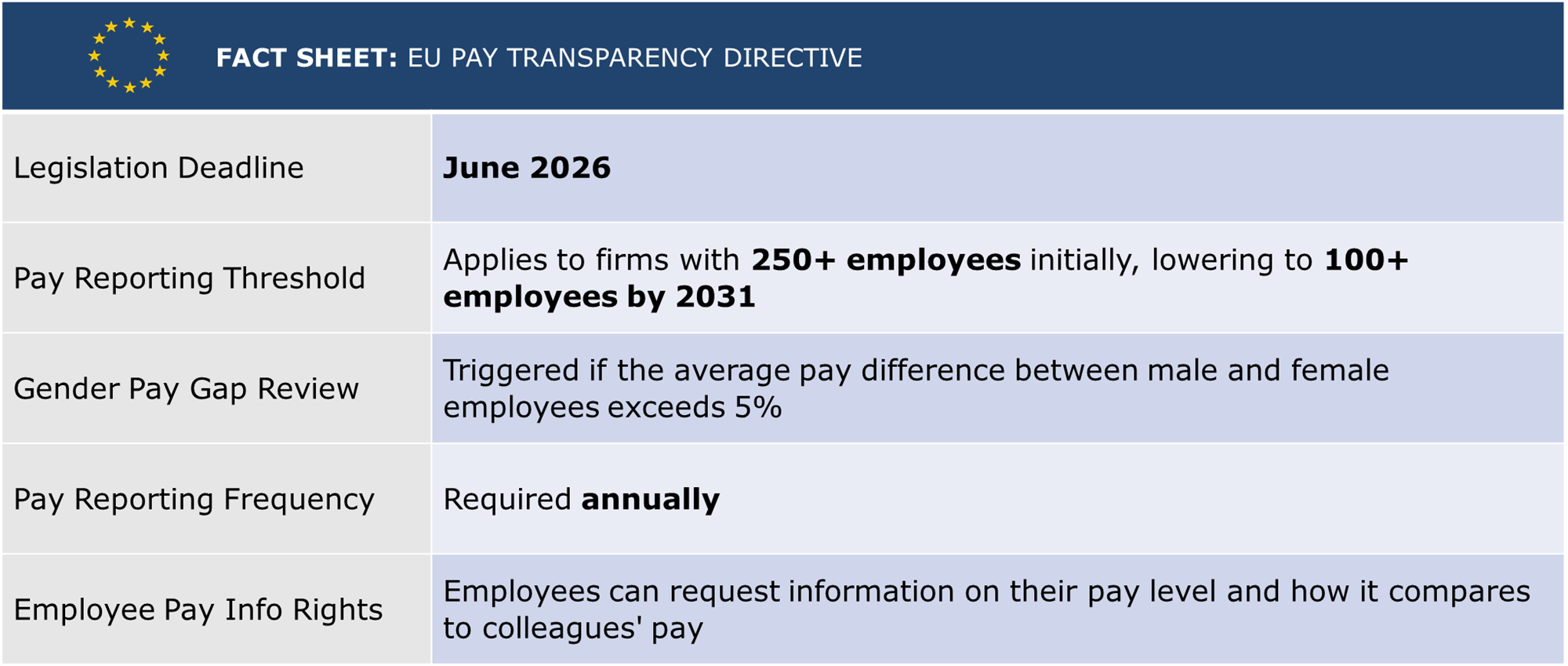
- Gender pay gap reporting: Employers with 250+ employees must report annually, with the first reports due in 2027. Employers with 150–249 employees will report every three years from 2027. Employers with 100–149 employees will be brought into scope later under phased national timelines.
- Mandatory corrective action: Where a gender pay gap of 5 percent or more cannot be objectively justified, employers must conduct a joint pay assessment and take remedial action.
- Broader discrimination coverage: The Directive explicitly covers intersectional discrimination, and affected employees are entitled to compensation.
EU Member States must transpose these requirements into national law by 7 June 2026, after which enforcement and reporting obligations will apply according to employer size.
Why the Directive Matters
Despite decades of policies aimed at promoting pay equity, the gender pay gap in the EU remains around 12 percent on average. Structural opacity in pay systems has made it difficult for employees to understand how pay is determined and for authorities to detect discrimination. By mandating transparency, the Directive seeks to transform pay equity from principle into practice.
Improved transparency has the potential to generate meaningful benefits. Research by labour unions suggests that even modest reductions in pay gaps could translate into significant annual earnings increases for many workers. Beyond compliance, transparent pay systems also foster trust with employees, strengthen employer brand, and enhance talent attraction.
Current Organisational Readiness
Recent surveys indicate that many organisations are still in the early stages of preparing for the Directive. A 2025 survey of HR professionals in Germany found that only one in three HR managers were familiar with the Directive’s details. Nearly half of respondents expected implementing the changes to take more than six months, and many cited concerns about additional workload and potential internal conflicts. At least ten EU Member States had taken no steps toward implementation by late 2025, while others were in draft or partial stages of preparation.
Implications for Compensation Teams
The Directive has several practical implications for compensation and HR teams:
- Compensation Structure Review and Redesign: Organisations must ensure that pay structures are defensible under transparency scrutiny. Broad pay grades and informal pay practices must give way to clearly documented, objective, and gender-neutral criteria. Pay decisions must align with job architecture and evaluation systems.
- Pay Gap Reporting and Analytics: Teams must collect, analyse, and report pay data by gender and pay category. This requires accurate, governed data, structured processes for analysis, and mechanisms to address pay gaps exceeding five percent without valid justification.
- Recruitment and Job Advertising: Salary transparency now requires organisations to include pay ranges in job postings or provide this information early in the hiring process. Compensation teams must carefully define salary bands to maintain internal equity once disclosed publicly.
- Talent Attraction and Employer Branding: Transparent pay practices can become a competitive advantage, attracting top talent and building trust with employees and candidates.
Practical Steps to Prepare
To meet the Directive’s requirements, organisations should begin preparations immediately:
- Educate HR, legal, finance, and executive teams about the Directive’s scope, timelines, and obligations.
- Audit pay data, job classifications, and pay bands to identify gaps or inconsistencies.
- Update job evaluation methodologies and pay policies to align with objective, gender-neutral criteria.
- Build repeatable processes for ongoing pay gap reporting and data governance.
- Prepare internal communication strategies to ensure transparency changes are understood and culturally supported.
- Consider technology solutions that automate data collection, reporting, and analytics to improve efficiency and accuracy.
Starting these steps early helps avoid rushed implementation and positions organisations for long-term compliance and pay governance improvements.
Challenges to Anticipate
Even with preparation, compensation teams will face challenges:
- Policy complexity as countries may interpret the Directive differently, creating a patchwork of requirements for multinational organisations.
- Incomplete or inconsistent pay data, which can make reporting difficult without strong governance.
- Sensitive internal discussions around pay transparency, requiring careful communication to maintain trust.
Non-compliance carries legal risk and can damage employer brand and employee trust.
Turning Compliance Into Advantage
While the EU Pay Transparency Directive introduces increased scrutiny and workload, it also offers an opportunity. Organisations that approach transparency strategically can strengthen pay governance, improve employee trust, and enhance employer branding. Clear, fair, and well-structured compensation systems will not only meet legal requirements but also provide a competitive edge in attracting and retaining talent.
For compensation teams, the Directive represents a clear mandate: transparency is coming, and the question is whether it arrives as a disruption or as a capability the organisation is ready to lead.
Supporting Pay Structures Under Increased Scrutiny
Vencon Research advises organisations on how to prepare pay structures for the practical realities of pay transparency. Using market-aligned benchmarking data, we help compensation teams test pay ranges, job matching, and progression frameworks against external practice and identify areas of potential exposure ahead of implementation.
Our advisory work goes beyond supplying data. We work with clients to interpret market evidence, assess pay gap risk, and ensure that pay decisions can be clearly explained to employees, leadership, and regulators once transparency requirements apply.
More information on our advisory services is available here.
EU Pay Transparency Becomes Law in 2026: What Compensation and HR Teams Should Expect
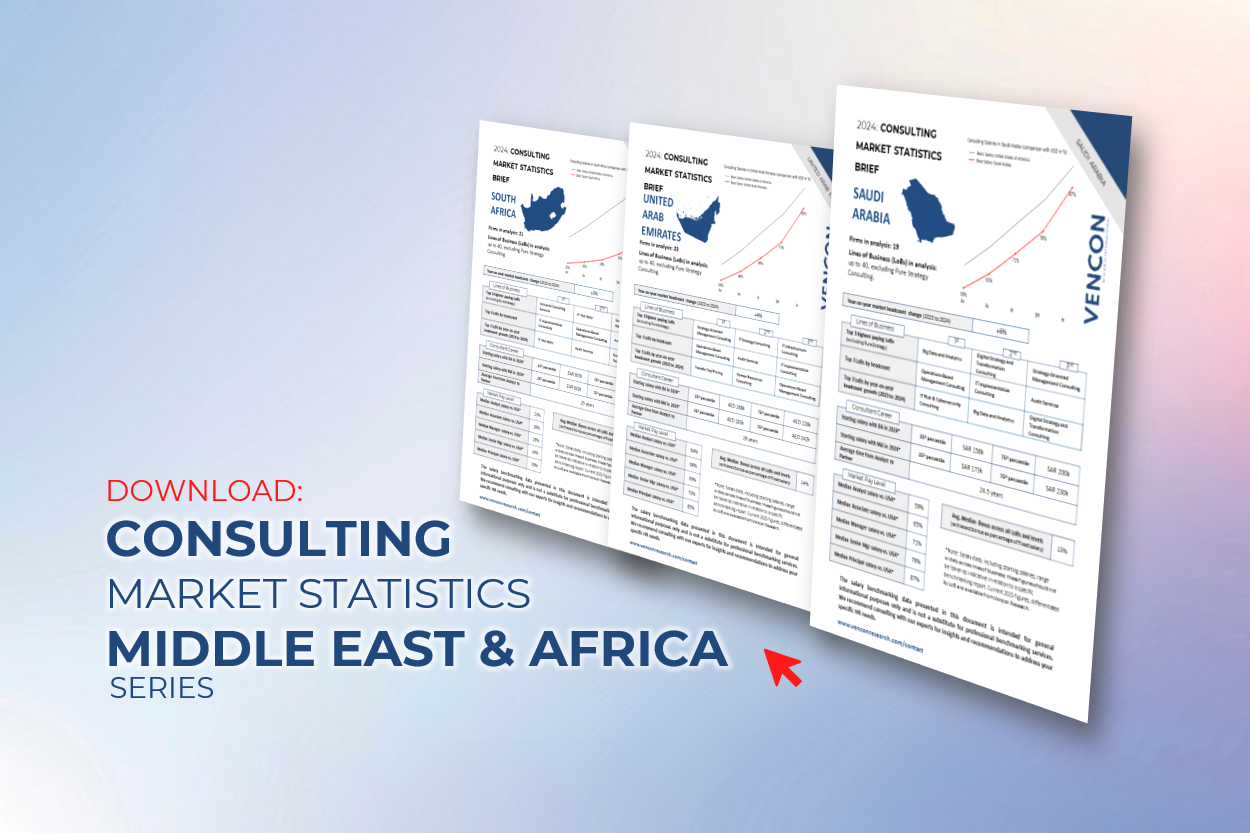
This series of briefs consolidates essential HR indicators for the consulting sector across three markets in the Middle East and Africa: the United Arab Emirates, Saudi Arabia, and South Africa. It provides a comparative view of compensation positioning, workforce structure, career progression, and service line dynamics across the region.
Download: Middle East & Africa Consulting Market HR Insights 2024-2025

By Mik Bodnar - Business Development
As AI has matured from isolated pilots to enterprise-wide deployment, it has become a central pillar of business change. Consulting firms including Accenture, Deloitte, McKinsey, Bain, EY, KPMG, PwC, IBM, Infosys, TCS, Wipro, and Oliver Wyman have expanded AI-related offerings in response to sustained client demand.
Across firms, these services tend to fall into two broad categories: Insight & Transformation and Implementation & Managed Services. Together, they reflect the strategic and operational sides of AI adoption—defining both what AI should deliver and how it is embedded at scale.
AI Consulting: Insight & Transformation
Definition This segment focuses on setting direction. It covers strategy, governance, ethics, industry perspectives, and workforce change.
Core question What should AI mean for our business?
Strategic AI Consulting
Strategic AI Consulting helps organizations identify where AI can create material value and how it fits into broader operating and growth models. McKinsey’s QuantumBlack unit, for example, supports clients in prioritising high-impact use cases and building adoption roadmaps that extend beyond pilots.
AI Governance, Risk & Ethics
Governance and risk services establish guardrails for responsible AI use, addressing compliance, transparency, and ethical considerations. Deloitte’s Trustworthy AI framework illustrates how firms help clients balance innovation with regulatory scrutiny and reputational risk.
Industry-Specific AI Strategy
AI strategies are increasingly tailored by sector. EY, for instance, advises financial institutions on AI-driven fraud detection while ensuring alignment with regulatory requirements and model risk standards.
Workforce Transformation
Workforce-focused services prepare organisations for AI-enabled ways of working. This includes role redesign, reskilling, and change management. Bain’s work with retailers on AI-supported inventory and demand planning highlights the emphasis on human–AI collaboration rather than automation alone.
AI Consulting: Implementation & Managed Services
Definition This segment focuses on execution—deploying, operating, and scaling AI in day-to-day environments.
Core question How do we make AI work consistently in practice?
AI Implementation & Integration
Implementation services cover the deployment of AI platforms, models, and automation into existing processes. Accenture’s AI Studio, for example, supports the integration of generative AI into customer service functions to improve responsiveness and personalisation.
AI Product & Solution Development
Here, consultants design and build bespoke AI applications, such as predictive analytics tools or domain-specific generative AI solutions. IBM’s work with healthcare providers on clinical data analysis illustrates this product-oriented approach.
Managed AI Services
Managed services focus on ongoing performance, monitoring, and optimisation. Infosys provides managed AI operations for manufacturing clients, ensuring predictive maintenance models remain accurate as conditions and data change.
Data & Cloud Enablement for AI
AI at scale depends on modern data and cloud foundations. TCS supports organisations in migrating legacy systems to cloud environments, enabling more advanced analytics and model deployment.
Why AI Consulting Matters for Firms and Talent Leaders
AI consulting has become a core practice area, combining strategic advisory work with deep technical execution. Yet growth in this space is constrained by talent availability. Demand for consultants who can bridge business context and advanced analytics continues to exceed supply.
For HR and compensation leaders, access to reliable market data on AI consulting roles is therefore critical. Salary benchmarks support competitive pay structures, internal equity, and retention—particularly as firms compete not only with peers but also with technology companies and startups. Without clear market reference points, consulting firms risk losing scarce AI talent just as these capabilities become central to client value delivery.
AI transformation places new demands on roles, skills, and pay structures. Vencon Research provides HR advisory services alongside compensation benchmarking to help consulting firms make data-backed workforce and pay decisions.
AI Consulting in Practice: Insight & Transformation vs. Implementation & Managed Services
By Andy Klose - Associate Partner
The consulting industry in the Middle East, particularly in the United Arab Emirates (UAE) and in the Kingdom of Saudi Arabia (KSA), has experienced a period of rapid growth post-COVID-19. However, recent economic shifts – especially budget cuts in Saudi Arabia’s public sector – have significantly affected management consulting companies operating in the region. While consulting companies in both the UAE and KSA continue to seek sustainable growth, they are facing challenges related to talent acquisition, retention, and compensation structures. This paper explores the key trends in the consulting industry, with a focus on their impact on the talent market and firm operations.
Saudi Arabia: The Epicentre of Consulting Demand
The Kingdom of Saudi Arabia remains the most significant market for consulting services in the region, particularly within its semi-public and government sectors. Many consulting companies have built their business models around serving Saudi clients, and the recent budget cuts have had a profound impact:
- Demand for consulting services has declined across various government projects.
- Most consulting companies have seen their growth slow down, with only a few maintaining the pace of previous years.
- Achieving ambitious revenue and profitability targets has become increasingly difficult for consulting companies.
Despite these challenges, Saudi Arabia remains a crucial market, and consulting companies are adjusting their strategies to adapt to the new landscape.
Increasing Sophistication of Clients and Changing Project Expectations
Clients in the region, from both the private and the public sector, are evolving in their approach to consulting services, which may have an impact on how consulting companies operate and compete:
Key Trends in Client Expectations
- Higher Sophistication: Clients demand deeper expertise and more tailored solutions from consulting companies (including more expertise with regards to the needs of SMEs).
- Longer Project Timelines: Consulting projects are taking longer to execute as clients scrutinize deliverables more closely.
- Shift Toward Smaller Firms: More clients in the region seem to be open to working with boutique consulting companies instead of relying solely on big brand names, creating additional competitive pressure from below.
- Implementation-Focused Consulting: Clients require more than just PowerPoint presentations; they need consulting companies with strong execution and operational expertise.
- Capability Building: Clients seek support in developing internal skills and knowledge instead of continuously outsourcing these capabilities to external consultants.
Implications for Consulting Firms
To succeed in this evolving environment, consulting companies should:
- Strengthen their ability to execute strategies beyond “pure” strategy or advisory work.
- Invest in training programs that help their clients develop in-house expertise.
- Offer practical, hands-on solutions rather than theoretical recommendations.
- Differentiate themselves through specialized expertise rather than relying solely on brand recognition.
Talent Market Pressures in the UAE
Unlike the KSA, the UAE consulting market is facing an overheating talent market with:
- Stagnant Compensation: Consulting salaries are said to have “maxed out”, making it difficult to keep increasing financial incentives as in the recent past. One consulting firm reported that a 5-8% pay increase for every promotion is no longer sustainable from a cost perspective.
- Employee benefits Under Review: As a result of these cost pressures, benefits were mentioned to be a “key differentiating factor” to be increasingly cost effective.
- Rising Cost of Living: The higher cost of living in Dubai and Abu Dhabi is putting pressure on consulting companies to increase allowances, which in turn is affecting profitability. In particular, the cost of accommodation was cited as a critical factor, with the rent for a two-bedroom apartment now as high as a villa with a garden would have been a few years ago. The cost of international schools has also risen significantly.
- Layoffs and Hiring Freezes: Some consulting companies have stopped and delayed hiring or even laid off staff to control costs and improve margins. It was mentioned that firms were more rigorous in their recent performance evaluations than in previous years, letting go of underperformers.
- Shift in Hiring Strategies: Also, some consulting companies are becoming more selective, hiring specialized talent for client or project-based needs rather than generalist consultants. Hiring for IT-related consulting services and subject matter expertise remains at high levels.
The result is a strategic shift in workforce allocation, with more firms opting to place or to hire consultants in the KSA instead of the UAE, where local talent is increasingly available. Also, it was said several times that consulting firms are focussing in the near term more on enhancing their benefits packages as the main differentiator in the talent market.
Evolving Workforce Strategies in Saudi Arabia
The Kingdom of Saudi Arabia has seen a notable improvement in the availability of junior consulting talent. Consulting companies that have invested in strong graduate and internship programs are benefiting from a steady pipeline of entry-level consultants. However, the mid-to-senior level talent pool remains highly competitive:
- Government Sector Competition: While there is no shortage of well-educated Saudi labour, many mid-to-senior-level consultants are being poached by government entities offering attractive compensation packages, leading to high attrition rates. Beyond better pay, many professionals are drawn to government roles for a better work-life balance.
- Localization Pressures: Saudi clients, particularly in the public sector, increasingly prioritize local hires and cultural alignment. This includes:
- Fluency in Arabic.
- Understanding of Saudi business customs.
- Strong local networks for business development.
To address these challenges, some consulting companies are taking innovative approaches to hiring senior-level talent:
- Hiring Senior Consulting Staff from Outside Consulting: Some firms are bringing in senior candidates from industry roles in the hope that they can provide valuable client connections. However, failure rates seem to be high, often due to a lack of sales acumen and consulting expertise.
- Increasing Local Presence: Consulting companies are pressured to have “troops on the ground” to compete for major government contracts. The Saudi government requires firms to demonstrate a local commitment, including adherence to Saudization quotas (40% of staff being Saudi nationals).
Compensation and Workforce Mobility Challenges
As consulting companies adapt to the evolving landscape, compensation strategies are also changing:
- High Costs for Senior Expats: The shortage of mid- to senior-level talent has forced consulting companies to rely on expatriates. However, relocating expats from the UAE to the KSA is expensive, as Saudi Arabia is still considered a “hardship location” from an expat's perspective. And it was said that hiring an expat to work in the KSA would cost 1.25 times more than hiring a Saudi national.
- Reduced Willingness to Relocate: Several international consulting companies noted that they receive many applications for relocation to the UAE from other countries. Once in the UAE, expats are also more inclined to stay, as one firm put it, “This is the highest paying region (in addition to no income tax and a comfortable lifestyle). Everybody wants to come and nobody wants to leave”.
- Dual Contracts for Expats: To mitigate costs, some consulting companies employ dual contract structures:
- A significant portion of the salary is paid in the UAE, where the consultant’s family resides.
- A smaller portion is paid in Saudi Arabia, where the consultant works for 3-4 days per week.
- Alternative Talent Pools: Some consulting companies have started flying in consulting staff from lower-cost countries from Egypt, Jordan, and Lebanon. However, this approach presents challenges such as:
- Visa and work permit complexities.
- Additional allowances required for travel and accommodation.
- Higher attrition rates due to (longer) travel chore and equality concerns.
The Future of Consulting in the Middle East
The Middle East consulting industry is undergoing a transformation driven by economic shifts, talent dynamics, and localization requirements. Consulting companies may adapt their strategies to remain competitive by:
- Investing in Local Talent Pipelines: Strengthening internship and graduate programs to develop homegrown consulting talent.
- Balancing Compensation and Cost Management: Rethinking expat pay structures and leveraging innovative mobility solutions like dual contracts.
- Enhancing Local Market Access: Hiring (senior) professionals with deep local connections while ensuring they have the necessary consulting skills and sales acumen.
- Optimizing Workforce Deployment: Using a mix of onshore, nearshore, and offshore talent to manage costs while maintaining service quality.
- Aligning with Client Expectations: Adapting to client demands for:
- More implementation-driven consulting.
- Stronger internal capability-building efforts.
- IT-related consulting services and subject matter expertise.
- Broader acceptance of smaller consulting firms as credible advisors.
- By proactively addressing these challenges, consulting firms can position themselves for sustained success in both the UAE and KSA markets.
We would be pleased to assist you with any additional inquiries or questions you may have.
Andy Klose is an Associate Partner at Vencon Research International and heads the firm’s consulting unit.
Vencon Research International is a leading provider of compensation benchmarking and research as well as of compensation and performance-related consulting services for professional service firms, especially for audit and tax, management consulting, and IT services firms. Vencon Research International provides services to a full range of clients in more than 75 countries worldwide and is proud to name more than 85% of the world’s major consulting and/or professional services firm its clients.
Middle East Consulting: Talent Market and Compensation Insights

By Mik Bodnar - Business Development
Consulting firms are facing unprecedented competition for talent as tech companies and financial institutions lure top candidates with lucrative packages. Entry-level analysts, digital specialists, and data experts are increasingly weighing opportunities outside consulting, forcing firms to rethink compensation, career development, and workplace flexibility to attract and retain the best professionals.
Rising Salaries Reflect Market Pressure
The competition for talent between consulting firms and the tech and financial services sectors has intensified in recent years. Vencon Research data shows that consulting salaries, particularly for entry-level analysts and specialist roles, are being adjusted upward to remain competitive with the lucrative packages offered by technology companies and investment banks.
While consulting firms traditionally attracted graduates with the promise of diverse project exposure and rapid career progression, they now face direct competition for the same pool of quantitative thinkers, digital strategists, and subject matter experts who are equally sought after in fintech, data science, and corporate strategy roles. Boutique consultancies, unable to match the largest firms or banks on base pay, are differentiating through culture, flexibility, and work-life balance, positioning themselves as attractive alternatives for professionals seeking purpose and autonomy.
Roles Most Affected by Talent Mobility
The roles most likely to transition from consulting into tech and finance are entry-level analysts and mid-level managers with specialized expertise in areas like data analytics, cybersecurity, and financial modeling. Senior partners and managing directors, by contrast, tend to remain within consulting due to the unique equity and client-ownership structures of the profession.
Recruitment trends highlight how consulting, finance, and tech are converging on similar talent pools. We see this trend relfected in demand for benchmarking across sectors. Consulting firms are expected to increase full-time and internship hiring in 2025 after a slowdown in 2024, reflecting renewed demand for advisory services. Finance firms, meanwhile, are rethinking recruitment by broadening strategies to digital platforms and specialized networks to attract candidates with both technical and ESG expertise. Tech companies continue to lead in skills-based hiring, with focus on critical skills such as AI, data analytics, and cybersecurity, but consulting firms are also investing heavily in these candidates.
Across industries, flexible work arrangements and strong employer branding are now essential to attract candidates, with hybrid and flexible models becoming decisive factors in recruitment success.
Global Talent Hubs Intensify Competition
Geographically, the competition is most pronounced in global talent hubs such as the United States, the United Kingdom, Germany, and Singapore, where consulting firms, banks, and tech giants all recruit from the same elite universities and professional networks. In these markets, the challenge for consulting firms is not only to match compensation benchmarks but also to craft a compelling narrative of career development and cultural differentiation that resonates with a new generation of professionals.
Beyond pay, consulting firms can deploy non-financial levers such as hybrid work models, sabbatical programs, and transparent promotion criteria to appeal to talent who value stability and culture as much as compensation. Thus benefits packages are increasingly in focus, and we see a corresponding uptick in benchmarking for these non-financial rewards.
Compensation Remains a Central Battleground
Ultimately, compensation remains a central battleground. Tech and finance firms often lead with higher base salaries, equity participation, and performance bonuses, while consulting firms emphasize structured career paths, training, and international mobility. Strategies for consulting firms include raising entry-level packages to prevent attrition to tech startups or offering retention bonuses for mid-level managers with digital expertise.
For consulting HR leaders, the implication is clear: To compete effectively, market data must be used to identify critical pay gaps, selectively adjust pay scales for critical roles, and emphasize non-financial differentiators such as culture, flexibility, and career development. Partnering with a specialized benchmarking provider like Vencon Research can ensure your firm attracts and retains the right talent while staying ahead of industry trends.
Consulting Faces Intensified Talent Competition from Tech and Finance

By Gunjan Kalwani and Noel Tetteh - Data Integrity
Vencon Research’s proprietary compensation benchmarking data reveals a decisive shift in the consulting landscape. While five core Lines of Business (LoBs); Strategic Consulting (SCF), Management Consulting & Advisory (CON), Human Resources Consulting (HRC), Corporate Finance & Transactional Services (CFT), and IT Consulting (ITC) continue to define value creation globally, the highest growth is now concentrated outside traditional hubs.
This report identifies the emerging markets where national ambition is generating multi-year, project-driven demand, presenting a strategic expansion opportunity for firms with global ambitions.
Established Markets: Consistent Demand Profiles
Out of the 40+ LoBs Vencon Research tracks across 70+ countries, distinct regional specialties emerge.
These mature markets show stable demand, with each maintaining a consistent profile:
United States of America & United Kingdom: Dominance in high-level Strategic consulting and Management advisory.
Germany: Strong Management consulting, complemented by robust Technology and industrial advisory.
Singapore: A focus on Management and Operational consulting (OPO), aligned with its role as a financial hub.
United Arab Emirates: Prioritizes Strategic and Management consulting (CON) in line with its ‘We the UAE 2031’ vision.
Australia: Driven by digital transformation, demanding both Technology and Strategic consulting.
France: Uniquely balanced demand across all service areas.
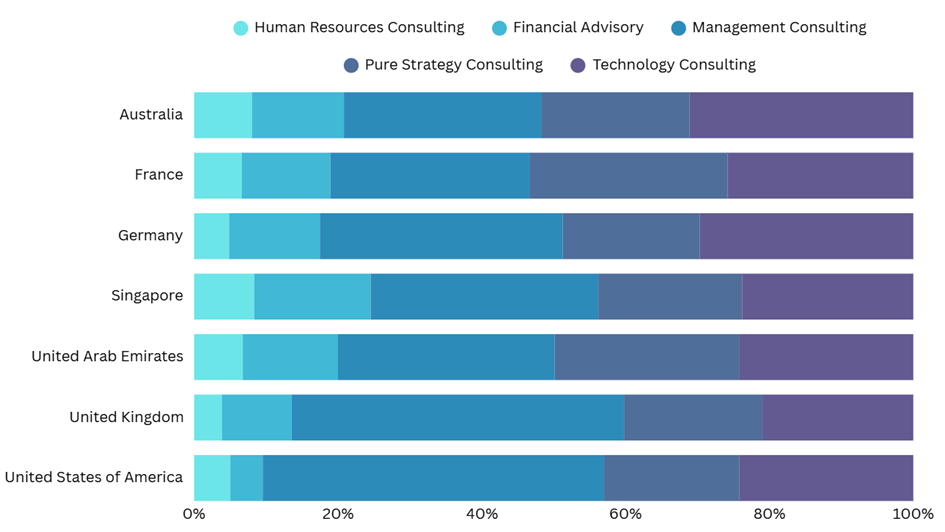
Growth Markets: Expanding Demand Across Core Services
Our Market Engagement Index (MEI) below shows a fundamental reallocation of consulting resources. Strategic focus on key emerging markets has more than doubled since 2020. These are not fleeting opportunities but stable, long-term gateways to their regions, characterized by sustained, double-digit growth across core LoBs.
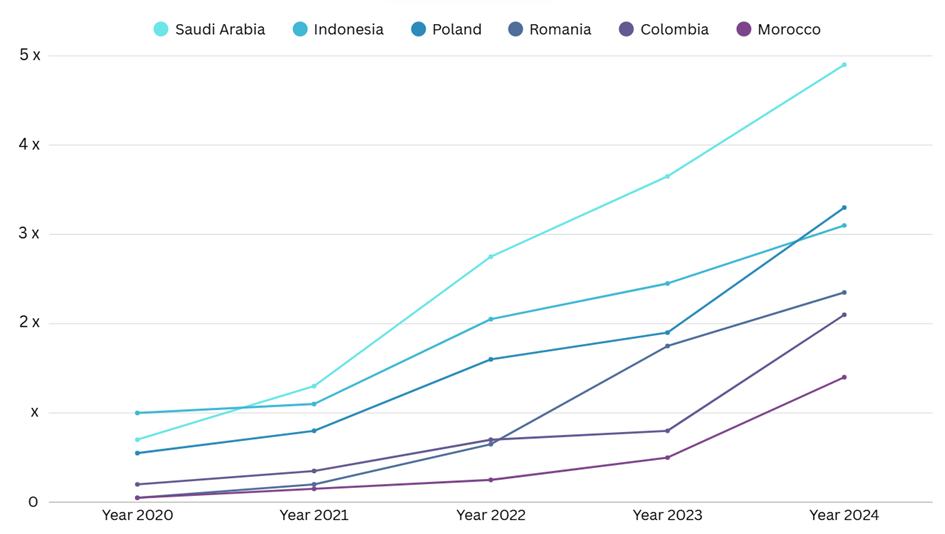
Country-Level Analysis: Markets with Rising Demand
Saudi Arabia
Key Driver: Saudi Arabia’s ‘Vision 2030’ transition from strategy to execution.
LoB Impact: Demand has shifted from SCF for giga-projects planning to a rise in OPO for implementation and ITC for digital infrastructure. HRC growth remains steady, driven by talent competition and regulation.
Poland & Romania
Key Drivers: Poland’s €60 billion EU recovery fund; Romania’s $1.3 billion tech sector.
LoB Impact: BDA and Digital Strategy projects have more than doubled. ITC growth has exceeded 150%, fuelled by smart city and cybersecurity mandates. SCF and CFT have grown significantly as local companies have matured and deal activity has nearly tripled.
Morocco
Key Driver: The "Digital Morocco 2030" strategy and 2030 World Cup preparations.
LoB Impact: The entire CON segment is growing, split between OPS for strategic advisory on cloud and AI, and OPO for the physical execution of 5G rollout and digital infrastructure.
Colombia
Key Drivers: A thriving fintech sector, exemplified by the successful launch of the Bre-B payment system, and a focus on green energy.
LoB Impact: Sustained growth in ITC from digitalization, complemented by rising CON demand for ESG transitions. A 55% surge in international hiring (Deel) is creating new needs in HRC for global workforce integration.
Indonesia
Key Drivers: The $32.7B Nusantara capital city, a $146B digital economy, and a $172B initiative to restructure and modernize state-owned enterprises.
LoB Impact: Our MEI shows rising demand across the board:
- SCF, DIG, BDA: For new city planning and digital economy strategy.
- ITC: For cloud and cybersecurity infrastructure.
- HRC, DIG, ITC: Driven by the formalization of 62 million SMEs.
- SCF, CON, BDA: For green finance and ESG linked to the 2060 net-zero goal.
Implications for Consulting Firms
The data mandates a strategic response. To remain competitive, consulting firms must:
- Recognize the Shift: The growth of these emerging hubs marks a fundamental reorientation of the global consulting market.
- Pivot Resources Strategically: To compete, firms must deliberately reallocate focus and investment to these regions.
- Establish a Local Presence: Build a strong physical presence in these markets.
- Invest in Local Talent: Prioritize the recruitment and development of in-region expertise to ensure relevance and execution.
- Specialize in High-Demand Services: Build deep, specialized capacity in the core service lines driving growth: DIG, BDA, ITC, OPO.
Growth Markets
The market is sending a clear signal. We are seeing a fundamental shift in where the real growth is happening for consulting firms. The most consistent and sustained demand is no longer confined to the traditional hubs, but is anchored in markets where national development agendas and national ambitions are generating multi-year project pipelines. For consulting firms looking to build a lasting advantage, these regions represent an opportunity not to be missed.
Benchmarking demand is key to growth. Vencon Research identifies the markets and service lines driving sustained consulting opportunities, giving your firm the insights needed to focus resources and capture high-growth regions.
Shifting Patterns in Global Consulting Demand: A Benchmarking Analysis

By Deepali Bist, MBA & Osas Ohenhen - Business Development
In compensation benchmarking, timing is everything. One often overlooked but critical factor influencing accuracy is a firm’s financial and salary review cycles — of which the financial year (FY) is often a key reference point.
For consulting firms (and indeed for many organizations), understanding the timing nuances is not just an accounting formality; it is a strategic cornerstone for effective remuneration planning and decision-making.
What Is a Financial Year (FY)?
A financial year (FY) is a 12-month period an organization uses for financial reporting and performance measurement. While some firms align their FY with the calendar year (January–December), others adopt alternative cycles such as:
- April–March (e.g., Big4 India, most UK based consulting firms)
- July–June
- October–September (common among several Big4 firms globally)
These choices typically reflect tax regulations, business seasonality, or internal strategic preferences. As a result, peer firms within the same industry may operate under different FY cycles, which can influence when they set budgets, review salaries, and adjust remuneration components.
Understanding these timelines ensures benchmarking efforts reflect the right data points in the right context.
Why FY Alignment Matters in Compensation Benchmarking
Financial year alignment is crucial for ensuring compensation benchmarking delivers accurate, actionable insights. It affects planning, salary review timing, and remuneration components.
1. Planning & Budgeting
Most firms align salary increases and bonuses with their FY. A mismatch in timing can distort benchmarking insights.
Example: Firm ABC Consulting follows an April 2025–March 2026 FY (FY26) but did not finalize its budget until December 2025. As a result, they only received benchmarking data in April 2026, by which time many peer firms had already reviewed and adjusted salaries.
Consequently, ABC’s benchmarking data appeared inflated or outdated — not because the market had changed dramatically, but because the comparison timing was misaligned.
Best Practice: Firms should synchronize benchmarking cycles with their budgeting and salary review windows to ensure market data reflects the most relevant and current pay decisions.
2. Salary Review Cycles
Salary review cycles vary significantly across firms and markets. Understanding when peers conduct reviews helps maintain competitiveness and prevent attrition.
Example: In India and the UK, salary reviews often occur around April, aligning with the April–March FY. So a simple example of how a firm with a financial year spanning April 1, 2025 – March 31, 2026 (FY26) might structure its remuneration planning:
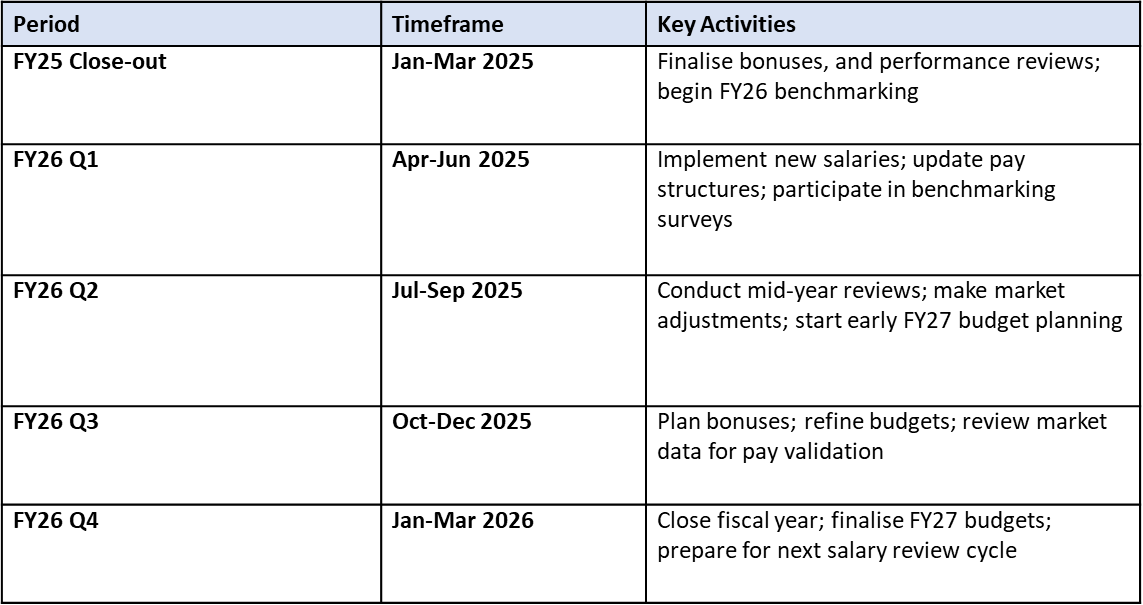
Best Practice: To stay aligned, firms should:
- Identify peer firms’ salary review months within each market.
- Incorporate effective date mapping into their benchmarking framework.
- Use multi-market benchmarking data carefully, ensuring timing equivalence.
3. Remuneration Components
Beyond base salary, FY cycles influence a range of pay elements linked to financial performance, including:
- Bonus pay-outs (individual and company performance)
- Long-term incentives (LTIs)
- Fixed overtime (e.g., Japan)
- Allowances (e.g., India, Mexico, Brazil, Belgium, UAE)
- Gratuity and pension contributions (e.g., India’s PF, Australia’s Superannuation)
- Profit-sharing
These components often follow fiscal performance outcomes, meaning that aligning benchmarking with FY cycles ensures accurate comparisons of total remuneration.
Risks of Overlooking FY in Benchmarking
Overlooking FY differences can lead to:
- Misinterpreted market data
- Mistimed salary reviews
- Inaccurate budgeting
- Loss of top talent
Global HR leaders often face additional complexity due to market-specific pay structures. For instance:
- France: Profit-sharing schemes (Participation and Intéressement)
- Belgium/Luxembourg: Representation allowances
- India: Gratuity and Provident Fund
- Australia: Superannuation
For multinational consulting firms, these considerations are interconnected. Failing to integrate such region-specific components into FY-aligned benchmarking can result in significant data inconsistencies and inaccurate pay comparisons.
Understanding Fiscal Naming vs Salary Validity
There is often confusion between fiscal year naming and salary validity.
For a firm with April 1, 2025 – March 31, 2026 (FY26):
- March 2025: FY25 ends.
- April 1, 2025: New salaries take effect (referred to as 2025 salaries).
- These salaries remain valid until March 31, 2026 (FY26).
In short: Even though the fiscal year is called FY26, the salary adjustments effective April 2025 are 2025 salaries, since they take effect in calendar year 2025.
Understanding this distinction prevents confusion when comparing data across firms using different fiscal and salary naming conventions.
Vencon’s Approach: Turning Timing Complexity into Benchmarking Clarity
At Vencon Research, we recognize that timing alignment is not just administrative — it is strategic. Our experience supporting consulting and professional services firms enables us to help HR leaders:
1. Align Benchmarking Cycles with Firm-Specific FY Structures
- Data Continuity: We collect and refresh data continuously, delivering “point-in-time” reports aligned with clients’ salary review cycles. For example: A survey with data up to June 30, 2025 remains valid through May 2026.
- Data Collection: Our questionnaires capture key timing details — salary effective dates, review periods, and bonus pay-out months — ensuring precise interpretation.
- Market Validity Mapping: We validate each market’s data against local pay cycle trends to prevent temporal distortion.
2. Interpret Market Data in the Correct Timing Context
- Example – Turkey: Due to high inflation and currency volatility, we collect data at a single point (e.g., 31 October 2025) for a realistic snapshot.
- Example – Bulgaria: With euro adoption scheduled for 1 January 2026, our pre-transition survey provides insights into how peers manage conversions, rounding, and timing communication.
3. Build Efficient, Data-Driven Review and Budgeting Processes
We help clients integrate benchmarking outcomes directly into budget planning tools, ensuring that FY-linked pay reviews and financial planning are data-driven, consistent, and actionable.
Strategic Implications
While fiscal calendars and salary reviews may appear technical, their implications for compensation benchmarking are strategic.
For consulting firms seeking to strengthen remuneration planning, improve timing, and retain high-performing talent, aligning compensation benchmarking with your financial year is a crucial practice. Reach out to Vencon Research to ensure your next review cycle is built on accurate, industry-specific data.
Timing is Key: Why Financial Year Alignment Matters in Compensation Benchmarking

By Gonzalo Lavín Alfaro - Business Development Manager
While consulting has developed along broadly similar lines worldwide, each region exhibits distinct strengths shaped by its economic structure, client base, and regulatory landscape. Western Europe and North America remain established centres for general management and strategy consulting, and regions such as Eastern Europe and India are recognised for their focus on IT and implementation. In contrast, Latin America stands out for a more diverse consulting landscape — one defined by operational depth, regulatory complexity, and accelerating growth in emerging service areas.
In this overview, we take a closer look at the consulting landscape across Latin America — highlighting where firms are most active, how service lines are evolving, and what this means for compensation trends across the region.
Sustainability and ESG Advisory
Sustainability and ESG consulting are emerging as dynamic growth areas, particularly in energy, mining, and agriculture. As local regulations evolve and investor expectations rise, demand for advisory work in sustainability reporting, carbon management, and responsible supply chains is increasing rapidly.
Operations and Efficiency Improvement
Latin America’s consulting sector has traditionally centred on operational excellence. Many local and regional firms built their reputations on helping clients optimise processes, reduce costs, and improve supply chain performance. This remains a key focus area across industries such as manufacturing, logistics, and energy, where operational improvements often deliver faster, more tangible returns than strategic repositioning.
Finance, Risk, and Regulatory Advisory
The complexity of local tax and compliance environments — particularly in countries such as Brazil and Argentina — has driven consistent demand for consultants who can navigate these challenges. Advisory work in corporate governance, internal controls, and financial risk management continues to represent a significant share of consulting activity in the region.
Implementation and Digital Transformation
Implementation-oriented consulting has expanded rapidly, driven by growing investment in technology and automation. Multinational firms increasingly view Latin America not only as a delivery base but also as a developing market for digital services, with strong momentum in ERP implementation, process automation, and data analytics.
Human Capital and Organisational Consulting
Human capital consulting plays an important role, particularly within large domestic conglomerates and subsidiaries of global firms. Engagements often focus on organisational design, compensation, and talent management — reflecting the region’s focus on workforce adaptability and productivity.
Strategy Consulting
Strategy consulting, while smaller in overall scale, is concentrated in the region’s largest and most internationally connected economies: Brazil, Mexico, and Chile. Here, companies are more likely to invest in strategic transformation, international expansion, and market-entry projects.
Expected Salary Increases in Latin America
Despite higher inflation than the OECD average, Latin America’s consulting industry continues to show steady growth. With relatively limited geopolitical disruption compared to other markets, countries such as Colombia, Mexico, and Brazil are leading salary growth projections — expected to exceed 5.3% in many cases. This reflects the region’s rising demand for skilled professionals and sustained investment in expanding service lines such as ESG, digital transformation, and implementation.
Nearshoring and Delivery Centres
The region, particularly Mexico, has become an important hub for nearshoring and delivery centres serving North America and other markets. The transfer of business operations to nearby, lower-cost locations has long been associated with India and Eastern Europe, but Latin America is increasingly capturing this activity. Proximity to clients, time-zone alignment, and cost advantages are driving consulting firms to establish or expand delivery centres in the region, creating new opportunities for talent and service delivery.
Understanding how consulting work is distributed across lines of business is essential when assessing compensation levels. Even within the same country, firms may vary widely in focus and service mix, influencing both pay structures and career paths.
Vencon Research’s benchmarking products capture these distinctions by matching roles precisely by line of business, level, and local market context. This enables consulting firms to make accurate, meaningful comparisons when reviewing compensation within their market.
Explore Vencon Research’s benchmarking services ›
Consulting in Latin America: A Market Defined by Operational Depth and Emerging Specialisations
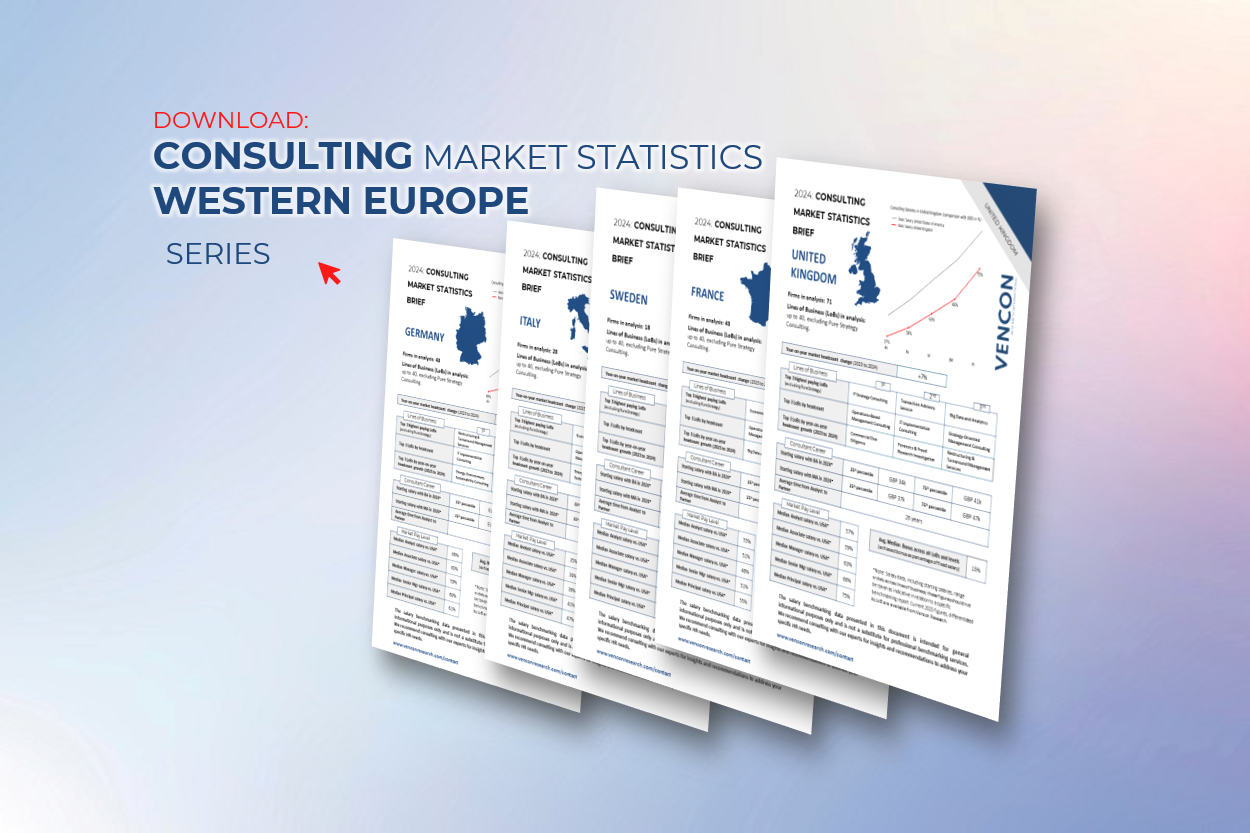
Key HR indicators for the consulting industry
This collection of market statistics briefs highlights key consulting market statistics across four countries in the Western Europe region: United Kingdom, France, Germany, Sweden and Italy. It offers insights into various key factors, such as the highest paying lines of businesses, market growth, starting salaries, career progression, and market pay level.
Notable highlights across Eastern Europe
- The year-on-year market headcount increase across these five countries ranged up to +7%, with “Energy, Environment and Sustainability Consulting” and “Big Data and Analytics” lines of businesses witnessing the largest growth.
- The average time required to progress from analyst level to partner level ranged from 24.5 to 26.5 years, with Germany having the fastest track.
- “Economics Consulting” was one of the highest-paid lines of business and "Restructuring & Turnaround Management Services" also ranked among the top three highest paid in three of five countries.
The sheets also present median salaries for all Vencon Research career levels as percentages of basic salaries paid in the United States. Out of the five countries presented here, consultants in Germany were paid the highest at entry level, while the United Kingdom saw the highest salaries as of Manger level.
Download: Western Europe Consulting HR Stats 2024 to 2025

By Yao Tang - Business Development Manager
In recent discussions with consulting firms in the U.S., one recurring theme has been job hugging: employees remaining in their current roles longer than usual, not necessarily due to engagement or satisfaction, but because external opportunities appear limited or uncertain.
From a Total Rewards standpoint, this trend carries several implications:
- Lower turnover may give an incomplete picture of workforce stability.
- Firms with slower salary progression or career advancement may face sharper attrition once mobility returns.
- Reviewing competitiveness now can prevent costly corrections later.
What Is “Job Hugging”?
Job hugging refers to employees choosing to stay put — often despite feeling underutilised or dissatisfied — rather than pursuing external opportunities. It represents a reversal of the “job hopping” behaviour that characterised much of the post-pandemic period.
Why It’s Emerging
Several factors are contributing to this shift:
- Economic uncertainty and layoff activity: Employees are more risk-averse and value job security.
- Perceived scarcity of external opportunities: A cooling labour market has reduced hiring across sectors.
- Relative comfort: If pay and benefits are broadly competitive, employees may see limited incentive to move.
Implications for Consulting Firms
1. Low Turnover Can Mask Underlying Risk
U.S. quit rates have fallen to around 2% per month (compared with roughly 3% during the peak of the “Great Resignation,” according to the Bureau of Labor Statistics). On the surface, this appears positive — but reduced movement may reflect caution rather than commitment.
When hiring activity picks up again, turnover could accelerate sharply, particularly among high performers who have postponed their next move.
Key point: Low attrition during periods of uncertainty should not be interpreted as loyalty. Job hugging is a temporary pause, not a sign of long-term satisfaction.
2. Slower Career and Pay Progression Amplify Future Attrition
Career growth remains a defining factor for consulting talent. If internal progression is noticeably slower than market norms — for example, where promotion steps take several years longer or salary growth at promotion is smaller — frustration can accumulate even during periods of low mobility.
When external opportunities re-emerge, those who feel “stuck” are often the first to leave.
Key point: Firms with below-market progression structures risk concentrated attrition once confidence returns to the labour market.
3. Proactive Benchmarking Reduces Future Costs
The last period of rapid mobility (2021–2022) showed how quickly pay structures can come under pressure. Firms that had not reviewed salary levels in advance often needed substantial market corrections to retain staff.
Regular benchmarking helps identify misalignments early and allows for phased, measured adjustments — avoiding sudden, reactive pay increases later.
Key point: Periodic benchmarking is not simply about keeping pace; it’s about maintaining readiness when market dynamics change.
Staying Prepared
Vencon Research works with consulting firms across markets, using directly collected and regularly updated compensation data from entry level through senior roles. This provides firms with a clear view of how their salary structures compare today — and how they may need to evolve as market conditions shift.
Accurate benchmarking is ultimately about preparedness. Understanding where you stand now ensures you’re ready when job hugging transitions back into job hopping.
Vencon Research is the largest player in the field of consulting compensation metrics. Our client list includes 85 per cent of the world’s major management consulting firms and we have over 20 years of experience and data at our fingertips. To find out more about our benchmarking products and services, visit our website or get in touch with our team.
HR Trends: Job Hugging in the U.S. and Its Implications for Total Rewards

By Irina Kvirikadze & Makar Evdokimov
Consultant pay is often used as a benchmark for career and business decisions, but headline figures alone rarely tell the full story. Pay may look similar across Germany at first glance, yet local costs mean the real value of a consultant’s salary can vary widely.
Based on Vencon Research’s compensation data, we benchmarked consultant compensation across six major German cities: Berlin, Düsseldorf, Frankfurt, Hamburg, Munich, and Stuttgart. We used our firm-weighted dataset that captures both base salary and bonus (Total Cash Compensation or TCC). To make comparisons more meaningful, we adjusted salaries against the Cost of Living + Rent Index (Numbeo), which reflects the true purchasing power of a consultant (all levels excluding partners) once local expenses are considered.
The results highlight striking differences in how far consultant pay really goes across Germany.
Key Findings
Munich: high pay, high cost
Consultants in Munich earn the most, with median TCC across all levels excluding Partner at just above €104,000. But with a cost index of 62, the steepest in Germany, much of this headline advantage is consumed by living expenses. Munich remains attractive for its prestige, corporate headquarters, and concentration of top-tier firms, but it is far less compelling when measured by net take-home value.
Düsseldorf: the sweet spot
With median compensation of €103,000 across all levels and a relatively modest cost index (54.5), Düsseldorf offers the most attractive balance between earnings and affordability. It consistently ranks as the strongest city for consultants seeking both competitive earnings and reasonable living costs.
Frankfurt: strong pay, middling value
Frankfurt consultants earn a median TCC of €102,200, but the city’s cost index (56.8) places it squarely in the middle of the pack. As Germany’s financial capital, Frankfurt provides stability and opportunity but doesn’t shine in relative value once affordability is factored in.
Berlin vs. Hamburg: a convergence story
Both Berlin and Hamburg cluster at €101,000 median pay with cost indices between 54–56. This is significant: Berlin was historically far more affordable, but rising rents and living costs have nearly eliminated its affordability edge, bringing it level with Hamburg.
Stuttgart: the hidden value play
Stuttgart ranks lowest in consultant pay (€100,200 median across levels), but also lowest in cost index (52.8). For consultants seeking to maximize savings rather than prestige, Stuttgart offers a compelling case as the most cost-efficient city in this comparison.
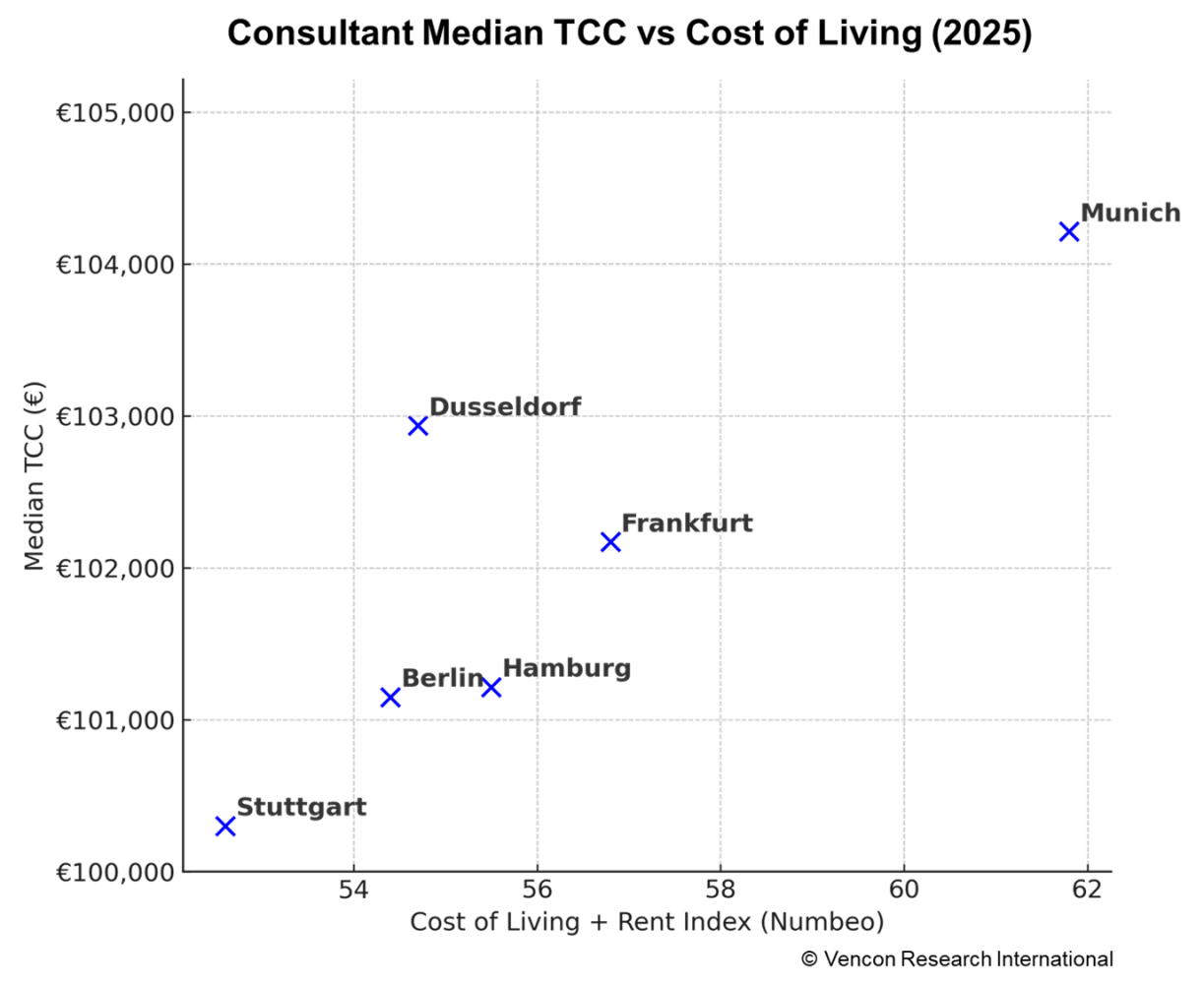
Real Purchasing Power Perspective: The Rankings Flip
Looking beyond nominal pay to purchasing power (PPI 2025) adjusted for cost of living and rent, the rankings shift dramatically:
- Munich drops from #1 in nominal pay to last place (#6) once high costs are included.
- Frankfurt follows a similar decline, slipping down the ranks when affordability is considered.
- Düsseldorf remains the most balanced, combining high pay with manageable costs.
- Berlin and Hamburg are now nearly indistinguishable in value.
- Stuttgart emerges as the clear winner, ranking #1 when adjusted for both cost of living and rent.
Why These Differences Exist: It’s More Than Just Numbers
Several dynamics explain why salaries and affordability have evolved the way they have:
- Munich continues to attract global headquarters and top-tier consulting firms, especially in strategy and technology. This prestige drives up both salaries and housing costs, creating a high-pay, high-cost profile.
- Berlin, once seen primarily as a creative and start-up hub, has evolved into a magnet for global consulting firms. The city attracts young, international talent with expertise in digital, analytics, and technology—skills that are increasingly critical as client projects shift toward transformation and digitalization. This demand is pushing salaries up, but it's also making the city more expensive for everyone.
- Frankfurt remains Germany’s financial centre. Driven by the banking and financial services sector, demand for finance, risk, and regulatory expertise fuels robust compensation and a steady, high-pay, high-cost environment, however with less explosive growth than tech-centric hubs.
- Stuttgart reflects its regional profile: fewer top-tier consulting firms and more moderate salaries, but far more manageable living costs.
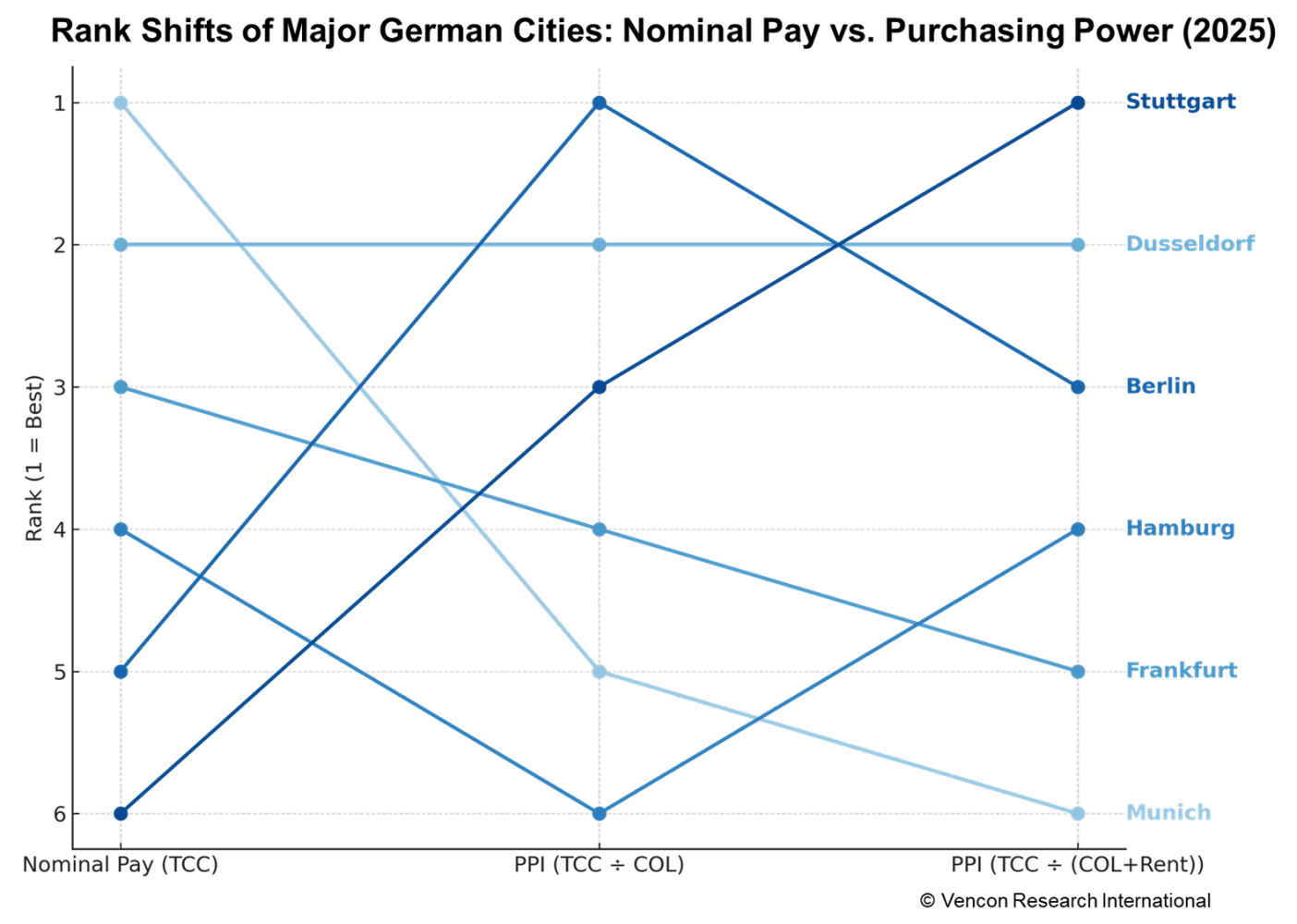
The Future of Consultant Pay (2025-2030)
Looking ahead, several dynamics are likely to reshape consultant pay and affordability across Germany’s major cities:
- Housing market pressures will intensify. Demand for urban housing in cities like Munich, Berlin, and Frankfurt will remain high, keeping the cost of living elevated.
- Remote and hybrid models may redistribute talent. As consulting firms adopt more flexible working models, consultants may increasingly live in lower-cost regions while remaining attached to high-paying city offices. This could weaken the traditional pay–location link over time, especially in costlier locations like Munich.
- Sector shifts will influence city attractiveness:
- Munich and Frankfurt are likely to maintain premium pay due to strategy and finance concentrations.
- Berlin should keep climbing as digital, data, and transformation work become core revenue drivers for firms.
- Stuttgart’s automotive focus could face headwinds if industrial transformation accelerates, potentially limiting salary growth unless diversification occurs.
- Generational and lifestyle choices will shape preferences. Younger consultants continue to value cultural vibrancy and international exposure (Berlin, Hamburg), while mid-career professionals with families may gravitate toward more balanced, affordable environments (Stuttgart, Düsseldorf).
- Purchasing power gaps may narrow further. As costs rise everywhere, the real purchasing power of salaries will become more similar across cities. By 2030, take-home pay could become less of a differentiator between locations
Implication: For consulting firms, this means compensation strategy will need to be more finely tuned to role, level, and specialization, not just location. For professionals, location choice may increasingly be driven by family status, lifestyle and sector focus, as the pure financial trade-offs between cities gradually flatten.
City-Level Dynamics and the Future of Pay
Understanding city-level dynamics is essential for consulting firms when shaping talent strategies, setting competitive pay, and maintaining internal equity. Over the next five years, rising housing costs, remote work, and shifting sector dynamics are expected to narrow city-to-city differences making lifestyle, specialization, and career goals as important as pay when choosing where to work. Firms will therefore need to refine compensation strategies beyond geography.
To stay competitive in this evolving market, deeper insight into level-specific pay, performance-linked rewards, and benefits will be critical. Our detailed country reports provide the intelligence consulting firms and professionals need to make informed, strategic decisions.
Consultant Pay vs. Cost of Living in Germany’s Major Cities: 2025 and Beyond

By Yao Tang - Business Development Manager
In a previous article, we discussed the various components of remuneration packages, and today, we will dive deeper into one of the key elements: Allowances.
Allowances are additional fixed payments provided alongside basic salary to address specific expenses, such as housing, transportation, or meals. While allowances are not typically included in bonus calculations, in certain regions they play a significant role in the overall compensation structure.
Regional Differences in Allowances
Allowances and their importance vary significantly across regions. Here's how they differ:
Gulf Countries (UAE, Saudi Arabia, Qatar)
In the Gulf region, allowances play a critical role in consultants’ pay packages. They often account for 30-50% of total compensation, particularly for expatriates. Common allowances in this region include:
- Housing: Often provided due to the high cost of living in major cities.
- Transportation: To cover the cost of commuting or car ownership.
- Education: Expatriate families may receive allowances to cover tuition fees for their children.
- Relocation: Moving expenses are often reimbursed.
- Home leave: Usually flights (roundtrip) once per year for employees and their families are reimbursed.
Allowances are prominent in the UAE because they offer employers greater flexibility and cost control. Since end-of-service gratuity is calculated only on the basic salary, structuring pay with a lower base and higher allowances reduces long-term liabilities. This approach also aligns with local labour laws and common market practices, particularly for expatriate-heavy workforces where housing, transport, and education allowances are expected. Additionally, allowances can be adjusted more easily than fixed salaries, making them a practical tool for managing changing business needs.
India
In India, allowances are highly structured and play a significant role in compensation packages, often due to tax benefits. Common allowances in India include:
- Housing Rent Allowance (HRA): To help cover the cost of housing
- Leave Travel Allowance (LTA): To reimburse travel expenses for employees and their families.
- Fuel/Transport Allowances: To assist with commuting costs.
India also uses a Cost-to-Company (CTC) model, where the total compensation (salary, allowances, and benefits) is disclosed as a single figure. As a result, employees may find that their take-home pay is lower than expected, since some allowances and benefits are included in the CTC but not always in the direct salary portion.
Europe & North America
In most parts of Europe and North America, allowances are less common compared to regions like the Gulf or India. Instead, firms tend to offer higher base salaries. When allowances are provided, they are typically for specific purposes, such as:
- Transportation stipends
- Meal vouchers
- Relocation support
In these regions, performance-based incentives, such as bonuses, stock options, or profit sharing, are more common than fixed allowances.
Asia-Pacific (Singapore, China)
In high-cost cities like Shanghai, Hong Kong, and Singapore, housing allowances are quite common to offset the high costs of living. Expatriates in these markets may also receive additional perks, such as:
- International school tuition for children
- Home leave flights
- Relocation benefits
Local hires in these regions generally receive fewer allowances, with firms often opting for higher base salaries or bonuses instead.
Are Allowances Always Considered Part of Total Cash Compensation (TCC)?
The answer is generally yes—and this is consistent with Vencon Research’s approach. In most markets, allowances such as housing, transportation, and meal stipends are included in Total Cash Compensation (TCC), especially in regions where such allowances make up a substantial portion of overall pay.
One exception is children’s education allowances, which are usually excluded and instead captured in our separate Benefits Survey. This is primarily because such benefits are not universally applicable—for example, not all employees have children.
Accurate Comparison Requires Regional Nuance
At Vencon, we understand that taking into consideration regional differences in each component of Total Cash Compensation (TCC)—such as allowances—is essential for accurate and meaningful compensation comparisons. We've discussed how allowances can significantly impact total compensation packages in different markets, and we ensure that all these variations are considered in our analyses.
In markets where allowances make up a larger portion of compensation, we provide detailed breakdowns to offer a comprehensive understanding of the total compensation package. These insights combined allow Vencon Research to help organizations make well-informed decisions when benchmarking salaries and structuring compensation packages globally.
By leveraging Vencon Research’s structured approach and industry-specific insights, consulting firms can ensure their compensation practices remain competitive, equitable, and aligned with market expectations.
Allowances in Compensation: A Worldwide Overview of Pay Beyond Salary
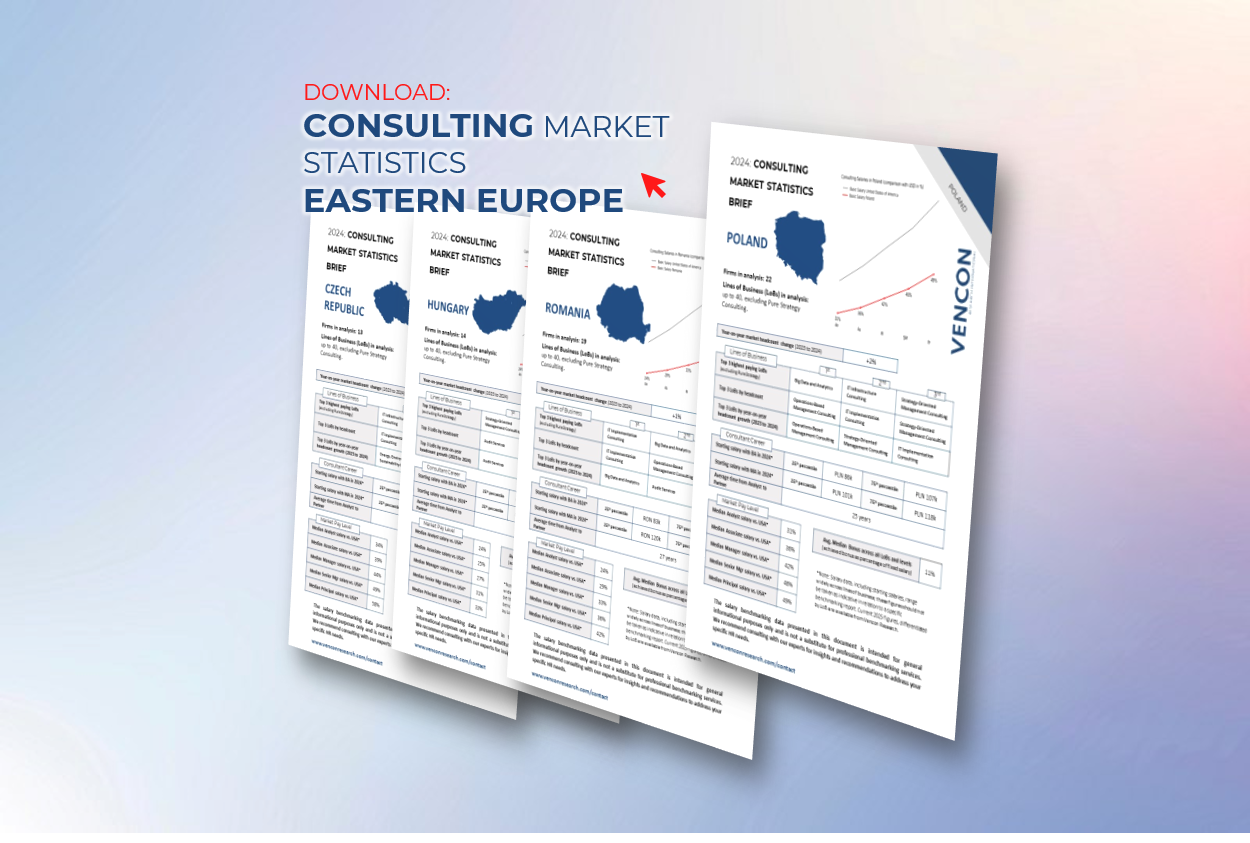

By Osas Ohenhen - Business Development Manager
Benchmarking compensation accurately starts with identifying the right peer group—and in consulting, that also means matching by line of business (LoB).
Many firms operate across multiple LoBs, from strategy to IT implementation to risk advisory. Each of these business lines serves different markets, demands different skill sets, and carries different compensation expectations.
Comparing roles across unrelated LoBs—whether within your own firm or externally—introduces distortions. A senior consultant in digital transformation doesn’t operate under the same market pressures or salary expectations as a peer in commercial due diligence. Yet we frequently see data misused in exactly that way.
One Firm, Multiple Realities
Consulting firms are rarely single-specialty. Even smaller firms may offer services across several distinct areas. Larger firms might have a dozen LoBs under one umbrella. Treating them as one homogenous group for compensation purposes obscures important differences.
Take two examples:
- A consultant in IT Risk & Cybersecurity (ITR) is likely to have a specialized technical background and face strong competition from both consulting and non-consulting employers. Compensation must reflect that scarcity.
- Meanwhile, a peer in Operations-Based Management Consulting (OPO) might face a more traditional consulting talent market, with different leverage models and client fee structures shaping pay expectations.
Even within broadly defined domains like IT or Finance, sub-lines matter. IT Strategy, IT Infrastructure, and Enterprise Software Implementation differ in project focus, required experience, and salary bands.
The Scope of LoBs
Vencon Research tracks more than 35 distinct lines of business in our compensation benchmarking—offering granular, role-by-role data within each. This includes well-established categories and fast-evolving specialties:
- Strategy Consulting Firms
- Operations-Based Management Consulting
- Digital Strategy and Transformation
- AI Consulting
- Commercial Due Diligence
- Restructuring and Turnaround
- Cybersecurity Consulting
- Tax, Transfer Pricing, and Assurance Services
- Actuarial, Legal, and Government Consulting
- ...and many more.
This breadth ensures that benchmarking is never reduced to broad categories like “Consulting” or “IT Services.” Instead, we ensure each job is matched to its correct peer group—based on functional focus, project type, and market conditions.
Why It Matters
HR leaders rely on benchmarking to set competitive pay, manage internal equity, and guide offer negotiations. But those decisions are only as sound as the underlying comparisons. Without alignment to the correct LoB, even the most robust benchmarking data can lead you off course.
At Vencon Research, accurate benchmarking—within clearly defined lines of business—isn’t an extra. It’s a pillar of our methodology. We work closely with clients to ensure each role is benchmarked where it belongs, across a peer group that reflects both the function and the market.
Getting Compensation Benchmarking Right: Why the Line of Business Matters

The promise of artificial intelligence in HR technology has caught the attention of many leadership teams — and compensation management is one area where interest is growing fast.
With rising expectations around pay transparency, regulatory compliance, and pay equity, many HR departments are wondering whether AI could help manage these increasing demands more efficiently.
At the same time, it’s important to take a realistic view of what current tools can deliver — and, more importantly, what it takes to implement AI systems that are truly effective and reliable in compensation work. While there is clear potential, significant investment and expertise are still required to move beyond basic applications.
Why Salary Data Remains a Limiting Factor
The usefulness of AI in compensation depends first and foremost on the quality of the data it can access. Unlike some other areas of HR, compensation data is largely private. Salary details reside within companies or specialist benchmarking services and are subject to confidentiality, compliance, and commercial sensitivities. Publicly available data — such as figures scraped from job boards or self-reported on crowdsourced sites — is often incomplete, inconsistent across markets, or skewed toward particular industries and seniority levels.
General-purpose AI models trained on open data (such as ChatGPT or similar tools) do not have access to the kind of verified salary data used in professional compensation management. Attempting to generate salary benchmarks based solely on such models carries a high risk of inaccuracy — which could lead to poor decisions on pay levels, legal exposure, or damage to employee trust.
Building Useful Tools Requires Expertise and Investment
There is genuine potential for AI to support compensation work — but delivering useful tools is not a matter of simply “adding AI” to existing systems. It is important to be clear what is meant here. Having access to an AI chatbot (such as one embedded in a broader HR system) is very different from building a bespoke AI application that has been trained and configured using a company’s internal data, role structure, pay philosophy, and specific business requirements.
Many of the most promising use cases require exactly this kind of customisation. For example:
- Automatically generating salary ranges for new or evolving roles
- Identifying pay disparities or inconsistencies across levels, regions, or business units
- Simulating the financial and structural impacts of salary changes
- Monitoring compliance with pay transparency regulations
To achieve this, AI models must be tailored to a company’s compensation framework, legal environment, and data structures. Developing such solutions involves technical expertise, time, and a significant financial investment — both to build the system and to ensure it can be trusted and maintained in practice. The costs of doing this — and of ensuring results remain auditable and aligned with changing pay practices — can be substantial.
Human Oversight is Built Into the Process
Even when custom AI tools are implemented, compensation work remains a sensitive and business-critical area. Outputs need to be reviewed and contextualised by experienced professionals — not just because of current limitations in the technology, but because compensation decisions often involve balancing objectives that are not easily reduced to data alone.
It is this complexity — combined with the need for regulatory compliance and employee trust — that makes careful human oversight an integral part of any AI-supported process.
Areas Where AI is Already Proving Useful
While the more advanced applications require considerable investment, there are areas where AI can already deliver value in a more straightforward way:
- Data cleaning and preparation, especially when combining multiple survey sources
- Drafting job descriptions or compensation documentation with natural language models
- Flagging anomalies or outliers in pay data for further review
- Supporting pay equity reviews by highlighting trends and patterns
These practical applications can help free up HR and compensation teams to focus on higher-value analysis and decision-making. Still, while some of these use cases may be served with ready-to-use models on a subscription or even free basis, others will require bespoke implementation that will come at significant cost. Using online models also opens up a plethora of data confidentiality questions that should not be taken lightly.
A Measured Path Forward
AI is unlikely to transform compensation management overnight — not because of a lack of potential, but because building models that genuinely reflect the complexity of compensation requires considerable customisation and resources. For many companies, the path forward will be gradual: using AI first to support data processing and review, while investing in more advanced tools where business needs and resources align.
In the coming years, AI will no doubt play a larger role in compensation management. But as with many areas of HR, its value will depend not just on the technology itself, but on the care and expertise brought to its implementation.
How Vencon Research Can Support Your Compensation Work
At Vencon Research, we work with consulting firms to ensure their compensation decisions are grounded in accurate, relevant data. Whether you're exploring how AI might support your internal processes or simply need reliable benchmarking to build on, we can help you get the foundations right.
AI in Compensation Management: Opportunities and Practical Limits

By Irina Kvirikadze - Senior Manager Data Integrity Lead
The Middle East has become a key region for consulting firms, attracting both international players and regionally focused specialists. Compensation practices in the region often include generous benefits and lifestyle-related perks—frequently exceeding what’s typical in Western markets. These offerings reflect a long-standing emphasis on making roles in the region attractive to both local and expatriate talent.
Based on Vencon Research survey data, we present an overview of the key hard and soft benefits shaping the consulting talent landscape across the region—particularly in the UAE and Saudi Arabia.

Hard Benefits: Solid Foundations
Almost all surveyed firms offer a robust suite of hard benefits. Here’s a breakdown:
1. Health & Insurance Coverage
All surveyed firms provide mandatory health insurance, with most extending additional coverage, including:
- Private medical insurance (beyond statutory requirements)
- Long-term disability insurance
- Life and business travel insurance (offered by select firms)
2. Housing & Transportation
- Housing allowance is provided by the majority of firms
- Transportation allowance is very common, payment varying by seniority.
3. Retirement & Financial Growth
- None of the surveyed firms offer supplementary pension plans or investment options for foreign employees—representing a potential gap in long-term financial benefits that are increasingly regarded as important by global talent.
Soft Benefits: Enhancing the Employee Experience
1. Professional Development
All firms invest in employee growth through:
- MBA sponsorships (select firms)
- Postgraduate education support (limited PhD funding)
- Language courses, sabbaticals, and exchange programs
- Structured professional development programs (universally available)
2. Lifestyle & Wellness Perks
- Subsidized or free lunches
- Daily snacks and fruits (standard)
- Sponsored social events (annual retreats, team-building activities)
- Health club memberships or in-house gyms (limited availability)
- Generous paternity leave (5 days to 6 weeks, depending on the firm)
MENA-Specific Benefits: Relocation & Family Support
1. Relocation Assistance
All firms cover company-related relocation expenses, including:
- Visa processing
- Temporary housing/hotel accommodation (budget varies by family size and seniority)
2. Children’s Education Allowance
This benefit is typically available to:
- Managerial-level employees (majority of the firms)
- All staff (in some firms), subject to conditions (e.g., number of children, residency status)
3. Annual Home Leave
This benefit is typically available to:
- All levels, including and immediate family members
Tailored Benefits for a Dual Workforce
A notable aspect of the regional talent strategy is the distinction between local and foreign employees. Many Middle Eastern countries enforce nationalization policies, requiring firms to maintain a certain percentage of local employees. As a result, benefit structures often differ between groups:
- Local nationals typically receive state-supported benefits, reflecting the government's broader role as a welfare provider.
- Foreign employees rely more on private services and are offered firm-sponsored benefits to bridge the gap.
To meet regulatory quotas and remain attractive to both groups, consulting firms are strategically leveraging tailored benefits offerings that appeal to locals and expatriates alike.
A Competitive Edge in Talent Attraction
Consulting firms that stand out are those that go beyond compensation—offering holistic, well-structured benefits that align with both regional expectations and global best practices. While surveyed firms provide strong support in areas such as healthcare, housing, and professional development, one notable gap is the absence of retirement or long-term investment options for foreign employees. Addressing this area could represent a valuable opportunity for firms looking to further differentiate themselves and enhance retention.
With generous core benefits, tailored expatriate support, and a commitment to career growth, consulting firms in the Middle East continue to position themselves as employers of choice.
Contact us for customized benchmarking to support your talent strategy. We offer detailed valuation of each benefit component, comparative analysis of benefit scope across market tiers as well as quality assessment of total rewards offerings.
Consulting in the Middle East: Competitive Employee Benefits


By Philip Thomas - Data Integrity Manager
Vencon Research observes a wide variety of partner remuneration models across the consulting market. Designing or optimising a model can be a complex task, requiring consideration of factors far beyond the typical starting point of competitive total income.
Partner compensation models are often shaped—or limited—by a firm’s structure. For example, public firms are not able to offer full profit-sharing compensation packages to their partners, while private firms may be able to lean more heavily on a cash-based, full profit-sharing approach.
Despite structural differences, most models aim to achieve the same goals: being competitive enough to attract and retain talent, and robust enough to remain sustainable and fair over time.
What separates an average model from a strong one is not simply what components are offered or how much partners earn—but rather why each component exists and how it is designed to support the broader aims of the firm.
Hallmarks of Success
The following are the key indicators Vencon Research considers fundamental to competitive and robust partner remuneration models:
Fairness across the partner group
Perceived fairness is critical to maintaining trust and morale. Remuneration structures should be transparent and consistently applied.
Incentivisation of both personal and firm performance
Partners should be encouraged to succeed as individuals while benefiting from collaboration and shared firm success.
Encouragement of both short- and long-term thinking
Effective models strike a balance between rewarding immediate results and promoting sustainable growth.
Robust link between performance and variable payout
Variable components should be clearly tied to measurable outcomes. Partners who perform well should feel appropriately rewarded, and those who do not should not be surprised by the outcome.
Alignment between pay, role, and financial contribution
Remuneration should reflect the scope of a partner’s responsibilities and their impact on firm performance.
Clarity and communication
Partners are more motivated when they understand how the model works and what is required to progress. Clear expectations reduce uncertainty and build long-term confidence.
Retention and buy-in mechanisms
These mechanisms help secure mid- to long-term commitment by aligning partner interests with the firm’s future direction.
Recognition of partner risk
Partners who hold equity or invest financially in the firm take on significant personal risk. If applicable, models should acknowledge this by offering appropriate upside and protections—reinforcing a genuine ownership mindset.
Why Getting It Right Matters
To what extent a partner remuneration model meets the above criteria deserves serious consideration. Falling short in any of these areas can negatively impact firm performance and increase the risk of dissatisfaction or attrition among partners.
Vencon Research’s Advisory services work closely with clients to design tailored partner compensation models that align with each firm's unique structure, strategy, and ambitions—ensuring the key principles outlined above are not only met, but built in from the start.
Key Indicators of a Competitive and Robust Partner Remuneration Model

By Yogendra Balayar - Senior Associate Data Integrity
Compensation strategies in consulting often focus on client-facing positions, but administration and support teams play a critical role in keeping firms running efficiently. These roles—ranging from reception and office management to recruiting, design, and internal research—are diverse, and compensation practices can vary widely. Without reliable data, it’s difficult to know whether pay levels are competitive or appropriate.
Vencon Research’s Administration & Support Staff Survey provides firms with detailed, market-based insights to support compensation planning and evaluation for these roles. The survey covers a broad range of support functions and job levels, helping firms make well-informed decisions across their internal operations.
Why Benchmark Support Staff Compensation?
1. Attracting Talent
Support roles need to be filled by capable, reliable professionals—and competitive compensation is key to attracting them. Benchmarking shows what similar roles are paid elsewhere, making it easier to set realistic salary ranges.
2. Retaining Skilled Staff
Good employees are hard to replace. Monitoring compensation trends helps firms stay aligned with the market and reduce the risk of losing valuable team members to better-paying offers.
3. Planning and Managing Budgets
Understanding what comparable roles cost across the industry supports more accurate and sustainable budgeting. Benchmarking also helps firms plan for changes, such as adjustments during reviews or promotions.
4. Demonstrating Fairness
When employees see that their compensation is based on objective market data, it fosters transparency and trust. Firms that benchmark regularly are better equipped to explain and justify their pay structures.
How Vencon Research Supports Better Compensation Decisions
To help consulting firms make informed, market-aligned decisions around support staff pay, Vencon Research offers a dedicated Administration & Support Staff Survey. The survey is designed to reflect the realities of internal roles within consulting—providing comprehensive, reliable data that goes beyond job titles to capture the actual scope and structure of support positions
Detailed Compensation Data
The survey provides a comprehensive view of compensation components: base salaries, bonuses, total cash, and applicable market-specific allowances. Results are broken down by role, level, and geography.

Accurate Role Matching
Job titles alone often don’t reflect the real responsibilities behind a role. The survey includes a structured job matching process that looks at actual tasks and reporting lines to ensure valid comparisons across firms.

Support for Multi-Function Roles
Support staff frequently handle responsibilities across more than one function. The survey allows for incumbents to be matched to multiple sub-functions when necessary, reflecting the way these roles actually operate.

Career Level Consistency
Instead of assuming equivalence based on titles, roles are matched based on skill level, responsibility, and decision-making scope. This results in more accurate level-to-level comparisons across firms.
Additional Insights
The report also covers non-compensation elements such as overtime pay, vacation days, and year-on-year salary movement. These data points help provide a broader understanding of employment practices in support functions.

International Coverage
Data is collected from consulting firms across a range of markets, including the US, UK, Middle East, and selected emerging markets. This global perspective is especially useful for firms with cross-border operations.
Confidential and Reliable
All data is gathered directly from HR professionals or firm leadership and treated with full confidentiality. No firm- or individual-level data is disclosed in the reporting.
A Structured Approach to Support Staff Pay
For consulting firms, the Administration & Support Staff Survey offers a clear and reliable basis for setting and reviewing compensation across non-consulting functions. With accurate job matching, robust data coverage, and detailed reporting, firms gain the insight needed to make better decisions—whether the goal is attracting new hires, retaining experienced staff, or aligning internal structures with the wider market.
Vencon Research helps consulting firms make informed, data-backed decisions on compensation—across both client-facing and internal roles. From accurate job matching to reliable benchmarking, our surveys provide the depth and clarity firms need to navigate compensation planning with confidence. To find out how our data can support your firm, contact us or visit our website.
Support Staff Compensation Benchmarking in Consulting Firms

By Irina Kvirikadze - Senior Manager Data Integrity Lead
Skill-Based Pay (SBP) can be a compelling approach to compensation, but it isn't a universal fit. Not every organization will benefit from shifting away from traditional models, and success depends heavily on context, structure, and execution. The purpose of this article is to provide a clear, balanced overview of SBP—what it is, when it works, and what to consider before implementation. Whether you're exploring it for the first time or reassessing your current compensation strategy, this guide is designed to help you make informed decisions.
Skill-Based Pay (SBP) represents a significant departure from traditional compensation models that reward employees based on job titles, seniority, or set responsibilities. Instead, SBP focuses on rewarding employees for the skills they acquire and apply, encouraging continuous learning and aligning more closely with the dynamic needs of businesses.
This approach is particularly relevant in fast-paced and innovation-driven sectors like technology, consulting, and finance, where the demand for specialized skills changes rapidly. Organizations adopting SBP can respond more quickly to market shifts, attract top talent, and reward employees who demonstrate the capabilities most critical to success.
What Makes Skill-Based Pay Work: Features and Benefits
Skill-Based Pay (SBP) is a dynamic compensation model that aligns rewards with the evolving competencies employees bring to an organization. It promotes competency-focused compensation—rewarding verified skills over traditional job titles or tenure—and fosters flatter organizational structures through broader pay bands and greater mobility. Moreover, the transparent, objective criteria of SBP may reduce bias, promote fairness, and enhance organizational agility, enabling companies to quickly adapt to technological advancements and changing market demands.
Below are some of the core features and advantages that make skills-based pay an effective compensation model.
Dynamic Salary Structure
- Employees earn a base salary with additional skill-based components, adjusted as they acquire and demonstrate relevant skills.
Competency-Focused Compensation
- Pay is linked to specific skills, certifications, and expertise rather than job roles, allowing employees with high-demand skills to earn more.
Flatter Organizational Structure
- SBP reduces rigid hierarchies and broadens pay bands, fostering a more agile workforce.
Strategic Alignment
- SBP directly ties compensation to critical skills (technical, strategic, or leadership) that drive business performance, ensuring pay structures support operational and strategic goals.
Talent Attraction & Retention
- Attracts top talent by offering competitive pay for high-demand skills.
- Empowers employees to control their career growth by developing skills that align with personal and organizational objectives.
Adaptability & Pay Equity
- Enables companies to adapt quickly to market changes and technological advancements.
- Reduces biases (gender, ethnicity) by establishing clear, measurable pay criteria, promoting equitable compensation.
Why Skill-Based Pay May Fall Short: Key Challenges and Pitfalls
SBP presents several challenges that organizations must navigate to ensure its effective implementation. First, the operational complexity of SBP demands a well-defined skills framework, standardized evaluation criteria, and continuous management. Additionally, there is a risk of misalignment when skills that do not directly drive strategic outcomes are rewarded, potentially wasting resources on niche capabilities that add little value to business performance. External benchmarking is another significant challenge, as the value of skills can vary widely between industries and regions. For example, in the consulting industry, a project management certification such as PMP may carry significant value in a strategy consulting firm, where it supports the delivery of complex, large-scale transformation projects.
In contrast, the same certification may hold less monetary weight in a smaller, operations-focused consultancy that places greater emphasis on technical expertise or industry-specific knowledge. As a result, Skill-Based Pay (SBP) offers a more objective and tailored compensation structure for many consulting firms, aligning pay more closely with the specific capabilities that drive value in different business contexts.
Lastly, the rapid obsolescence of so-called “hot” skills means that what was once a premium capability can quickly become commonplace or outdated, necessitating frequent reviews and adjustments to compensation structures to avoid overpaying for skills that no longer provide a competitive advantage. Below is the summary some of the key challenges for skills-based pay structure.
Operational Complexity and Employment of Skills
- Implementing a skill-based pay system requires a well-defined skills framework and standardized evaluation methods across the organization.
- Consistency in how skills are assessed and rewarded is essential to ensure fairness and transparency.
Misalignment Risk
- Rewarding skills that are not directly tied to business outcomes or KPIs can lead to inefficiencies and reduced ROI on talent investment.
- Inaccurate skill evaluations may result in unfair compensation, leading to employee dissatisfaction and trust issues.
Cost and Compensation Structure Challenges
- Skill-based pay can increase payroll costs, particularly when compensating for highly specialized or niche skills.
- Organizations may face challenges in determining the appropriate pay structure—whether to incorporate skill premiums into the base salary, offer it as a separate variable component, or use a hybrid approach.
Difficulty in Market Benchmarking and Alignment
- Skills may be valued differently across industries and regions, making external benchmarking difficult. For instance, firms in India might be much more flexible in offering or “taking away” skill-based pay as opposed to e.g. France where labour law is much more stringent.
- This model may be more suitable for industries like tech, where certifications, programming languages, and skill levels are more clearly defined and aligned with market rates.
Shifting Value of Skills
- So-called "hot skills" can quickly become standard or outdated as market demands evolve rapidly; static SBP models risk irrelevance.
- Companies may struggle to adapt compensation structures in real time, risking overpayment for now-common skills or underpaying for newly in-demand capabilities.
Implementation Roadmap
If your organization finds that Skill-Based Pay aligns with its goals, here are key steps to adopt the model in its early stages.

Making SBP Work
Skill-Based Pay is an innovative compensation model that promotes agility, equity, and competitiveness by aligning rewards with employees' actual capabilities. Its advantages—including improved talent retention, stronger alignment with strategic goals, and reduced bias—make it an attractive option for modern, forward-looking organizations. When implemented through a structured roadmap, SBP can help companies build a skilled, adaptable, and future-ready workforce.
But its success depends on more than intent. SBP is particularly effective in sectors like technology and consulting, where skill sets are clearly defined and closely tied to value creation. Still, the model requires a solid foundation: a clear skills framework, alignment with strategic and legal considerations, transparent governance, and thoughtful change management. Without these elements in place, the long-term effectiveness and fairness of SBP may be compromised.
For companies considering this model, the key is careful evaluation. SBP can be a powerful tool—but only when it genuinely supports broader performance and organizational goals.
At Vencon Research, we work closely with consulting firms to design and benchmark compensation structures that align with business goals, including models like Skill-Based Pay. Our compensation expertise and tailored benchmarking services ensure your pay strategy reflects the actual value of skills within your market and organization. If you're considering SBP or refining your current approach, we can help you navigate the complexities and make compensation a real driver of performance.
Skill-Based Pay: Opportunities, Complexities, and a Roadmap for Implementation

Tariffs are often viewed through the lens of international trade policy, but their downstream effects reach deep into professional services—consulting included.
Recent rounds of tariff introductions and revisions, particularly by the United States, have added another layer of global economic uncertainty. While consulting firms may not import or export physical goods, they operate within the broader systems shaped by such policy shifts.
As tariffs alter client behaviour, restructure supply chains, and reshape corporate priorities, they also impact demand for consulting services and influence compensation dynamics within the industry.
Disruption Triggers Demand—But Not Evenly
Historically, tariffs trigger uncertainty and disruption. For consultants, disruption often translates into opportunity. Clients facing increased costs due to tariffs seek advice on how to restructure operations, identify alternate suppliers, localize production, or navigate cross-border regulations. Strategy and operations practices typically see an uptick in demand in these periods.
However, the benefits are not evenly distributed. Boutique firms that rely heavily on clients in trade-sensitive industries may feel the pinch if those clients pause discretionary spending. Conversely, larger firms with diversified client bases and deep expertise in supply chain or trade compliance may see growth.
Services and Tariffs: Not Immune, Just Indirect
Consulting services themselves are rarely subject to tariffs. Most trade policies target physical goods, not expertise. Still, the consulting industry is affected indirectly. Tariff-driven cost increases or supply chain disruptions can shift client spending priorities—sometimes delaying projects, other times accelerating demand for advisory support. In more complex trade disputes, regulatory barriers to delivering services across borders may also emerge, though this remains uncommon.
Regional Compensation Pressures
Tariffs often prompt companies to shift operations regionally, particularly from high-tariff geographies to more favourable ones. This movement affects the distribution of consulting demand geographically. For example, an uptick in demand for consultants in Mexico or Southeast Asia might follow tariffs targeting Chinese goods, as companies explore alternative manufacturing hubs.
This regional shift can create compensation pressure, especially for firms trying to retain experienced consultants in high-demand markets. While global firms may have the flexibility to adjust pay bands across offices, many still benchmark compensation by region or country. In those cases, benchmarking data needs to be updated more frequently to remain accurate during volatile trade shifts.
Compensation Structures Adapt to Market Volatility
Volatility brought on by tariffs and related trade policy changes may lead consulting firms to revisit their compensation structures. In periods of uncertainty, firms may emphasize performance-based bonuses over fixed salary increases, particularly at senior levels. Incentives tied to utilization, client retention, or business development become more prominent as firms aim to reward adaptability and revenue resilience.
On the recruitment side, firms may also shift their hiring strategies—favouring professionals with trade policy or supply chain backgrounds, which can place upward pressure on compensation for niche skill sets.
Tariffs as a Benchmarking Variable
For firms benchmarking compensation, tariffs are an indirect but relevant factor. While they don’t directly alter pay, they influence the conditions under which consultants operate—demand for specific services, client industries under pressure, and regional reallocation of work. When reviewing benchmarking data, consulting firms should consider whether tariff changes or anticipated policy shifts might be distorting demand in certain functions or geographies.
At Vencon Research, we’ve seen clients request more granular cuts of benchmarking data during periods of trade disruption. Understanding compensation trends not just by role, but by industry served or region of operation, becomes essential to ensure alignment with shifting market realities.
If you're re-evaluating your compensation strategy or want a clearer picture of where the market is heading, Vencon Research can help. We specialize in compensation benchmarking tailored to the consulting industry—so you can make informed decisions, no matter how the trade winds shift. Get in touch now.
Behind the Tariffs: What They Mean for Consulting and Compensation

By Gunjan Kalwani - Senior Associate, Data Integrity
The consultant experience as an employee is shaped by multiple factors, from career progression and financial incentives to work-life balance and organizational culture.
Vencon Research’s Consultant Salary Survey not only provides detailed salary structures but also examines career-related aspects such as time-based remuneration, career progression, sign-on bonuses, and other factors that significantly influence employment decisions in a competitive market. These insights are included in the accompanying presentation format of our survey as standard.
Career Progression: Mapping the Path Forward
Career progression in consulting follows a structured advancement through different roles, characterized by increasing responsibility, skill development, and experience over time. Aligning career progression with both company growth and employee expectations is essential for attracting ambitious talent and retaining high performers.

While many professionals follow a standard promotion timeline, others may progress at faster or slower rates depending on performance and business needs. Vencon Research’s Consultant Salary Survey captures all three career tracks—fast, typical, and slow—to provide companies with a clearer view of industry norms. Firms can use this data to assess whether their career progression structure aligns with competitive benchmarks and industry best practices.

Beyond broad career tracks, Vencon Research also offers detailed breakdowns by individual career levels, helping firms compare their career progression models with those of their competitors and refine their talent development strategies.
Time-Based Remuneration: Understanding Pay Progression Over Tenure
Time-based remuneration progression tracks how salaries evolve based on tenure, offering valuable insights even if compensation is not strictly linked to time spent at a particular level. This data helps organizations understand historical pay trends, benchmark against industry standards, and identify potential inequities in pay structures.

While Vencon Research’s salary surveys primarily benchmark roles based on responsibilities rather than tenure, time-based remuneration insights are available to provide additional context on how salaries change over time within the industry.
Graduate Starting Salaries: Setting Competitive Entry-Level Pay
Starting salaries are a crucial factor in attracting top graduates and early-career professionals. These salaries vary based on factors such as educational background, geographical location, and market demand. Competitive starting salaries ensure firms can secure the best talent while avoiding the risks of over- or underpayment.

Vencon Research’s Salary Survey includes detailed insights into starting salaries at the entry level for candidates with Bachelor’s, Master’s, and MBA degrees, helping firms refine their recruitment strategies and compensation packages.
Sign-On Bonuses: A Key Talent Attraction Tool
Sign-on bonuses serve as financial incentives to entice new employees to join a company, often structured as a lump-sum payment with a payback period if the employee leaves within a specified timeframe. These bonuses can be particularly influential in consulting, where firms compete for high-calibre candidates.

Tracking sign-on bonus trends through benchmarking allows companies to assess whether their offerings remain attractive relative to competitors, ensuring they maintain a strong recruitment advantage.
Referral Incentives: Encouraging Employee-Driven Recruitment
Financial incentives for employee referrals reward current staff for recommending qualified candidates, helping firms reduce recruitment costs and improve hiring quality. However, ensuring these incentives strike the right balance between motivation and budget efficiency is key.

Benchmarking referral incentives allows firms to fine-tune their programs to maximize effectiveness while maintaining cost control.
Overtime Policy and Time Off in Lieu: Balancing Workload and Compensation
Overtime compensation policies vary widely across consulting firms. Some companies pay overtime at an enhanced rate, while others offer Time Off in Lieu (TOIL), allowing employees to trade extra hours worked for additional paid leave.

Comparing these policies with industry standards helps firms identify potential gaps or inefficiencies, ensuring their approach remains competitive and supports employee satisfaction.
Beyond Compensation: Additional Career-Related Factors
Other aspects such as internship programs, utilization rates, and revenue targets also serve as valuable benchmarks for assessing industry trends and identifying areas for growth. These factors influence not only individual job satisfaction but also the broader organizational culture – all of them are included in our reports.
Long-term success in consulting isn’t just about securing clients—it’s about developing and retaining talented professionals who can drive the firm’s vision forward. Offering transparent career progression and effective incentive structures reduces turnover and strengthens employer branding. Regularly reviewing and benchmarking these policies and keeping them in view when benchmarking compensation ensures they remain relevant, competitive, and aligned with evolving workforce expectations.
Download a sample report to get a full picture of our benchmarking data.
Vencon Research provides the insights consulting firms need to attract and retain top talent. Contact us today to learn how our benchmarking reports can help you refine your compensation strategy and stay ahead of the curve.
Beyond Salaries: Benchmarking Career Progression and Incentives in Consulting

By:
David Warren - Partner Emeritus
Erwin Harbauer - Managing Director
The German management consulting market remains one of Europe's most resilient and dynamic, continuing to reflect the country's position as the continent’s largest economy.
As of March 2025, the sector has continued its post-pandemic recovery, reaching an estimated market volume of € 47.7 billion, with a modest 1.1% growth rate, down from an average of 3% since 2020. Demand is largely driven by digital transformation, energy consulting, and sustainability initiatives, as businesses navigate stringent EU and local German environmental regulations and the shift to renewable energy. Industry leaders such as Roland Berger, McKinsey & Company, and Accenture dominate, leveraging their expertise to help companies manage geopolitical uncertainties and economic volatility.
Digital Services Take Centre Stage
Digitalization remains a core focus, with firms seeking advisory support to integrate AI, big data, and cloud computing to enhance operational efficiency and resilience amid supply chain disruptions and rising energy costs. Consulting firms are expanding digital service offerings through partnerships with tech giants and in-house innovations. Additionally, remote and hybrid work models—solidified during the pandemic—are reshaping service delivery, optimizing costs while maintaining client engagement.
Competition and Regulation Reshape the Market
Competition in the German consulting market is intensifying. Homegrown firms like Roland Berger and Simon-Kucher retain strong footholds, while global players such as BCG, Bain & Company, and the Big Four continue expanding. Niche consultancies specializing in ESG / EES and regulatory compliance are also gaining traction, particularly in response to EU directives like the Non-Financial Reporting Directive. However, challenges persist, including talent shortages and fee pressures, driving firms to ramp up recruitment efforts—evidenced by BCG and McKinsey’s plans to hire hundreds of consultants annually.
Outlook: Growth with Challenges Ahead
Looking ahead, the market is poised for continued growth, albeit retaining the current low rate, with projections suggesting it could reach € 50.2 billion by 2030. Key drivers include the ongoing digital and green transitions and the resilience of Germany’s industrial sector. However, risks such as inflation, geopolitical instability, and the country’s continued economic slowdown may temper expectations. To stay competitive, consulting firms are expected to deepen their focus on innovation, sustainability, and client-centric solutions, ensuring their relevance in this evolving business landscape.
Vencon Research specializes in compensation benchmarking for strategy consulting firms, providing data-driven insights to help firms make informed decisions on pay structures and market positioning. With a focus on accuracy and industry-specific analysis, Vencon Research ensures consulting firms stay competitive in an evolving market.
Stay Informed with the Latest Insights: For the most up-to-date market trends, benchmarking data, and strategic insights tailored to the consulting industry, explore Vencon Research’s latest reports. Contact us to learn how our data-driven approach can help your firm navigate the evolving consulting landscape.
Germany’s Consulting Market in 2025: Growth, Challenges, and Industry Shifts

Percentiles are a key statistical tool in compensation benchmarking, providing a clear and structured way to compare salaries within a broader market.
By dividing data into ranked segments, percentiles allow firms to understand where their pay structures fall in relation to the competition, whether they are positioned at the lower, middle, or upper end of the market. Unlike averages, which can be skewed by extreme values, percentiles present a more accurate and nuanced view of salary distributions, making them particularly useful in salary benchmarking reports.
Statistics and the Use of Percentiles
Percentiles are a key tool in descriptive statistics, allowing researchers to summarize data distributions efficiently. Over time, they have been widely adopted across various disciplines due to their ability to provide meaningful insights into datasets without requiring complex mathematical calculations.

One of the earliest large-scale applications of percentiles was in educational testing. Standardized exams in the United States, such as the SAT, GRE, and IQ tests commonly use percentiles to rank test-takers, showing how an individual's score compares to others. For example, a student scoring in the 90th percentile has performed better than 90% of test-takers. This same principle applies across other domains, from healthcare and epidemiology to finance and engineering, making percentiles a versatile and universal statistical measure.
Percentiles are widely used in various industries to analyse and interpret complex data distributions:
- Healthcare & Epidemiology: In medical research, percentiles are crucial in understanding health indicators such as blood pressure, cholesterol levels, or body mass index (BMI). Paediatricians, for instance, assess a child’s growth using percentile charts, which indicate how a child compares to others of the same age.
- Finance & Economics: Investors and analysts use percentiles to evaluate market performance. A mutual fund’s return in the 90th percentile means it outperforms 90% of similar funds. Likewise, income distribution studies use percentiles to define economic classes and assess wage inequality.
- Manufacturing & Quality Control: In industrial settings, percentiles help define product quality standards. For example, if a company wants to ensure that 95% of its manufactured parts meet certain specifications, it may set quality control limits at the 5th and 95th percentiles.
- Technology & AI: Percentiles play a key role in machine learning and AI-driven decision-making. Many predictive models rely on percentile ranks to filter out anomalies or detect patterns in large datasets.
Each of these industries benefits from the ability of percentiles to break down complex datasets into digestible insights, allowing stakeholders to make informed decisions based on clear comparative measures.
Percentiles as the Ideal Measure for Aggregated and Confidential Data
One of the biggest advantages of percentiles is their ability to present an accurate picture of aggregated data without requiring access to individual data points. Unlike averages, which can be skewed by extreme values, percentiles show the full distribution of a dataset. This makes them particularly useful when working with large sets of confidential or anonymized data, where individual records cannot be disclosed.

Consider an alternative approach—using averages to analyse salary data. A single high-paying outlier could disproportionately raise the average, leading to a misleading representation of typical market pay. Conversely, a wide spread in the lower range could bring the average far down from the predominant pay level in the market. In contrast, percentiles provide a more nuanced picture. The 50th percentile (median) shows what a "middle-of-the-market" salary looks like, while the 25th and 75th percentiles define the lower and upper ranges, respectively. This allows firms to position their pay policies strategically based on their compensation philosophy.

Salary benchmarking data is inherently aggregated because individual salaries remain confidential to protect the interests of both employers and employees. No single participant in a salary survey can access another firm’s exact data, ensuring privacy and compliance with data protection regulations. Instead, data from multiple sources is combined and analysed in percentile distributions, giving firms the insights they need without exposing specific salary figures.
This is why percentiles are such an effective tool in salary benchmarking. They allow consulting firms to compare themselves against the market while maintaining confidentiality. By using a range of percentiles, firms can see where they stand relative to different segments of the industry—whether they are paying at the lower end, middle, or upper tiers of the market. At Vencon Research, we present percentile analyses in most of our reports using 5-percentile increments, ranging from the 5th to the 95th percentile. This approach enables our clients to gain deeper and more precise insights into their market positioning.
Additionally, percentile analysis supports long-term strategic decision-making. Firms can assess pay trends over time, adjust their compensation strategies to remain competitive, and ensure they are offering salaries that align with their desired market positioning. For example, a firm aiming to attract top talent may choose to pay at the 75th percentile, ensuring their compensation package is more attractive than those of most competitors.
Vencon Research is the leading provider of compensation benchmarking statistics to the global consulting industry. To find out more about our surveys and our benchmarking methodology do not hesitate to get in touch. Our team is always ready to provide personalized assistance to meet your specific needs.
Percentiles: for Accuracy and Privacy in Compensation Benchmarking

By Andy Klose - Associate Partner at Vencon Research in Berlin, Germany
Management consulting firms frequently face a critical challenge: balancing competitive partner compensation with sustainable growth and profitability. Many firms set their target on compensating partners at the market median but often fall short. This misalignment leads to partner dissatisfaction and increased pressure on leadership. Addressing the issue requires a strategic, data-driven approach that not only ensures fair compensation but also fosters performance-driven growth.
Performance and Financial Outcomes Are Interdependent
At its core, the challenge stems from a direct but complex link between partner compensation and firm profitability. Unlike salaried employees, partners derive their income largely from the firm’s profits, which in turn depend on their own ability to generate revenue and control costs. If partners underperform, firm-wide profitability suffers, making it financially unfeasible to pay them at target market levels. Therefore, increasing partner compensation requires a dual focus: boosting individual partner performance and improving overall firm profitability.
Understanding the Compensation Gap
Vencon Research regularly benchmarks partner compensation across consulting firms, comparing actual earnings to market norms and the firm’s target market percentile. A common scenario we come across involves consulting firms aspiring to pay their partners at the market median but operating closer to the 25th percentile (lower quartile). At the same time, these firms aim for ambitious double-digit revenue growth while maintaining or improving profitability.
A deeper analysis often reveals a fundamental issue: underperformance among partners, with a significant proportion failing to meet their sales targets. This raises an essential question: How can the firm enhance both partner compensation and financial sustainability?
Growth Strategies: Expanding Revenue Potential
To meet revenue growth targets, firms typically consider three strategic options:
- Increase sales targets for existing partners: While raising revenue expectations seems like a logical solution, it is often impractical if partners are already struggling to meet current targets. Without structural changes, higher sales goals would likely intensify the firm’s revenue attainment challenges.
- Increase the number of partners: Promoting internal talent or hiring externally can drive additional revenue. However, this approach is hindered if the firm’s partner compensation is not competitive, making it difficult to attract and retain top talent.
- Pursue “inorganic” growth: Acquiring smaller consulting firms can provide an immediate revenue boost, assuming the financial backing is available. Yet, without addressing underlying performance and profitability issues, mergers and acquisitions merely delay—but do not solve—the fundamental problem.
Given these challenges, what practical steps can firms take to improve both financial performance and partner satisfaction?
Rethinking Partner Compensation: Pay-for-Performance
While increasing partner pay to the target market percentile is a straightforward solution, it is rarely feasible without increasing profitability. Unlike consultant levels (below partner), where competitive compensation is often mandatory to reduce attrition, partner pay must align with contributions to the firm’s financial health.
Most consulting firms adopt a meritocratic “pay-for-performance” model. To ensure consistency, we advocate for a structured approach that integrates profit, goals, and pay within defined frameworks such as partner levels or career groups. This approach, which we refer to as the Trinity Model, links partner compensation directly to revenue and profit contributions.
Addressing Partner Underperformance
One of the key hurdles to increasing partner compensation is underperformance. Firms must take a systematic approach to improve productivity and effectiveness at the partner level. A crucial first step is conducting a book of business review to assess individual contributions and identify areas for growth. Additionally, firms should evaluate:
- Role clarity and expectations: Many underperforming partners prioritize project delivery over business development. Clarifying expectations through role definitions and accountability frameworks is essential.
- Training and development: Equipping partners with business development skills can enhance revenue generation capabilities.
- Structural realignment: Refining the firm’s partner model, including job descriptions and performance benchmarks, ensures a stronger alignment between roles and firm strategy.
Improving Profitability to Sustain Growth
Beyond individual partner performance, firms should optimize their broader business structure to enhance profitability. Key areas for evaluation include:
- Project team composition: Ensuring an optimal balance of senior and junior consulting staff improves cost efficiency.
- Firm-wide organizational structure: Adjusting the overall staffing pyramid and staff-to-partner ratios can drive margin improvements.
- Operational efficiency: Identifying cost-saving measures and optimizing service delivery models contribute to higher profits.
By strengthening both individual performance and overall firm profitability, consulting firms can create a sustainable foundation for increasing partner compensation.
A Holistic Approach to Sustainable Growth
Aligning partner compensation with market expectations requires a holistic strategy that addresses both revenue generation and profitability. By improving partner performance, optimizing the firm’s organizational structure, and reinforcing a merit-based pay model, consulting firms can create a sustainable path toward higher earnings and growth.
Additionally, enhancing compensation competitiveness will improve the firm’s ability to attract top-tier partner candidates, further accelerating growth. In the long run, improved profitability may also open doors for external financing, enabling both organic and inorganic expansion.
Ultimately, firms that successfully integrate these elements will be well-positioned to achieve their financial targets while ensuring partner satisfaction and long-term success.
We would be pleased to assist you with any additional inquiries and provide recommendations to enhance performance and financial sustainability in your organization. Contact us to learn more.
Andy Klose is an Associate Partner at Vencon Research International and heads the firm’s consulting unit.
Vencon Research International is a leading provider of compensation benchmarking and research as well as of compensation and performance-related consulting services for professional service firms, especially for audit and tax, management consulting, and IT services firms. Vencon Research International provides services to a full range of clients in more than 75 countries worldwide and is proud to name more than 85% of the world’s major consulting and/or professional services firm its clients.
Aligning Partner Compensation with Growth and Profitability in Consulting Firms

2025 Expected Salary Increases in the Consulting Industry
These concise overviews provide:
- A consulting-specific picture, representing real estimates gathered first-hand from consulting firms in the local market.
- A picture of country wide expected salary increases, based on data from third-party research.
Our download package includes:
- Brazil
- France
- India
- United Kingdom
- United States
Vencon Research conducts compensation benchmarking studies for over 70 countries worldwide. Should you require further information on the summaries included or additional data for different countries, please contact us.
Download: 2025 Expected Salary Increases in the Consulting Industry

By Osas Ohenhen - Business Development Manager
A well-executed salary benchmarking process follows a structured approach to ensure meaningful comparisons. Previously, we outlined four key steps that contribute to accurate and actionable benchmarking results:
- Selecting the most relevant competitors
- Identifying the most applicable “line of business”
- Conducting accurate job matching
- Comparing the relevant components of remuneration
This article focuses on the final step: ensuring a clear understanding of remuneration components before making comparisons. Without alignment on these components, salary benchmarks can lead to misleading conclusions, impacting firms' ability to offer competitive and fair compensation.
The Importance of Defining Remuneration Components
For benchmarking data to be reliable, all participants must operate on a like-for-like basis when reporting compensation. This requires standardizing definitions to ensure consistency across firms, regions, and roles. Failure to do so can result in distorted comparisons, where compensation figures appear higher or lower due to differences in what is included rather than actual market trends.
Key Remuneration Components in Salary Benchmarking

Understanding the breakdown of compensation is critical when benchmarking salaries. Below are the key components that provide a complete view of an employee’s total remuneration:
1. Basic Salary
The contractually guaranteed cash component of an employee's pay, excluding any bonuses or variable elements. This figure is typically expressed as an annual amount. Example: In the United States, the basic salary is the fixed amount an employee receives before bonuses, stock options, or benefits.
2. Allowances
Additional fixed payments that supplement basic salary, often provided to account for region-specific costs such as housing, transportation, or meal expenses. These are not typically included in bonus calculations. Example: In India, allowances may cover travel, meals, and medical expenses, significantly affecting total pay.
3. Fixed Overtime
A predetermined overtime payment included in an employee’s remuneration regardless of actual overtime hours worked. This structure is common in certain markets with strict labour laws. Example: In Japan, many companies include a fixed overtime component as part of base pay.
4. Base Salary
The sum of basic salary and allowances, providing a more complete view of guaranteed cash compensation. Example: In Australia, base salary may also include mandatory employer superannuation contributions to retirement funds.
5. Bonus (Variable Compensation)
Bonuses may be reported in two ways:
- Target Bonus: The expected variable cash bonus, typically expressed as a percentage of basic salary.
- Actual Bonus: The most recent bonus paid, reflecting realized performance-based compensation.
Example: In many markets, bonuses are tied to individual and firm performance, making them a crucial part of competitive pay structures.

Target vs. Actual Compensation: In salary benchmarking, target compensation refers to the expected or projected amount an employee is set to receive, typically based on predefined salary structures or bonus plans. In contrast, actual compensation—sometimes referred to as achieved compensation—reflects the real amounts paid in the previous year, including any variations due to performance-based bonuses, adjustments, or other discretionary elements.

6. Total Cash Compensation (TCC)
The sum of base salary and actual bonus, representing an employee’s total earnings before benefits and employer contributions.
- Target TCC (t-TCC): Expected total cash compensation, including the target bonus.
- Actual TCC (a-TCC): Total cash compensation actually paid in the prior year.
Example: In Switzerland, TCC reflects both base salary and the variable bonus awarded based on company performance.
7. Total Cost-To-Company (CTC)
A broader measure that includes base salary, variable cash bonuses, and the employer’s cost of benefits such as pension contributions, health insurance, and other mandatory employer payments.
- Target CTC (t-CTC): The anticipated total employment cost to the firm.
- Actual CTC (a-CTC): The total cost incurred in the prior year.
Example: In South Africa, CTC includes employer contributions to retirement funds and medical aid, providing a more comprehensive view of total compensation.
Vencon Research’s Approach to Defining and Comparing Remuneration Components
Vencon Research ensures clarity and consistency by standardizing how remuneration components are defined and reported. Our benchmarking reports provide detailed data on all relevant compensation elements for both the current and previous years, allowing firms to track market trends accurately.
Why Vencon Research Stands Out
Vencon Research’s methodology offers consulting firms a significant advantage by ensuring robust and reliable salary benchmarks. Key differentiators include:
- Comprehensive Data Coverage: Our reports account for all major remuneration components, preventing inconsistencies that could skew comparisons.
- Year-over-Year Comparisons: We provide both current and historical data, helping firms analyse compensation trends over time.
- Tailored Insights for Consulting Firms: Our benchmarks are designed specifically for strategy consulting firms, ensuring relevance and accuracy.
- Market Intelligence Beyond Compensation: We offer insights into broader pay trends, helping firms align their compensation strategies with evolving market standards.
- Unmatched Expertise in Job Matching: Unlike many providers, Vencon Research prioritizes accurate job matching, ensuring that benchmarking comparisons are made between truly equivalent roles.
Agreeing on and properly comparing remuneration components is essential for effective salary benchmarking. Misalignment in definitions can lead to inaccurate market positioning and difficulty in attracting and retaining talent. By leveraging Vencon Research’s structured approach and industry-specific insights, consulting firms can ensure their compensation practices remain competitive, equitable, and aligned with market expectations.
Ensuring Accurate Salary Benchmarks: Defining and Comparing Remuneration Components

Analysis by Irina Kvirikadze - Senior Manager, Data Integrity Lead
Competitive compensation remains essential for attracting, retaining, and motivating top talent—crucial for delivering client value and sustaining long-term growth into 2025.

Research from Vencon Research and other sources shows that while consulting salaries continue to rise in 2025, the pace of increases has slowed compared to previous years. Firms are regularly adjusting their compensation structures in response to economic conditions, technological advancements, shifting client expectations, and overall business strategy.

Our data indicates that average global salary increases in 2025 stand at 4.5%, with inflation at 2.6%—both lower than the 2024 projections of 5.4% salary growth and 3.1% inflation.
Across regions, the range is narrow, from 4.1% in Europe to 5.6% in the Middle Eastern and African countries analysed. The range of inflation rates is even tighter, from 2.4% to 2.8%.

Expected Regional Salary Growth Projections: Europe
In 2025, salary increases across Europe are expected to range from 2% to 7.6%, while inflation rates are projected between 1% and 5.1%. Overall regional salary growth is forecast between 4.1% and 5.1%, with inflation ranging from 2.4% to 2.8%.
Our country-specific projections indicate 3.6% salary increases in the United Kingdom, 3.9% in Germany, 3.6% in France 3.6%, and 3.6% in Spain.
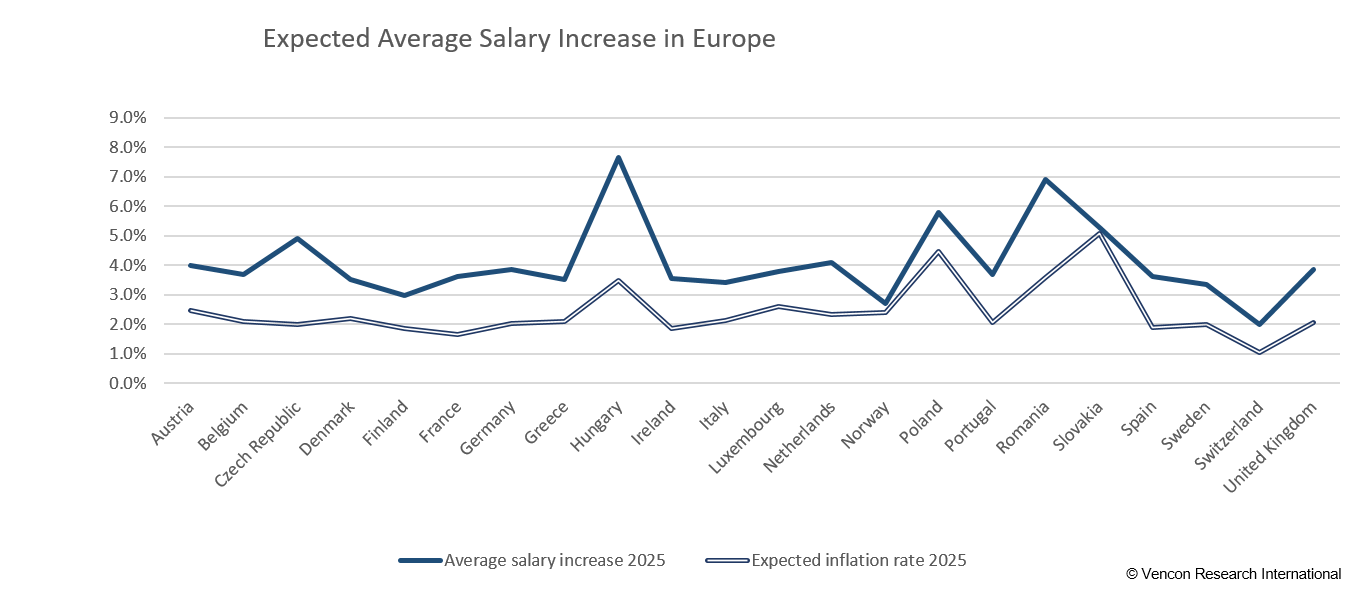
Expected Regional Salary Growth Projections: Americas
In 2025, salary increases across the Americas are projected to average 4.4%. Excluding Argentina, where hyperinflation distorts salary trends, Latin America is expected to see the highest wage growth in Colombia (6.1%), Mexico (5.4%), and Brazil (5.3%).
In North America, projected salary increases are more moderate, with Canada expected to see a 3.6% increase, while the United States is forecast at 3.7%.

Expected Regional Salary Growth Projections: APAC and MENA
According to our research, most locations in the APAC region are expected to maintain real salary growth rates similar to those seen in the previous year. Additionally, the region is projected to experience some of the lowest inflation rates globally. However, India stands out as a leader in salary growth, with an anticipated 9.3% increase.
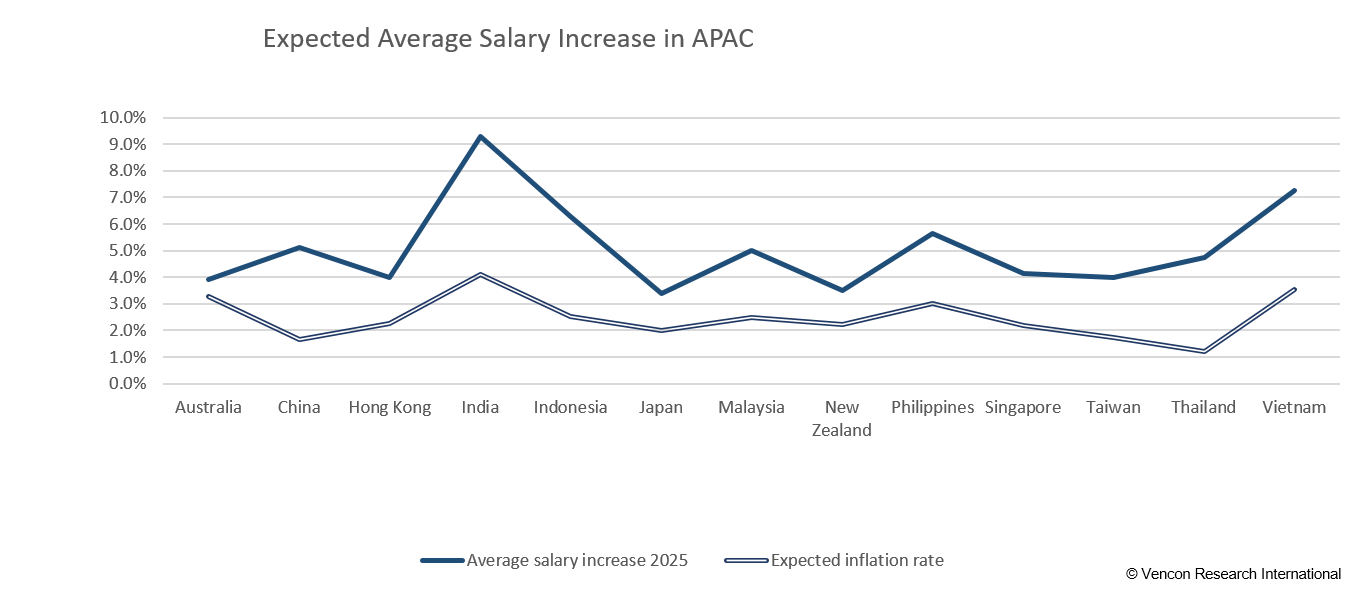
In the Middle East and South Africa, average salary increases are expected to be lower than last year but will still remain strong throughout 2025. Projected increases include 4.2% in Saudi Arabia, 5.9% in South Africa, and 3.8% in the United Arab Emirates.

Trends Influencing Salary Changes in 2025
Economic Slowdown and Company Performance
Despite overall salary growth, some consulting firms are moderating salary increases in response to economic slowdowns and declining deal activity, which traditionally drive industry revenues. As a result, firms are increasingly adopting a balanced approach—while base salaries continue to rise, performance-based bonuses may be adjusted downward, particularly in firms that rely heavily on transaction-driven consulting services. This shift reflects a broader focus on cost management and financial sustainability amid uncertain market conditions.
Demand for Digital and AI Expertise
Market dynamics, driven by digital transformation, are pushing up salaries for consultants with expertise in AI, big data, and cloud/cyber technologies. Major firms, including top-tier strategy consulting firms and the Big Four, are making significant investments in AI and data driven consulting solutions. As a result, professionals with strong tech and analytics capabilities are commanding premium salaries.
Demand on Expertise in Sustainability
As businesses increasingly prioritize sustainability and environmental, social, and governance (ESG) strategies, consultants specializing in these areas are seeing salary premiums. Firms are expanding their ESG consulting departments, creating new opportunities for professionals with expertise in sustainability initiatives and triggering subsequent effects on staffing and compensation packages.
Emerging Industry Trends and Competitive Landscape
While established consulting firms maintain their dominance through structured practices and global scale, emerging players and boutique consultancies are gaining traction by focusing on niche sectors and delivering agile, customized solutions. This shifting competitive landscape is fuelling salary growth, as firms compete for top talent with competitive compensation and enhanced benefits. As demand for specialized expertise rises, consultants with sought-after skills and deep industry knowledge are increasingly able to negotiate higher salaries and more lucrative opportunities.
Vencon Research provides consulting firms with precise, industry-specific compensation benchmarking, ensuring they stay competitive in a rapidly evolving market. Our research includes further detailed insights into salary increases for 2025 by country, line of business, and career level, helping firms understand pay trends and make informed compensation decisions.
Learn more about how Vencon Research can support your firm’s pay strategy.
Global Outlook: Expected Salary Increases for 2025

The management consulting industry is witnessing several transformative trends, driven by technological advances, evolving client expectations and strategic shifts within organisations.
Vencon Research has prepared an overview of the key trends currently shaping the landscape and the challenges being faced by the industry in 2025, specifically with regard to human resources management.
Authors:
Erwin Harbauer is Managing Director and founder of Vencon Research International
Hilmar Albers is Partner of Data Integrity at Vencon Research International
Andy Klose is Associate Partner and Advisory Leader at Vencon Research International
1. Emphasis on Specialised Expertise
Clients are increasingly looking for consultants with deep industry knowledge and specialised skills. The traditional model of “generalist” consulting is giving way to a demand for experts, who can deliver measurable results and adapt to clients' evolving capabilities. Consultancies are expected to refine their service offerings in order to deliver more targeted and impactful solutions.
This shift however requires the recruitment of a new breed of staff, often being recruited from sources outside of the current pool of top-MBA universities. Furthermore, this trend is however also creating significant disruption within traditional consulting companies, where the newly defined specialist roles are expecting access to senior leadership positions and/or partnership.
2. Integrating Artificial Intelligence (AI) and data-driven decision making
Advanced analytics, big data, and predictive modelling are becoming essential consulting tools. Data-driven decision-making allows consulting companies to deliver more precise and actionable insights to clients by leveraging vast amounts of structured and unstructured data. Consulting firms are using AI-powered business intelligence platforms to extract patterns, predict market shifts, and offer real-time strategic recommendations. With AI playing a larger role in business operations, ethical concerns regarding bias, transparency and governance are growing, increasing demand from organisations get advice on developing responsible AI strategies.
Internally, firms are investing heavily in AI technologies to improve productivity, automate routine tasks and offer innovative solutions to clients. For example, large firms have developed custom AI tools to assist with tasks such as email drafting, data formatting and document summarisation, allowing their consultants to focus on higher value activities. It is a matter of time before AI applications are rolled out into HR and compensation, however, caution will be advised to ensure accuracy and effectiveness in implementing such ambitious, and often unproved, technologies.
3. Decentralised and Blockchain-Based Consulting Solutions
Blockchain technology is beginning to find a foothold beyond finance, into areas such as supply chain and healthcare. As organisations experiment with tokenisation and smart contracts, consultants are increasingly called upon to advise on regulatory compliance, risk management, and the practical integration of these technologies.
4. Private equity investment and industry consolidation
There has been a notable uptick in private equity interest in consulting firms. These investments are fuelling strategic acquisitions and partnerships, expanding market reach while also forcing traditional equity partnerships to adapt to new ownership models and the challenges of integrating disparate corporate cultures.
It is important to note that these investments also bring significant cultural changes and financial implications for the traditional equity partnerships, who have to adapt to new ownership structures or, for example stemming from the merger and integration of the consultancies being purchased. Implications are also expected for the talent pool, as new, expanding or restructured firms make their mark on the local employment market.
5. Focus on Resilience and Risk Management
In response to geopolitical uncertainties and economic fluctuations, advisory services focused on building organisational resilience and effective risk management are in high demand.
Key focus areas include, for instance, geopolitical and financial risk management, supply chain resilience, cybersecurity, ESG compliance, and crisis preparedness to ensure long-term business stability.
6. Sustainability and ESG Advisory
Sustainability is no longer an optional business practice but a core strategic priority. Environmental, social and governance (ESG) consulting is shifting from compliance-focused approaches to holistic business transformation strategies. At Vencon Research we see both this and the previous Risk Management trend substantiated in steadily increasing demand for compensation benchmarking related to consultant roles in these fields.
7. Growth of Corporate Out-of-House Firms and Independent Consulting
A continuing trend is strong growth of consulting offering stemming from consulting practices that were originally founded to consult their parent companies in-house, as well as from firms that were otherwise more strongly focussed on non-consulting actively. Examples include Detecon, DSS+, IQVIA and Mastercard, all of which are now both well respected and seen as serious alternatives to traditional consulting firms working in their field of expertise.
In parallel, we see a notable uptick in prominence for “independent” consultants, i.e. freelance or individual service providers, with clients attracted by the autonomy and flexibility this alternative offers. This growth is leading to the formation of new consortia and networks of independent consultants, allowing them to collaborate on larger projects and share resources.
Both of these trends will increase the realm and span of potential competitors to the traditional consulting organisations – with consequent effects on staffing and compensation.
8. Niche and Specialised Boutique Consulting
The trend continues that competition increases from boutique consulting companies specialising in emerging fields such as ESG compliance, AI ethics, and supply chain resilience. Firms offering deep industry or functional knowledge are in great demand from a broad spectrum of clients. Careful evaluation is called for when deciding whether to include such firms as competitors in a benchmarking exercise. It may be that a firm competes for talent with such boutiques in a given market, or, conversely, their relative size, pay structure, and business focus may result in a skewed perception of the wider market.
Broader Recruitment Strategies
While each of the above trends brings its own set of considerations to HR and talent management, one additional shared is found in a consulting landscape that is continually becoming more diverse. Firms are expanding their recruitment efforts beyond traditional MBA programmes to include candidates from non-target schools, specialised master's programmes, PhDs and experienced professionals to allow more for more effective recruitment. This applies whether in generalist or specialist roles.
Salary Trends
Reviewing our own market data and recently published external sources indicates a worldwide anticipated “average” increase in salary budgets of approximately 3.7% in 2025 (we include Vencon Research data in this projection as an average across all positions and countries in our database).
This rate is marginally lower than the increase that was observed in 2024. While the management consulting industry continues to offer very competitive remuneration packages, the rate of salary growth in 2025 reflects a cautious approach amid evolving economic conditions.
Interestingly, we have seen a higher increase in the salaries typically being offered to recruits coming from outside of the traditional MBA programmes but only limited increases to those candidates from within the traditional channels for recruitment.
Vencon Research – Independent Insights for Consulting Firms
Vencon Research provides data-driven analysis and benchmarking tailored to the consulting industry. With a focus on clarity and precision, their research helps firms refine compensation strategies, assess market trends, and make informed decisions. Learn more at venconresearch.com
The Management Consulting Landscape in 2025: Trends and Challenges in HR

By Yao Tang - Business Development Manager
Companies across industries are expanding their consulting divisions through a mix of strategic acquisitions and internal growth. This trend is driven by the rising demand for integrated solutions, the pursuit of high-margin revenue, and the imperative to support clients through digital transformation. In this article, we explore the strategies behind these expansions, highlight key examples from various sectors, and discuss the HR challenges that arise when integrating consulting roles into existing compensation structures.
Expansion Across Sectors
The trend toward incorporating or expanding consulting capabilities is evident across a range of sectors—from technology to private equity, specialized industries, and traditional accounting—where companies are leveraging strategic acquisitions and internal growth to meet the rising demand for integrated, expert advisory services.
A. Technology Firms Moving Beyond IT Services
Technology companies are increasingly shifting from their traditional focus on IT services to broader consulting roles. For instance, NEC’s acquisition of ABeam Consulting in 2023 represents a strategic move to expand its advisory offerings. Similarly, in 2023, Accenture’s acquisition of InfinityWorks—a leader in agile digital transformation solutions—underscores the growing demand for integrated advisory services. In addition, other types of firms are also responding to this trend; for example, EY’s 2022 acquisition of Nuvalence has enhanced its digital transformation expertise, reflecting a broader industry move toward offering comprehensive, end-to-end consulting solutions.
B. Private Equity’s Interest in Consulting
Private equity firms are capitalizing on the high-margin revenue potential of consulting services. The ongoing discussions by Apax Partners to acquire a majority stake in CohnReznick, along with Inflexion’s 2025 acquisition of Baker Tilly Netherlands, reflect a broader trend of investing in professional services with established consulting practices. These moves are not only financial transactions but also strategic efforts to diversify revenue streams and build more resilient business models.
C. Specialized Industry Consulting
In specialized fields such as life sciences, biotech, and pharmaceuticals, targeted acquisitions have become a key strategy. Sia Partners’ 2022 acquisition of Latham BioPharm, for example, deepened its expertise in these sectors. By focusing on niche advisory services, firms can offer tailored solutions that address the specific regulatory and operational challenges inherent in these industries.
D. Accounting Firms Strengthening Their Advisory Services
Accounting firms have long offered professional advisory services, and many are now expanding these capabilities. PwC’s 2023 acquisition of Sagence boosted its data and digital transformation advisory, while Deloitte has expanded its digital consulting presence in both the U.S. and Europe. KPMG’s acquisition of Russell Reynolds Associates and Grant Thornton’s 2024 partnership with New Mountain Capital further underscore the trend of blending traditional accounting services with modern consulting approaches.
Key Drivers Behind the Expansion
Several factors are motivating firms to broaden their consulting capabilities:
- Digital and AI Expertise: The rapid adoption of technologies such as cloud computing, automation, and AI has created an urgent need for expert guidance. Consulting services now play a critical role in helping organizations navigate digital transformation.
- Revenue Diversification: Consulting provides recurring, high-margin revenue streams that complement other business areas. This diversification is particularly attractive in a volatile market environment.
- Client Demand for Integrated Services: Clients increasingly seek comprehensive, end-to-end solutions that combine strategic advice with practical implementation. Firms are responding by integrating consulting services into their broader offerings.
HR Challenges in Integrating Consulting Roles
Integrating consulting roles into established compensation structures presents several HR challenges:
1. Differing Compensation Structures
- Consulting Models: Often include performance-based bonuses, accelerated salary progression, and equity incentives at senior levels.
- Corporate Models: Typically rely on fixed salary bands and standardized annual raises.
- The Challenge: Balancing these models to avoid pay disparities while remaining competitive in both markets.
2. Incentives and Career Progression
- Consulting Firms: Employees expect rapid promotions and profit-sharing opportunities.
- Traditional Corporations: Generally emphasize structured career growth based on tenure.
- The Challenge: Designing career paths that attract top consulting talent without undermining traditional career progression models.
3. Recruitment and Retention
- Consulting Talent: Often drawn to project-based, performance-driven roles but tend to be more mobile.
- Corporate Talent: Typically prefer longer-term, specialized roles with predictable career paths.
- The Challenge: Crafting recruitment and retention strategies that effectively appeal to both types of professionals.
4. Accurate Benchmarking of Compensation
- Consulting Benchmarks: Usually compared against peer consulting firms.
- Corporate Benchmarks: Often aligned with industry-specific salary norms.
- The Challenge: Developing a hybrid benchmarking approach that reflects both consulting and corporate compensation standards to ensure internal equity and external competitiveness.
How Vencon Research Supports Compensation Strategy
Vencon Research plays a crucial role in helping firms navigate these HR challenges by providing detailed compensation benchmarking for consulting roles. With access to comprehensive market data, organizations can align their pay structures with industry standards while maintaining competitiveness and internal equity. Whether expanding a consulting division or restructuring compensation strategies, Vencon Research offers insights that support strategic growth and stability.
For more information on aligning your compensation strategy with industry standards, please contact Vencon Research to learn how our services can support your organization’s strategic objectives.
Expanding Consulting Capabilities: Why More Firms Are Investing in Advisory Services

The European Union has introduced an important update to its regulations on pay transparency, aimed at addressing gender pay disparities and fostering greater fairness in salary practices across its member states.
This new legislation mandates that companies disclose salary information in job postings, provide employees with clear insights into pay structures, and allow individuals to understand how their compensation compares to others in similar roles. While this shift represents a major leap toward a more transparent and equitable workplace, it also creates new challenges and opportunities for businesses to adapt their compensation practices in line with evolving regulations.
What the EU Pay Transparency Directive Means for Employers
The EU’s Pay Transparency Directive, which will fully take effect by 2027, imposes several key obligations on employers. One of the most significant changes is that companies with 250 or more employees (and eventually 100 employees by 2031) will be required to disclose detailed pay data. This includes breaking down salaries by gender and role, a practice that will no longer be hidden behind confidentiality clauses or other restrictive policies. Companies will also be required to report this data on an annual basis, increasing visibility of any pay disparities and putting pressure on businesses to act.

Under the new rules, if a gender pay gap of over 5% is discovered, employers must conduct a joint pay assessment with employee representatives to investigate the cause of the gap and take corrective measures. This provision forces businesses to confront any existing disparities and make necessary adjustments to their compensation structures. Furthermore, employees will have the right to request pay information at any time, enabling them to negotiate more effectively and ensure fair treatment in salary discussions.
Ensuring Competitive and Fair Compensation
The introduction of these new transparency measures highlights the need for companies to stay competitive by offering fair compensation packages that align with market standards. With the increased visibility into pay structures, firms will need to be proactive in reviewing their compensation practices to ensure they meet legal requirements and reflect industry trends.
By using detailed, market-based data, organizations can make informed decisions about their pay structures, ensuring they attract top talent while maintaining equity within their teams. This becomes especially important as businesses seek to comply with the new EU regulations and avoid potential backlash for not addressing pay disparities.
Adapting to the New Regulatory Landscape
The EU’s pay transparency initiative is more than just a regulatory obligation; it is an opportunity for businesses to demonstrate their commitment to fair pay practices. Firms must act swiftly to ensure their compensation structures are not only compliant but also aligned with broader market expectations. This will involve examining not just salary figures, but the full spectrum of compensation, including benefits, bonuses, and other forms of remuneration.
For consulting firms, particularly those in industries with highly competitive labour markets, staying ahead of the curve in terms of pay equity and transparency will be essential. As firms adjust their compensation models to comply with new laws, they will also need to ensure they remain attractive to potential hires, particularly in an era where talent is at a premium.
Embracing Transparency, Strengthening Competitiveness
The EU's new Pay Transparency Directive marks a significant step toward reducing gender pay gaps and promoting fairness in compensation practices across industries. While these changes may pose challenges, they also provide an important opportunity for businesses to assess and refine their pay practices to ensure they are both competitive and compliant.
With full implementation set for 2027, companies will need to act quickly to ensure compliance and begin integrating the necessary changes. At Vencon Research, we are committed to helping consulting firms navigate these regulatory changes and build stronger, more equitable compensation structures. With a focus on providing detailed and relevant benchmarking data, we support our clients in maintaining compliance while ensuring they remain attractive employers in an increasingly transparent labour market. Through comprehensive, data-driven insights, businesses can confidently adapt to the new EU regulations and continue to foster an environment of fairness and competitive compensation.
At Vencon Research, we specialize in helping consulting firms adapt to regulatory shifts like the EU Pay Transparency Directive. Our detailed benchmarking data and HR expertise enable firms to build equitable and competitive compensation structures. Contact us today to stay ahead of the curve and demonstrate your commitment to fair pay practices.
Understanding the EU's New Pay Transparency Directive

By Veronika von Strachwitz-Camara - Business Development Senior Manager
While cash compensation often takes centre stage in compensation benchmarking, benefits play an equally important role in attracting and retaining talent.
In the consulting industry, where competition for skilled professionals is intense, offering a robust and relevant benefits package can be a decisive factor for employees at every career stage. Here's a closer look at why consulting firms should prioritize benchmarking their benefits.
Understanding Benefits: More Than "Fringe"
Benefits encompass a wide array of offerings, both cash-related and non-cash-related. These can be categorized into:
- Hard Benefits: Tangible offerings with direct financial value, such as healthcare, life insurance, retirement contributions, and car allowances.
- Soft Benefits: Non-financial perks that improve work-life balance or enhance the workplace experience, including vacation days, sabbaticals, parental leave, professional development support, and flexible work arrangements.
Both types of benefits are essential, but their significance varies with employee preferences, career stage, industry trends, and market specifics. Early-career employees often value immediate financial perks like healthcare and allowances, while experienced professionals prioritize retirement plans and security. Regional differences also play a critical role; for example, countries with limited public services require robust private benefits, while flexible work policies are highly valued in regions where work-life balance has become a cultural norm. Consulting firms must adapt their offerings to align with global trends, local market demands, and the diverse needs of their workforce to stay competitive.
The Case for Benchmarking Benefits
By regularly evaluating and aligning their offerings, firms can remain competitive, adapt to evolving trends, and meet the diverse needs of their workforce.
Here are ten compelling reasons consulting firms should prioritize benefits benchmarking:
1. Attract and Retain Top Talent
Consulting firms face fierce competition for highly skilled professionals. To stand out, they must offer benefits packages that align with what employees value most.
- New Hires: Often prioritize hard benefits due to their tangible nature.
- Tenured Employees: Place greater emphasis on security-related benefits like health coverage and retirement planning.
2. Ensure Competitiveness
Benchmarking ensures consulting firms stay competitive by understanding how their benefits compare to industry standards.
- Market Positioning: While some firms aim to offer benefits at the market average, others—especially top-tier strategy consultancies—strive to lead the market to gain a distinct edge.
3. Stay Aligned with Market Trends
Regular benchmarking helps firms adapt to emerging trends. Some notable examples include:
- Unlimited Vacation Policies (popular in the US and UK).
- Fertility Treatments as part of health benefits.
- General Mobility Allowances for eco-friendly commuting options.
Adopting forward-thinking benefits also enhances a firm's image as modern and employee-focused.
4. Support Work-Life Balance
Consulting is demanding, often involving long hours and frequent travel. Benefits like mental health support, remote work options, and sabbaticals are increasingly valued. Ultimately, a healthy work-life balance is an essential driver of sustainable productivity.
- Generational Shift: Younger employees tend to prioritize work-life balance over traditional markers of success like salary or status, focusing on vacation days, sabbaticals, and team-building events.
5. Optimize Cost-Effectiveness
Benchmarking helps firms allocate resources wisely:
- Identify underutilized benefits and redirect funds to those with higher perceived value.
- Avoid overinvesting in trendy but low-impact perks while ensuring sought-after benefits are covered.
6. Address Demographic Shifts
- Retirement Security: With decreasing public pension guarantees, private retirement options are critical for employees at all stages.
- Health Insurance: A robust health plan is increasingly vital as public offerings shrink in many markets.
7. Foster a Modern Workplace Culture
Younger professionals are drawn to firms with:
- Considered Workspaces: Well-designed offices, collaborative environments, and wide-ranging amenities.
- Social Perks: Team-building events and activities that foster camaraderie.
Maintaining a balance between traditional benefits and modern workplace culture is a challenge but critical to success.
8. Regional Considerations
Different regions have unique needs that must be addressed when structuring benefits. For example:
- In the US, where public benefits are minimal, firms must offer comprehensive private packages to ensure employees have adequate coverage.
- In GCC countries, benefits packages often need to reflect expectations around allowances, housing, and even child education, making it important to understand these specific regional requirements.
9. Legal Requirements
Benchmarking benefits can help firms navigate local legal frameworks, ensuring compliance with labour laws and industry standards.
- For companies opening offices in new regions, detailed benefits reports are invaluable to understand local legal obligations and competitor offerings.
- This ensures firms structure benefits packages that meet regulatory requirements while staying competitive in the local market.
10. Encourage Innovation in Benefits Strategy
Analysing competitors' offerings can inspire innovative, cost-effective solutions that resonate with employees. Benchmarking may also highlight gaps or strengths in current offerings, equipping HR teams with data to better communicate benefits' value to employees.
The Vencon Research Approach
Benchmarking benefits is not just about staying competitive; it’s about understanding and responding to what employees truly value. For consulting firms, this translates to happier, more engaged teams and a stronger position in the talent market. By leveraging detailed insights from Vencon Research, firms can craft benefits packages that deliver value for both employees and the business.
Vencon Research specializes in compensation and benefits benchmarking for consulting firms. Our Benefits Reports are tailored to the consulting industry, offering:
- Detailed market insights.
- Up-to-date trends and legal requirements.
- Customized solutions for specific regions or firm needs.
Available as off-the-shelf or bespoke reports, they provide the comprehensive data consulting firms need to stay competitive in a rapidly evolving landscape.
Beyond Salaries: The Case for Benchmarking Benefits in Consulting

By Mik Bodnar - Business Development Senior Manager
Strategy consulting firms are facing notable shifts in workforce dynamics, shaped by evolving market demands and regional economic conditions. Recent analysis by Vencon Research highlights significant headcount trends across Germany, Japan, the UAE, the UK, and the USA, offering valuable insights for HR leaders faced with these realities.
Workforce Trends in Strategy Consulting
The consulting industry continues to grapple with tightening talent markets and rising compensation pressures. Entry-level positions have been disproportionately affected, reflecting cost containment strategies and evolving hiring priorities. At the same time, senior roles such as Principal-level positions remain in demand, suggesting a focus on leadership and specialized expertise.
Meanwhile, regional disparities have become more pronounced. While mature markets like Germany and the USA reported negligible changes in overall headcount, the UAE experienced exceptional growth, driven by strong demand for consulting services in the region.
These trends align with broader industry shifts. Hybrid work models, purpose-driven consulting, and demand for cross-functional expertise are reshaping workforce strategies in the sector. Effective talent management, including targeted upskilling and leadership development programs, has become critical for retaining top talent in an increasingly competitive market.
Findings from Vencon Research

Vencon Research's year-on-year analysis of strategy consulting firms reveals the following key trends:
- Declines in Entry-Level Roles: Analyst positions experienced the largest reductions, with headcounts decreasing by over 10% in Japan, the UK, and the USA.
- Growth in Senior Roles: Principals were the only group to show consistent headcount increases across all regions studied.
- Regional Variations:
- Minimal Changes in Germany and the USA: Overall headcounts remained relatively stable.
- Decreases in Japan and the UK: These markets saw modest declines in total headcount.
- Exceptional Growth in the UAE: Headcount increased by nearly 20%, with associate roles surging over 40%.
Implications for HR Leaders in Strategy Consulting
Current workforce trends present both challenges and opportunities for HR and business leaders in strategy consulting. As firms reassess their approaches to talent management and compensation, several key questions emerge:
- Are our workforce trends aligned with market benchmarks, or should we adjust to remain competitive?
- How can we capitalize on opportunities to attract top talent amid rising attrition at competing firms?
- What measures can optimize compensation strategies, particularly for critical senior-level roles?
Addressing these issues demands a balanced strategy—maintaining workforce stability while remaining responsive to changing economic and market conditions. For example, reductions in entry-level positions may appear manageable in the short term but could weaken the talent pipeline over time. Conversely, growth at senior levels underscores the importance of retaining and fairly compensating leadership talent while controlling costs.
Making informed decisions starts with access to accurate, market-specific data. Vencon Research provides targeted solutions to help firms act decisively. Our compensation benchmarking services deliver precise, actionable insights tailored to strategy consulting firms, enabling leaders to align pay structures with evolving market realities. By including detailed job matching as a core component, these services ensure roles are benchmarked with precision, providing a solid foundation for competitive and equitable compensation plans.
Beyond benchmarking, Vencon Research offers customized solutions to tackle unique challenges. Whether addressing talent shortages in established markets, identifying growth opportunities in high-demand regions like the UAE, or refining workforce strategies in response to economic shifts, our expertise equips firms with the tools to act with confidence.
To learn how Vencon Research can support your firm in meeting workforce and compensation challenges, visit venconresearch.com. With comprehensive insights and practical solutions, strategy consulting firms can position themselves not only to overcome today’s challenges but to strengthen their teams for long-term success.
Workforce Adjustments in Strategy Consulting: Insights from 2023–2024

By Osas Ohenhen - Business Development
In compensation benchmarking, the choice of peer firms can make or break the quality of insights gained. Selecting firms that align closely with your company in industry, size, and business model ensures the data collected is relevant and actionable.
The Foundations of Benchmarking
A successful benchmarking process typically involves four key steps that build upon each other to deliver accurate, meaningful results:

- Selecting the most appropriate competitors
- Choosing the most applicable “Line of Business” (e.g., consulting functions)
- Completing an accurate “Job/role matching”
- Comparing the relevant components of remuneration
Each step requires careful consideration and expertise to ensure that benchmarking efforts translate into informed compensation strategies. In this article, we will examine the first step—selecting the most appropriate competitors—and why it is important for a meaningful comparison.
Consulting Industry Segmentation
The consulting industry is highly segmented, with each area bringing unique compensation dynamics. Strategy consulting firms, for example, often pay higher base salaries and offer substantial performance bonuses to match their high-level project demands. IT consulting, on the other hand, spans a range of roles, with compensation varying widely based on technical skills and certifications needed for rapidly changing tech requirements. Operations management consulting emphasizes efficiency and stability, with compensation reflecting deep industry knowledge. Meanwhile, accounting and full-service consulting firms often balance base pay with moderate performance incentives to suit their compliance-focused work.

Firm size and revenue add further complexity: large, multi-service firms may standardize base pay with practice-area bonuses, while smaller firms may emphasize profit-sharing or equity. These variations make selecting relevant competitors essential for reliable benchmarking across consulting segments.
Why Selecting the Right Competitors is Essential
Choosing the right competitors allows firms to create benchmarks that align with their unique demands and operational scope. This process involves four key considerations:
- Ensuring Industry Relevance and Specificity: Given the segmentation within consulting, each firm may operate in a distinct practice area or sector, such as healthcare, technology, or sustainability consulting. Selecting competitors within the same niche ensures salary benchmarks reflect the unique demands and compensation patterns of that specific consulting area. For instance, a technology-focused firm should benchmark against other technology consultants rather than financial advisors.
- Matching Client Scope and Project Complexity: Selecting competitors of similar scale and complexity allows for compensation comparisons that reflect the firm’s workload, client sophistication, and employee expertise. For example, comparing a boutique consulting firm to a large, global consultancy may skew results. Instead, a boutique firm might benchmark against other regionally focused or similarly scaled consulting firms.
- Influences Employer Brand and Talent Attraction: Benchmarking against respected industry leaders or firms known for competitive pay can enhance a company’s reputation, making it more attractive to top talent. Peer selection directly impacts how prospective employees perceive a firm’s compensation practices.
- Promotes Retention by Offering Competitive Packages: Benchmarking with relevant peers also aids in employee retention, ensuring that pay and benefits align with industry standards. Employees who feel fairly compensated relative to the market are less likely to leave, helping reduce turnover and its associated costs.
Vencon Research’s Approach to Selecting the Right Competitors
At Vencon Research, we recognize that effective salary benchmarking starts with carefully selecting the right competitor group. This goes beyond simply selecting firms within the same industry, rather this needs to be aligned with the firm’s position in the talent market, its hiring needs, and retention goals. To this end, we ask three important questions to guide the peer selection process.

1. Which firms are you competing with in the market?
This first question identifies the direct market competitors—firms operating in the same or similar lines of business, often targeting the same client base or market segment. Benchmarking against these firms provides insight into how competitors compensate roles that are crucial to maintaining a competitive edge in the industry.
2. Which firms are you / might you be losing people to?
Understanding where an organization’s employees are going when they leave can be highly revealing. By selecting competitors who frequently attract departing employees, we gain insight into what might be drawing talent away. This allows Vencon Research’s clients to adjust their compensation packages, benefits, or career progression opportunities to improve retention.
3. From which firms do you / might you hire people?
This question focuses on the talent pipeline. Knowing where new hires are likely to come from helps Vencon Research tailor peer selection to ensure salaries are attractive to candidates coming from specific backgrounds. Benchmarking against firms that are common sources of talent enables organizations to position themselves as an appealing next step for potential hires.
Aligned Compensation Strategies
Vencon Research’s approach to competitor selection through these three questions provides a 360-degree view of the talent landscape. By understanding not only who the immediate competitors are but also who attracts or supplies talent to the organization, Vencon Research enables clients to build compensation strategies that are highly aligned with their market position and talent needs.
This comprehensive approach to peer selection is central to Vencon Research’s commitment to providing clients with compensation benchmarks that are not only accurate but also strategically aligned with business and talent goals.
Consultant Salary Survey: An Invaluable Tool for Compensation Management
Salary survey reports are invaluable tools for compensation management. By understanding key indicators and leveraging data-driven insights, businesses can develop competitive compensation strategies that attract, retain, and motivate top talent effectively.
Find out more about Vencon Research's Consultant Salary Survey here.
As a trusted HR partner for the consulting industry, Vencon Research is here to help you unlock the full potential of your team. Contact us to learn more about how we can support your HR needs and drive success for your business.
The Importance of Peer Selection in Salary Benchmarking


Accurate job matching is a critical step in salary benchmarking and setting pay ranges. It goes beyond simply comparing job titles; it involves a thorough examination of the tasks, responsibilities, skills and qualifications required for each role to ensure that the positions being compared are truly aligned. Without this precision, compensation structures can become inconsistent, leading to issues such as overpaying or underpaying employees, internal dissatisfaction, and difficulties in attracting and retaining top talent.
Why Accurate Job Matching Matters
Getting roles aligned when salary benchmarking is especially important in the consulting sector due to the complex and varied nature of consulting roles. Consultants often work across different client industries, each with unique demands, and their responsibilities may shift depending on the project, client, or region. This makes it critical to go beyond surface-level job titles and ensure a deep understanding of the specific tasks & responsibilities as well as experience and expertise required for each position. Accurately aligning the roles to be compared in a benchmarking exercise (i.e. job matching) also:
- Ensures fair compensation: When roles are accurately matched, organizations can set salaries that reflect the actual work being done. This prevents disparities that could arise from comparing roles that aren’t equivalent in scope or responsibility.
- Reduces pay inequities: Proper job matching helps maintain equity by ensuring that employees with particular responsibilities and skills are compensated at similar rates across markets. This fosters a sense of fairness and reduces the risk of pay-related grievances.
- Enhances talent retention: Competitive and fair compensation is key to retaining top talent. When job matching is done accurately, organizations can better align their pay scales with the market, not just across broader levels, but also at more granular sub-levels. This ensures that existing incumbents are paid exactly what they deserve, while attracting the right candidates to the role.
- Supports strategic decision-making: Accurate job matching provides reliable data that can be used to make informed decisions about salary adjustments, promotions, and workforce planning.
Key Principles for Accurate Job Matching
At Vencon Research, we don’t see job matching as an extra; it's at the heart of how we benchmark salaries. By prioritizing this process and working closely with our clients, we help ensure that compensation structures are fair, competitive, and aligned with the realities of the market. This level of detail is what sets us apart and helps our clients stay ahead in attracting and retaining talent. Key principle in our methodology are:
- Focus on tasks & responsibilities, not titles: Job titles can be misleading, as the same title might encompass different responsibilities across companies. The focus should be on what the job actually entails—its core duties, the level of decision-making required, and the tasks, responsibilities and skills necessary to perform the role.
- Consider experience and skills: Beyond responsibilities, the experience and skills needed for a role should be closely examined. This ensures that comparisons are made between roles that require similar levels of expertise.
- Use a tiered approach: Grouping roles into tiers based on their level of responsibility and impact within the organization can help standardize the job matching process. This makes it easier to compare similar roles across different industries and companies.
- Engage in collaborative analysis: Job matching shouldn’t be a one-sided process. Engaging multiple stakeholders—such as HR professionals, hiring managers, and industry experts—can provide a more comprehensive view of the role and ensure that all relevant factors are considered.
- Keep market trends in mind: The job market is dynamic, and roles evolve over time. Regularly updating job matching criteria to reflect current trends in responsibilities and required skills is essential for maintaining accuracy.
Defining Career Progression and Levels
Our career progression structure reflects a transparent roadmap from entry-level Analysts to Partners. Matching participant firms’ own job levels to this structure serves as the foundation for accurate salary benchmarks. Mis-leveling a role can lead to significant discrepancies in pay so ensuring that roles are placed at the correct level is crucial. When incorporating a participant firm for our benchmarking surveys, we analyse the firm’s roles and find the appropriate match across 15 individual sublevels in order to structure in line with a standard 5 level / 15 sublevel output. Alternatively, we adjust to an output that reflects their own level matching. In both cases, we work closely with the firm to ensure the exercise is accurate and reflects the realities of the roles.

Task and Responsibility-Driven Matching
Vencon Research’s methodology focuses on task and responsibility-driven matching to ensure roles are assigned to the correct level. Unlike time-based metrics, this approach aligns job matching responsibilities, ensuring that tasks, responsibilities, skills and competencies directly correspond to the actual requirements of each role. This leads to a more accurate and nuanced understanding of an individual’s contribution.

Our criteria for each level are extensive, and build on a distinct understanding of differing tasks and responsibilities as a consultant progresses in their career from an Analyst via Principal (Consultant Salary Surveys) to a Primary Partner and further to a Senior Partner (Partner Salary Survey). At the entry level, Analysts focus on data gathering and analysis under supervision. As professionals advance to the Associate level, they engage more with clients and manage projects, requiring advanced analytical tools and leadership skills. Managers take on the first level of personal responsibility as well as full accountability for project deliverables and deepen their industry-specific expertise. Senior Managers oversee multiple assignments, guiding junior colleagues while managing profit and loss responsibilities. the final level within the Consultant Salary Surveys is the Principal level, those taken out of the “day to day” business and responsible for implementing the strategy decisions decided upon by the partners (Partner Survey).

A Commitment to Accuracy
Accurate job matching is more than just a technical exercise; it is the essential entry point to fair and effective compensation structures. When done right, it ensures that salaries align, first and foremost with actual job responsibilities, while also aligning with market standards, fostering a sense of fairness within the organization and beyond. This, in turn, helps retain top talent and positions the company as an attractive place to work.
For organizations, the benefits of accurate job matching are clear—ensuring competitive pay, maintaining internal equity, and supporting informed decision-making. By following principles such as focusing on tasks and responsibilities over titles, engaging in collaborative analysis with experts and keeping an eye on market trends, companies can create compensation structures that are not only fair but also competitive.
At Vencon Research, we place job matching at the heart of our benchmarking process because we believe that precision in this area sets the stage for everything else. By working closely with our clients and using a task and responsibility-driven approach, we help ensure that their compensation strategies are built on a solid foundation, enabling them to attract, retain, and motivate the talent they need to succeed.
An Invaluable Tool for Compensation Management
Salary survey reports are invaluable tools for compensation management. By understanding key indicators and leveraging data-driven insights, businesses can develop competitive compensation strategies that attract, retain, and motivate top talent effectively.
Find out more about Vencon Research's Consultant Salary Survey here.
As a trusted HR partner for the consulting industry, Vencon Research is here to help you unlock the full potential of your team. Contact us to learn more about how we can support your HR needs and drive success for your business.
Refining Salary Benchmarks for Consulting: The Essential Role of Job Matching

Key HR indicators for the consulting industry
This collection of market statistics briefs highlights key consulting market statistics across six countries in the Asia-Pacific (APAC) region: Australia, China, India, Japan, Singapore, and South Korea. It offers insights into various key factors, such as the highest paying lines of businesses, market growth, starting salaries, career progression, and market pay level.
Notable highlights across APAC countries
- The year-on-year market headcount increase across these six countries ranged from 5% to 10%, with “Energy, Environment, Sustainability Consulting” and “Risk Advisory Services” lines of businesses witnessing the largest growth.
- The average time required to progress from analyst level to partner level ranged from 24 to 28.5 years, with China having the fastest track.
- “Strategy-Oriented Management Consulting” was one of the highest-paid lines of business.
- Japan had the highest bonuses (relative to fixed salary) across LOBs and levels (18% median and 43% maximum) and Australia the lowest (10% median and 28% maximum).
The sheets also present median salaries for all Vencon Research career levels as percentages of basic salaries paid in the United States. Out of the six countries presented here, consultants in Australia and Singapore were paid the highest, ranging from 50% to 75%, while those in India were paid the least, ranging from 13% to 38%.
Download: APAC Consulting Market HR Brief Series

By Andy Klose - Associate Partner, Head of Advisory
Traditional single-track career and salary models often employ wide salary bands, which can lead to pay compression and employee dissatisfaction. In contrast, multi-track career and salary models offer a clear path for advancement and compensation, fostering motivation and transparency. This article explores the drawbacks of wide salary bands and the benefits of adopting multiple career tracks with defined salary increments.
The Problem with Wide Salary Bands
Wide salary bands within a single-track career model can create significant challenges for organizations and their employees. These bands are typically characterized by overlapping salary ranges that are often wider than the market average.

These wide salary bands can lead to several issues:
- Pay compression and low pay hygiene: Wide salary bands result in pay compression, when salary increases over time do not adequately reflect differences in responsibilities, role, experience, or performance. This compression can cause high-performing employees to feel underappreciated and undervalued, leading to decreased motivation and loyalty. Moreover, the lack of clear pay hygiene — meaning transparent and fair salary structures — can result in dissatisfaction and disengagement.
- Confusion and false expectations: The lack of clarity regarding pay increases and promotions often leads to confusion and false expectations. Employees may expect significant pay increases upon promotion, only to be disappointed by minimal adjustments. This can result in frustration and a sense of stagnation, particularly for high-performers who feel their efforts are not adequately recognized.
- Sense of unfairness and demotivation: Employees may perceive the wide salary bands as unfair, especially if they see colleagues at the same career level (even if roles and performance may be different) earning significantly different salaries. This perception of unfairness can demotivate employees, reducing their productivity and commitment to the organization.
- Lack of transparency and meritocracy: The single-track model frequently lacks transparency, as the pay grid is not shared with employees. This opacity allows for pay increases to be subject to discretion, leading to end-of-year negotiations that can descend to the level of haggling. Such practices undermine meritocracy, affecting employee motivation and loyalty.
Examples of Single-Track Model Issues

Theoretical potential vs. reality (1): In theory, an employee could move from the bottom of one salary range to the top of the next, a potential increase of approximately 250%. However, in reality, the company may offer just an 8% raise.
Discretion vs. planned pay advancement (2): A high-performer may expect to receive a 15% increase based on experience from previous promotions, while the company may prefer to offer just an 10% raise.
Frustration with pay disparities (3): Employees can become frustrated when they learn that colleagues at the same level are earning significantly more, e.g., with Base Salaries several times higher, especially if there is not much more differentiation than career level (e.g. to understand how roles may differ).
The Benefits of Multiple Career Tracks
In contrast to the single-track model, multi-track career and salary models offer a more structured and transparent approach to compensation. The multi-track model defines specific roles and levels within the organization, each with a set Base Salary or “spot value” along various distinct tracks.

Key advantages of the multi-track career and salary models include:
- Clear pay development: For each track and level, Base Salary is clearly defined, with increases to the next levels outlined as specific percentages. This clarity creates a straightforward path for employees, allowing them to understand exactly what they need to achieve to advance.
- Transparency and clarity: The pay grid in a multi-track model is typically transparent, providing employees with a clear understanding of their pay potential. This transparency eliminates confusion and sets realistic expectations for salary development.
- Reduced need for negotiation: Since the company adheres to a set pay grid, there is little need for negotiation. Variance in compensation is based on KPI achievements and variable bonus pay-outs, which reflect performance differences and motivate high-achievers.
- Focus on meritocracy: The model based on "spot values" promotes a meritocratic environment, as seen in many leading strategy consulting firms. Employees know what Base Salary to expect at the next career level, shifting their focus to achieving promotions rather than negotiating salaries.
Optimising Career Tracks
The transition from a single-track career and salary model with wide salary bands to a multi-track model with defined salary increments offers numerous benefits for both organizations and employees. By providing clear pathways for advancement and compensation, companies can foster motivation, transparency, and a meritocratic culture that attracts and retains top talent.
The multi-track model addresses the challenges posed by wide salary bands, creating an environment where employees are motivated to excel and achieve their career goals.
We are at your disposal for further questions and suggestions regarding how you optimally design career tracks (and/or remuneration systems) for your company.
Andy Klose is an Associate Partner at Vencon Research International and heads the firm’s consulting unit.
Vencon Research International is a leading provider of compensation benchmarking and research as well as of compensation and performance-related consulting services for professional service firms, especially for audit and tax, management consulting, and IT services firms. Vencon Research International provides services to a full range of clients in more than 75 countries worldwide and is proud to name more than 85% of the world’s major consulting and/or professional services firm its clients.
Disclaimer: The example provided is simplified, and these are not suggestions but ideas. Any real-life application or implementation requires an in-depth analysis of the client’s circumstances, along with a custom-designed solution. Decisions regarding compensation models should be made with careful consideration of the organization’s specific needs and objectives.
A Case Against Pay Ranges and For Multiple Career Tracks

Key HR indicators for the consulting industry
This collection of market statistics briefs highlights key consulting market statistics across five countries in the Eastern Europe region: Hungary, Slovakia, Poland, Czech Republic, and Romania. It offers insights into various key factors, such as the highest paying lines of businesses, market growth, starting salaries, career progression, and market pay level.
Notable highlights across Eastern Europe
- The year-on-year market headcount increase across these five countries ranged from 1% to 4%, with “Strategy-Oriented Management Consulting” and “IT Risk & Cyber Security Consulting” lines of businesses witnessing the largest growth.
- The average time required to progress from analyst level to partner level ranged from 25 to 30 years, with Poland and Hungary having the fastest track.
- “Strategy-Oriented Management Consulting” was one of the highest-paid lines of business and "Big Data and Analytics" also ranked among the top three highest paid in three of five countries.
The sheets also present median salaries for all Vencon Research career levels as percentages of basic salaries paid in the United States. Out of the five countries presented here, consultants in Czech Republic were paid the highest, ranging from 30% to 61%, while those in Hungary were paid the least, ranging from 23% to 42%.
Download: Eastern Europe Consulting Market HR Brief Series

By Makar Evdokimov - Data Integrity Senior Associate
At Vencon Research, we pride ourselves on being the leading specialist provider of compensation and pay metrics to the global professional services, management, and IT consulting industries.
In this article we take a closer look at the statistical measures used in our compensation reports to represent remuneration levels in the market. Taken together these ensure accuracy and relevance for a variety of benchmarking purposes.
Mean: a common starting point with considerable limitations
Looking at the average (mean) salary might be the most intuitive way to get an idea about the overall situation in the market. Statistically speaking, the arithmetic mean is an unbiased estimator of expected value, so from a theoretical perspective, it is a meaningful way to describe the distribution of values with a single number. However, in practice, the average may be somewhat misleading, especially when dealing with remuneration.

Even if we compare employees that have very similar scope of responsibilities and hold positions in firms which are direct competitors, the financial compensation may vary drastically from one case to another. Quite often, such a population will include a few individuals whose remuneration is substantially higher than that of the rest of the group. Such incumbents would be the outliers that drive the average value for the population upwards. The average considers all remuneration values in the population, but it may still be considerably higher than the financial compensation of most of the employees. This undermines the ability of the mean to represent the level of remuneration in the market. Therefore, it is common practice to use other, more robust indicators to aggregate remuneration data in a meaningful way.
Median and percentiles: analysing data distribution
The median is the most common measure used when evaluating remuneration levels in a market. While the mean requires an arithmetic operation involving all values in the sample, the median is rather defined by how the values in the sample are distributed across its range. The median value of remuneration in a population is basically such a value that half of the population is paid lower than the median and the other half is paid higher.

The median provides meaningful insight into the distribution of the values and it is more robust to outliers than the mean. This makes it one of the most important measures utilized in our surveys. Nonetheless, a single value can only say so much about a large dataset, so to provide an extensive overview of the market distribution of various remuneration components, the entire percentile range alongside the median (50th percentile) is presented in our surveys. This is especially helpful if your firm is interested in paying employees above or below the market, which means that the target market percentile (TMP) is not the median but a different point within the range. Vencon Research surveys provide all the data and tools necessary for benchmarking against any target - allowing you to select market target percentiles ranging from the lowest 5th to the highest 95th.
Our surveys also display distribution in the form of boxplot visualizations, charts that focus on five data points in the population: minimum, 25th percentile, median, 75th percentile, maximum.

Such visual aid gives a quick understanding of how the distribution is shaped which can become a valuable insight about the market.
Midpoint: a range-focused indicator
The midpoint (also known as the mid-range) is an arithmetic mean of the maximum and the minimum values in the population.

Even though it seems to be a poor measure of the remuneration level in the market, since it is very much not robust to outliers, the midpoint value is a range-focused indicator that can tell you how much the values of remuneration are dispersed in the market.
Compa-ratio: a key benchmark for salary comparison

One of the most useful metrics utilized in compensation benchmarking is the compa-ratio. The compa-ratio is calculated as your firm’s pay level divided by the market pay level. The selected measure of pay level can vary: mean, midpoint, median, or any other percentile can be used. Nonetheless, it is most common to calculate compa-ratio based on medians. In this case, a compa-ratio value of 0.85 or 85% indicates that the level of remuneration at your firm is 15% below the market level, while a compa-ratio of 1.1 would mean that your employees are paid 10% more than in the market. The comparative ratio assesses how competitive the remuneration at your firm is and gives a specific quantitative estimate of how far your current pay level is from your target in relative terms.

Our reports include the compa-ratio in interactive tool format, allowing you to select the target market percentile with which to compare your firm’s compensation. This allows you to quickly interpret the difference between your firm and the market pay rate at any level or sub-level, across while targeting any point on the entire percentile range.
Actionable statistics for accurate and goal-oriented benchmarking
In our comprehensive compensation benchmarking surveys, Vencon Research utilizes these statistical measures to deliver precise and insightful analyses. By comparing your firm’s pay levels with market data, you can determine how competitive your compensation packages are. At Vencon Research, we are dedicated to providing our clients with the tools and insights needed to make informed decisions about employee compensation. Our meticulous approach ensures that you have the most accurate and actionable data at your fingertips, helping you maintain a competitive edge in the market.
To find out more about our surveys and our benchmarking methodology do not hesitate to get in touch. Our team is always ready to provide personalized assistance to meet your specific needs.
What are the Key Statistics that Matter in Compensation Benchmarking?

By Veronika von Strachwitz-Camara - Business Development
In compensation management, a thorough understanding of market trends is essential for businesses aiming to attract and retain talent. This understanding is often gained from salary survey reports, which provide the crucial data points for crafting competitive compensation strategies.
Here, we explore the key indicators highlighted in Vencon Research salary surveys and how they inform decision-making across talent management scenarios.
Client Priorities: Focusing on Essentials
Clients consistently emphasize the usefulness of several key indicators from our salary survey report that help them get the insights they need to focus their compensation strategies.
Total Cash Compensation (TCC) Medians per Career Level:

This metric offers a comprehensive view of compensation, including base salaries and bonuses, serving as a fundamental benchmark.
Alongside Basic Salary and Bonus, Total Cash Compensation is presented in a separate tab, both for the current and previous year as well as in firm and incumbent weighted (link) forms. It is also viewable in the accompanying PDF presentation, as well as via the dashboard.
TCC offers the quickest overview of compensation in the market, while our percentile breakdown indicates the prevalence and level of variance from the median.
Basic Salary Medians per Career Level:

This view provides insights into salary structures across different career levels. Basic salary as a metric is essential for understanding baseline compensation.
Our reports present all data broken down into 5 career levels with 3 sub-levels each. These levels are carefully matched against participants own career structures to ensure like-for-like comparison.
Bonus Medians per Career Level:

Bonuses are integral to compensation packages, and understanding bonus medians helps assess reward structures and performance-based incentives. Bonuses are presented both in monetary value as well as in percentage of basic salary form.
Once again, we present not just the median but the full percentile scale, and allow for comparison with your own firm’s basic salary.

While the median serves as a reliable reference point for many firms, ambitious enterprises may explore higher percentiles for competitive insights.
Firm-weighted Salaries:
For smaller firms, firm-weighted salaries ensure balanced analyses reflective of diverse organizational landscapes.
The choice between firm-weighted and incumbent-weighted data depends on organizational size and preference. We recommend watching our three-minute video on the topic for a concise introduction to the difference in each approach.
Utilization of Data: Practical Applications
Beyond mere observation, clients utilize the data in our reports in various ways:
- Market Positioning Assessment: Well organised compensation data allows organizations to understand their competitive stance within the industry, including employee reactions to compensation changes, turnover trends, and job satisfaction levels.
- Global Teams Harmonizing Salary Ranges: Multinational corporations leverage survey data to align compensation frameworks across regions, empowering local HR teams to refine offerings.
- Strategic Recruitment: Key indicators inform the crafting of compelling compensation packages to attract both junior and senior talent, ensuring competitiveness in the talent market.
- Retention Strategies: By benchmarking against industry standards, organizations identify retention risks and implement targeted interventions to foster loyalty.
- Bonus Allocation: Insights from bonus medians and payout ratios guide organizations in strategically distributing bonuses based on performance and market benchmarks.
Tailoring Indicators to Needs
Different talent management scenarios require emphasis on specific indicators:
Recruiting Junior Levels:
Basic salary medians and bonus structures provide insights into entry-level compensation and growth potential.
Recruiting Senior Levels:
TCC medians and bonus potential are crucial for senior candidates assessing overall value propositions.
Retention Strategies:
Comparative analyses of salary increases aid in identifying retention risks and devising targeted retention strategies for each career level.
Bonus Allocation:
Analysis of bonus medians and payout ratios ensures fair and strategic bonus allocation aligned with performance metrics.
An Invaluable Tool for Compensation Management
Salary survey reports are invaluable tools for compensation management. By understanding key indicators and leveraging data-driven insights, businesses can develop competitive compensation strategies that attract, retain, and motivate top talent effectively.
Find out more about Vencon Research's Consultant Salary Survey here.
As a trusted HR partner for the consulting industry, Vencon Research is here to help you unlock the full potential of your team. Contact us to learn more about how we can support your HR needs and drive success for your business.
Essential Indicators for Effective Compensation Benchmarking Strategies

In the consulting industry, compensation isn't just about salaries— it's a strategic tool for attracting top talent, managing finances, staying competitive, and ensuring fairness. At the heart of this strategy lies salary benchmarking, a practice that aligns compensation with industry norms.
In this briefing, we'll explore the twelve crucial factors that drive success, ensuring consulting firms can attract top talent, manage costs effectively, stay competitive, and maintain fairness within their organizations. These factors are thoughtfully grouped into four relevant categories, providing a comprehensive framework for compensation strategies tailored to the needs of the consulting industry and its professionals.
Talent Acquisition and Retention
Talent acquisition and retention are critical for consulting firms to maintain their competitive edge and deliver high-quality services to clients. Ensuring that consultants are adequately compensated and incentivized is key to attracting and retaining top talent.

Cost Consideration and Financial Management
Managing costs effectively is vital for consulting firms to maintain profitability and sustainable growth. Salary benchmarking helps firms optimize their financial resources while ensuring competitive compensation for employees.

Market Dynamics and Strategic Planning
Understanding market dynamics and aligning with industry standards are essential for consulting firms to adapt to changing market conditions and drive strategic decision-making.

Compliance and Fairness
Ensuring compliance with labour laws and maintaining fairness in compensation practices are fundamental for fostering a positive work environment and minimizing legal risks.

As a trusted HR partner for the consulting industry, Vencon Research is here to help you unlock the full potential of your team. Contact us to learn more about how we can support your HR needs and drive success for your business.
Compensation Essentials: Twelve Benchmarking Considerations Specific to the Consulting Industry

By Cara Solorzano - Business Development
Stay on pulse with HR trends in the consulting industry as our advisors share the latest insights and strategies gleaned from engagements with firms worldwide.
1. Budget considerations
Many consulting firms are being cautious with their company spending and HR budgets are not immune to imposed constraints. Such budget considerations seem to affect small to mid-size consulting firms more than larger and global players.
2. Both consulting firms and their clients err on the side of caution
Consulting firms are cautious due to a general sense of insecurity surrounding market stability, compounded by clients hesitant to embark on consulting projects, often delaying confirmation and constraining project size and scope in the name of “cost saving”.
3. Q1 offers promising talent in 2024
HR leaders tell us 2024 is offering up a rich pool of consulting talent in Q1. Hirers are excited about having options, something denied them for the past few years as outstanding talent seemed rare to find.
4. Candidate green demands
New hires are very focused on company sustainability and are questioning not only which “green” Employee Benefits a firm may offer, but also the company’s eco-friendly operating policies.
5. Office presence, on occasion
Many firms have cut their physical offices (one client cut 70% of physical locations) and are developing new strategies to maintain team spirit and social interaction. One has endeavored to build “chit chat” culture into video comms: “setting up calls can be daunting, so we are starting to call employees outside of fixed meeting times to simply say hello and have a cup of coffee, like we would in the office”. Another firm that sees a majority of work done remotely has recognized that many younger employees are still keen to come into the office due to their living situations (shared flats or smaller apartments), or simply the desire for more “in-person” connection, and has set up a system allowing consultants to book the times they intend to spend in the office, where space may otherwise be limited.
6. No office, no oversight?
Many consulting firms are concerned about employee output, especially in the context of increased remote work. One client informed us that managers have created a due diligence system to account for employees’ timelines. If an employee is falling behind their quotas they set up one-on-ones and set appointments to review both prioritization and strategy on accomplishing both goals and tasks.
As a trusted HR partner for the consulting industry, Vencon Research is here to help you unlock the full potential of your team. Contact us to learn more about how we can support your HR needs and drive success for your business.
Six Insights and Strategies from HR Leaders in Consulting

By Andy Klose - Associate Partner
Designing and defining partner compensation within consulting companies can be challenging, but the Trinity Model proposed here offers a clear solution.
By following this model, companies can confidently institute effective partner compensation to achieve the best outcome for all stakeholders. This model emphasizes the interconnectedness of profit, goals, and pay in shaping partner compensation, ensuring alignment with organizational objectives.
Understanding the Trinity Model
Vencon Research’s Trinity Model for Partner Compensation design is based on three fundamental pillars: profit, goals, and pay (Exhibit 1):

These elements are not discrete elements but are interwoven, shaping the trajectory of partner compensation within consulting firms.
- Profit: Profitability, in its broadest sense, serves as the cornerstone of the Trinity Model. It encompasses various factors such as geographical location, business segment, industry dynamics, and operational models, delineating the profit potential of a company, service line, or consulting project.
- Goals: Central to the Trinity Model are the objectives or Key Performance Indicators (KPIs) set for partners. These encompass tangible metrics like sales targets, revenue goals, contribution margins, and profitability thresholds, defining the expected outcomes from individual or team contributions.
- Pay: The compensation offered to partners is the tangible expression of their contributions and achievements within the organization. While market competitiveness is essential, equitable compensation that aligns with individual contributions is equally crucial for fostering a culture of fairness and performance.
Harmonizing the Trinity
The Trinity Model demonstrates structural cohesion by linking profit, goals, and pay within defined frameworks such as partner levels or career groups. Unlike traditional career progression paradigms, partner levels in this model are based on competency and performance rather than a linear upward trajectory.
In practice, changing one element of the Trinity requires corresponding adjustments to maintain balance. For instance, modifying compensation without aligning goals can cause conflict within the system. Therefore, it is crucial to synchronize all three elements to avoid any potential issues.
The following example should highlight these interrelations: Consider a scenario where a consulting company is striving to achieve ambitious growth goals by increasing revenue. This can be implemented by setting higher revenue goals for the firm’s partners. Profitability is typically defined by the types of clients served or the type of advisory work offered and is often less flexible. In this example, it is a fixed element. So, increasing partners’ revenue goals without adjusting their pay (potential) will eventually lead to an imbalance. Partners can increase their income by achieving higher revenue or profit goals and making other contributions. However, for career levels below partner, pay may also be significantly influenced by inflation and other factors.
In essence, the example highlights the imperative of harmonizing profit, goals, and pay to maintain balance within the compensation structure. By aligning compensation with organizational objectives, companies can ensure that incentives are calibrated to drive desired outcomes, fostering a culture of accountability and performance at all levels of the organization.
Moving Beyond Benchmarking
Regular benchmarking of pay against relevant peers provides valuable market insights when reviewing pay practices and market positioning. However, some consulting companies, such as those with a more meritocratic pay approach (“pay for performance”) may need to add a second step to the benchmarking exercise, particularly when reviewing Partner pay in relation to performance metrics. Such companies may wish to consider additional factors beyond pay benchmarking to ensure coherence within the Trinity Model and achieve a more holistic alignment across all elements.
Incorporating ESG Considerations
In an era marked by heightened awareness of environmental, social, and governance issues, consulting companies should be encouraged to incorporate ESG considerations into Partner performance assessments and incentives. By doing so, companies can promote a culture that values responsible management, and strive for sustainable value creation over the long term. This holistic approach not only aligns with societal expectations but also enhances the company's reputation and competitive advantage in an increasingly ESG-conscious business environment. This expansion of the Trinity Model to include ESG elements will be covered in a follow-up piece to this article.
Balance & Interdependence for Success
Achieving balance in partner compensation is important for creating a culture of performance, fairness, and sustainability in consulting companies. By acknowledging the interdependence of profit, goals, and pay, and incorporating emerging ESG considerations, firms can implement partner compensation strategies with confidence and foresight.
We would be pleased to assist you with any additional inquiries you may have and offer recommendations on how to enhance partner compensation for your organisation.
Andy Klose is an Associate Partner at Vencon Research International and heads the firm’s consulting unit.
Vencon Research International is a leading provider of compensation benchmarking and research as well as of compensation and performance-related consulting services for professional service firms, especially for audit and tax, management consulting, and IT services firms. Vencon Research International provides services to a full range of clients in more than 75 countries worldwide and is proud to name more than 85% of the world’s major consulting and/or professional services firm its clients.
Achieving Balance: The Trinity Model for Partner Compensation

Compensation and Pay Mix: Part 4
By Andy Klose - Associate Partner
In this series of articles, we highlight an aspect of remuneration strategy that is often overlooked: the ratio of fixed and variable pay to total cash compensation (also known as "pay mix").
Pay mix determines what types of employees are attracted by a particular compensation model, which in turn impacts a company's performance and results. Setting the right pay mix, especially for client-facing and sales roles in professional services firms is critical for success.
As a rule of thumb: The higher the influence of a job holder on clients’ purchasing decisions, the higher the variable portion in the pay mix. Lastly, the type of employees being attracted to a particular compensation model will also shape a firm’s culture in the long run.
Pay Mix: A Defining Differentiator in Compensation
In Part 1 of this series, we explained why the pay mix can be the defining differentiator, particularly from an employee’s perspective, when many of the other key elements of compensation across competing organisations are considered to be broadly similar. In Part 2 we discussed how pay mix affects the financials of firms, especially with regards to personnel costs. Part 3 examined how pay mix should be adjusted in relation to the total cash compensation offered and how benchmarked market percentiles are the most effective indicator of competitive positioning. And, in this final Part 4 we will assess how pay mix may influence firms’ culture and performance.
This is the last part (Part 4) of our series on compensation strategy, where we focus on the critical importance of pay mix - the balance between fixed and variable compensation - in shaping employee attraction, firm culture, and long-term performance. In this article, we provide deeper insights into how pay mix influences organizational culture and overall performance.
Challenging Conventional Wisdom
In the midst of debates over the effectiveness of increased remuneration in motivating employees, it is crucial to challenge conventional wisdom. While monetary incentives undoubtedly play a role, our research suggests that sustainable performance depends more on creating a high-performance environment than simply increasing pay.
We propose a paradigm shift captured in our “Performance Mindset Framework” (Exhibit 1), which highlights the link between mindset, behaviour, and performance. Our model suggests hiring individuals who are motivated by intrinsic factors, such as a sense of ownership and commitment, rather than relying solely on external rewards.

behaviour, and performance (Source: Vencon Research)
Attracting and Retaining Top Talent
To attract and retain high-potential candidates, firms must adopt rigorous recruitment processes and leverage advanced personality assessments to identify individuals with the right mindset and soft skills. Additionally, offering well-balanced total rewards packages, including compensation, benefits, and personal development opportunities, enhances the value proposition for prospective employees.
Strategic Pay Mix in Professional Services Firms
In industries like consulting and IT services, where achieving “hard KPIs” such as, e.g., sales targets and margin goals is paramount, offering a competitive pay package is imperative. Consulting companies not in the top quartile of their niche can leverage a slightly higher total cash package with a “riskier” pay mix to attract individuals motivated by performance-driven incentives.
Expected Long-term Effects of Compensation Strategies
Based on the following example, we present the expected long-term effects assuming that the compensation strategy and pay mix are implemented consistently over several years. In simplified terms, the expected results are shown in Exhibit 2:

Firm 1 will attract more 'hunter'-type employees who are drawn to the compensation model, which includes a relatively high variable, performance-related portion with the potential for the highest total cash. This will result in a competitive and dynamic corporate culture. The main challenge for the company will be fostering cooperation between employees rather than motivating them.
Firm 3 is the ideal choice for employees who value a higher fixed base income over a higher total remuneration. Individuals who are less performance-driven or less self-assured may find this option more attractive compared to Firm 1. This situation may result in performance issues for the company in the long term. There is the danger that employees who consistently outperform their colleagues will leave due to the relatively low variable bonus component, which prevents them from expecting a significantly higher salary than their peers. Additionally, these employees may be enticed to work for one of the other two rival types of companies, where they can earn significantly more for the same level of performance.
In the long term, Firm 2 will see long-term results between the two scenarios outlined. Identifying 'over-performers' and motivating them may be a key challenge, but one that can be overcome with the right approach.
Long-Term Implications
Different pay mixes yield distinct long-term effects on a company's economic situation and culture. Companies with a higher variable portion in their pay mix tend to attract dynamic, performance-oriented individuals, fostering a competitive corporate culture. Conversely, companies with a lower variable portion may face challenges retaining top performers and maintaining a high-performance environment.
Tailoring Pay Mix to Market Dynamics
Designing the right pay mix necessitates a nuanced understanding of market comparatives and cultural preferences. Pay mix varies by region and country, with some cultures more receptive to aggressive pay mixes than others. Therefore, companies must align their compensation strategies with local norms while remaining competitive in talent acquisition and retention.
Conclusion
Pay mix is a strategic tool that significantly impacts employee attraction, firm culture, and overall performance. A comprehensive approach to compensation and aligning pay structures with organizational objectives can position companies for sustained success in a competitive marketplace. Optimizing pay mix and remuneration systems to suit individual company needs and objectives is essential for achieving this success.
We are at your disposal for further questions and suggestions regarding how you optimally design pay mix (and/or remuneration systems) for your company.
Andy Klose is an Associate Partner at Vencon Research International and heads the firm’s consulting unit.
Vencon Research International is a leading provider of compensation benchmarking and research as well as of compensation and performance-related consulting services for professional service firms, especially for audit and tax, management consulting, and IT services firms. Vencon Research International provides services to a full range of clients in more than 75 countries worldwide and is proud to name more than 85% of the world’s major consulting and/or professional services firm its clients.
Maximizing Organizational Performance Through Strategic Pay Mix

By Andy Klose - Associate Partner
The rise of remote work after the COVID-19 pandemic has led to discussions among consulting firms about how to adjust pay for remote employees. This article explores the complexities of compensation strategies for remote work, including different pay models, remote work policies, and long-term perspectives within the consulting industry.
Exploring Pay Strategies
The question of whether consulting companies employ different pay strategies for their remote employees is a common one. To address this, we must first consider the various pay strategies employed by consulting firms (there are other as well as hybrid strategies in place):
- Employee location-based pay: In this approach, companies adjust salaries based on the cost of living in the employee’s location (which often applies also to remote employees). This ensures equitable compensation, with higher salaries in high-cost areas such as San Francisco.
- Office location-based pay: Some companies base employee salaries on the location of their offices, considering the local cost of labour which is not only driven by cost of living but also by talent supply and demand.
- Country-based Pay: Another strategy is to set salaries based on a national average or maintain consistent pay across all locations in the country. While straightforward to implement and to maintain consistency across the organization, this approach may not account for regional cost-of-living differences.
Given these pay strategies, companies with employee location-based pay strategies are less likely to differentiate pay for remote employees. Conversely, those with office location-based or country-based pay strategies may be more inclined to do so.
Remote Work Policies
Furthermore, the diversity of remote work policies further complicates the issue (there are other as well as hybrid policies in place):
- Fully remote: Some companies allow employees to work entirely remotely.
- Hybrid remote: Many companies offer a blend, where employees work remotely part-time and attend office meetings or collaborations as needed.
- Remote-friendly: Others permit remote work on an as-needed basis or with managerial approval.
Therefore, companies that have fully remote or hybrid remote work policies are less likely to differentiate pay for remote employees. This means that companies with remote-friendly policies seem to be more likely to consider different pay to their remote employees.
Long-Term View on Remote Work Policies
Additionally, consulting companies’ long-term view on remote work policies vary:
- For remote work: Advocating for remote work indefinitely, some firms commit to embracing its advantages.
- Against remote work: Conversely, other companies aim to return to pre-pandemic office norms, underscoring e.g. the value of in-person interactions.
- Undecided: Certain companies are struggling with the decision of whether to continue remote work or return to the office. They recognize the challenges of reversing current remote work trends or are unsure about the potential benefits, such as increased efficiency.
Only firms in the first category, which are for remote work, are likely to consider pay differences for their remote employees. The other two groups are less likely to do so due to a possible transition.
Conclusion
All in all, most consulting companies remain hesitant to implement different pay strategies for their remote employees due to strategic and ethical considerations:
- Strategic considerations: Companies typically choose office locations strategically, independent of individual employee locations, to achieve business metrics like revenue and margin. Thus, business outcomes remain unaffected by remote work. For example: A consulting company will charge the same billing rate to a bank in Manhattan regardless whether the consultant will be working in the New York office or remotely.
- Misusing financial leverage: Paying remote employees less could be seen as an attempt to force them to return to the office. Transparent communication about the reasons for this request would be more effective.
- Efficiency evidence: There is little or conflicting evidence (depending on the sources) that a full return to the office improves long-term employee efficiency.
In summary, creating suitable payment strategies for remote work requires thoughtful consideration and customised solutions. If you and your team require assistance, we are ready to provide support and expertise. Our aim is to ensure that your compensation approach aligns with your organisational goals while promoting fairness, engagement, employee satisfaction, and productivity.
Andy Klose is an Associate Partner at Vencon Research International and heads the company’s consulting unit.
Vencon Research International is a leading provider of compensation benchmarking and research as well as of compensation and performance-related consulting services for professional service firms, especially for audit and tax, management consulting, and IT services firms. Vencon Research International provides services to a full range of clients in more than 75 countries worldwide and is proud to name more than 85% of the world’s major consulting and/or professional services firm its clients.
Balancing Equity and Efficiency: Should Pay for Remote Employees be Adjusted?

By: Andy Klose and Jalol Khodjaev
In the competitive landscape of consulting firms, attracting and retaining top talent is crucial. Vencon Research has recognized the need for strategic guidance in compensation management and has introduced Pay Recommendations, an innovative enhancement to our compensation benchmark reports for the consulting industry. This solution is designed for both consultants and partners and has the potential to revolutionise how consulting companies approach their compensation strategies.

Tailored Solutions for Consulting Firms
At the heart of our Pay Recommendations lies a deep understanding of the unique needs of consulting firms, particularly for client-facing career levels below Partners and above. These recommendations are not one-size-fits-all; rather, they are bespoke reports crafted based on the Consultant Salary Reports or Partner Compensation Reports delivered to clients. Taking into account the specific local and service line dynamics of each client’s company, our reports provide a comprehensive evaluation of various compensation elements, including Total Cash Compensation, Basic Salary, Target Bonus, and Allowances.

Strategic Insights for Optimal Compensation Strategies
Vencon Research provides strategic insights into career progression and budget implications, in addition to numerical analysis. We align compensation elements with the client's desired market positioning to ensure adherence to the firm's pay philosophy while maintaining market competitiveness. Our aim is to facilitate gradual increases aligned with market percentiles, fostering employee rewards and career development in tandem.

Actionable Recommendations for Sustainable Growth
The true value of our Pay Recommendations lies in their actionable nature. With detailed suggestions for appropriate changes in each relevant compensation element, tailored to the client's positioning target, pay philosophy, and other metrics, our reports empower consulting firms to make informed decisions. By providing insights into the expected budget impact and assessing staff distribution across career levels, we enable strategic workforce planning and optimization of resources.

Illustrative Graphics and Comparative Analysis
Illustrative graphics within our reports vividly demonstrate the gap between current pay structures and market percentiles, highlighting areas for improvement. Through comparative analysis, we offer a holistic view of the client’s situation, enabling them to benchmark their compensation practices against industry standards. Moreover, our unique feature comparing career progression provides a time-based perspective on firm attractiveness for career development opportunities.

Guidance and Insights
Our Pay Recommendations provide clear and concise guidance on compensation elements, ensuring ease of implementation. We offer simulations of expected budget impacts and comparisons of staff distribution across levels, providing valuable insights into competitive positioning. Vencon Research provides data-driven recommendations and strategic guidance to empower consulting companies to optimize their compensation strategies for sustainable growth.

Empowering Consulting Firms for Success
In conclusion, Vencon Research's Pay Recommendations signify a significant change in how consulting firms approach compensation management. Our Pay Recommendations provide actionable insights, specific pay suggestions, and strategic guidance, empowering our clients to attract and retain top talent while maintaining competitiveness in the market. As the consulting landscape continues to evolve, our commitment to unlocking strategic insights remains unwavering. With Vencon Research as your partner, you can embark on a journey towards success, driven by informed decision-making and strategic vision.
A video overview of the Pay Recommendations report is available here.
We are at your disposal for further questions and suggestions regarding how you optimally design pay ranges and/or remuneration systems for your company.
Book your introduction meeting online here.
Andy Klose is an Associate Partner at Vencon Research International and heads the firm’s consulting unit.
Jalol Khodjaev is a Senior Consultant at Vencon Research International’s consulting unit.
Vencon Research International is a leading provider of compensation benchmarking and research as well as of compensation and performance-related consulting services for professional service firms, especially for audit and tax, management consulting, and IT services firms. Vencon Research International provides services to a full range of clients in more than 75 countries worldwide and is proud to name more than 85% of the world’s major consulting and/or professional services firm its clients.
Unlocking Strategic Insights: Vencon Research Introduces Pay Recommendations

By Irina Kvirikadze - Senior Manager Data Integrity
Competitive compensation packages play a pivotal role in attracting, retaining, and motivating top talent - essential for delivering value to clients and driving sustainable growth in the consulting industry.
Here, we take a look at expected global and regional salary increases, as well as factors influencing salary adjustment for the year ahead.

Expected Global Salary Growth Projections
Vencon Research’s own findings [i], backed up by other studies [ii], suggest that despite some economic concerns, companies all over the world are inclined to maintain a fairly aggressive approach towards compensation.
Among the primary factors for increasing salary budgets are inflation and cost of living adjustments. Inflationary pressures and rising costs of living have compelled consulting firms to review and adjust their compensation structures accordingly. Expected salary increases in 2024 are, partially a response to inflationary trends to maintain the purchasing power of their employees.

Salary increases and inflation rates exhibit significant variation across countries, yet this overarching trend is observable in many, though not all, countries. According to Vencon Research findings (see Figure 1), average global salary rises in 2024 is 5.2% and inflation rate 3.3%. It's important to highlight that in 2023, salary increases outpaced inflation [iii], and this trend is likely to persist into 2024.
Salary increases can vary depending on the geographic location of the consulting firm within a country and its employees. For example, consultants working in major metropolitan areas with higher costs of living may receive larger salary increases compared to those in smaller cities or rural areas. Consequently, each country [iv] and region should be assessed independently, given the significant disparities in economic conditions. The subsequent section will provide further exploration into expected salary increases at both regional and national levels.
Expected Regional and National Salary Growth Projections

Regional salary increases in 2024 vary from 5% to 5.4% and inflation rates from 2.8% to 3.8% (see Figure 2). In Europe, salary increases vary between 2% to 10.4% and inflation rates from 1.9% to 6.6% (see Figure 3). In Belgium, as the inflation rate stabilizes, salary increases for 2024 are projected to decrease to 4.9% compared to the previous year's increase of over 11%, which was influenced by wage indexation tied to inflation [v]. In Germany expected salary increase is 4.4%, in France 4.1%, in Spain 3.9% and in the United Kingdom 4.8%.
In countries with high inflation rates such as Türkiye, where the predicted inflation rate for 2024 exceeds 50%, the expected salary increase stands at 45.4%[vi]. Nevertheless, companies are implementing additional measures such as frequent salary adjustments and issuing payments in foreign currencies.

In the Americas, encompassing both North and South America, projected salary increases stand at 5.3%. Excluding Argentina, a country experiencing hyperinflation, the highest average salary increases in this region are anticipated in Brazil (6.3%) and Colombia (10.1%) (see Figure 4).
In Canada and the United States of America (USA) expected average salary growth rates are 4% and 4.3% respectively.

It is essential to acknowledge that the anticipated economic growth of individual countries is an also an influential factor. The United States of America holds a central position in this regard, owing to the size and resilience of its market. Furthermore, certain US companies boast sales figures that surpass the gross national product of entire countries. Increasingly, attention is shifting towards APAC (Asia Pacific) while diminishing emphasis on Europe. This transition is further accelerated by sluggish economic growth in Europe and notably in Germany [vii].
According to the Vencon Research study, it is anticipated that a majority of locations in the APAC region will either maintain or surpass their real salary growth rates from 2023 in the year 2024 (see Figure 5). China is anticipated to maintain one of the lowest inflation rates at 1.7% in 2024, trailing only behind Taiwan and Thailand in this region. Despite this, it is expected to experience a notable average salary increase of 5.6%. Conversely, India which is poised to lead the way in projected salary increases within the APAC region, with an impressive figure of 9.7%.

As seen in numerous other countries, the anticipated average salary increases in the Middle East and South Africa are poised to remain robust throughout 2024. Projections indicate that pay raises are expected to reach 6% in Saudi Arabia and South Africa, while in the United Arab Emirates, the figure is slightly lower at 4.2% (refer to Figure 6).

It is essential to note that beyond inflation and cost of living, there are additional pivotal factors that drive salary increases within this sector.
Factors Influencing Salary Trends: Beyond Inflation and Cost of Living
Tight Labour Market and Competition
In 2024, the demand for consulting services continues to increase as businesses face complex challenges such as sustainability initiatives, post-pandemic recovery strategies and digital transformation. In this context, consulting firms are under high pressure to attract and retain top talent to meet client expectations. This heightened demand has translated into competitive salary packages and lucrative benefits for consultants.
Today, it's not only the leading consulting firms competing for talent, but also the MAANG [viii] companies, as well as ever multiplying start-ups. This resonates with the "Z" generation, which has its distinct priorities. They are willing to put in the effort, but seek fair and transparent compensation, alongside a work-life balance conducive to family life, within a communicative, team-oriented environment. This trend predominantly impacts consulting firms operating in mature markets, while emerging markets are not experiencing the same degree of impact at present.
Industry Specialization and Niche Demands
Diversity of client specialization and the rapid emergence of new topics with increasingly shorter life cycles have significantly altered the requirements for potential consultants. Specialized expertise and niche knowledge are now more sought after than ever before. Certain specialized areas within consulting, such as technology, healthcare, or sustainability, may experience higher demand and thus higher salaries. Consultants with expertise in these areas may see larger salary increases compared to those in more general consulting roles or general lines of businesses.
Emerging Industry Trends and Consolidation
Emerging trends and innovations in the consulting industry, such as the adoption of new technologies or methodologies, may influence salary increases. Consultants with skills and expertise in these areas may be in high demand and receive higher compensation as a result.
Apart from that, the consulting landscape has witnessed significant consolidation through mergers and acquisitions, with larger firms acquiring boutique consultancies to expand service offerings and market presence. Salary increases may reflect the impact of industry consolidation, as firms seek to integrate talent seamlessly and align compensation structures across merged entities.
Conclusion
In conclusion, the dynamics of expected salary increases in 2024 within the consulting industry reflect a multifaceted interplay of global economic factors, regional trends, and industry-specific dynamics. Despite economic uncertainties and inflationary pressures, consulting firms are maintaining fairly aggressive compensation strategies to attract and retain top talent crucial for delivering value to clients and sustaining growth.
Across different regions, variations in salary increases and inflation rates underscore the importance of localized analysis and decision-making. Factors such as tight labour markets, industry specialization, and emerging trends significantly influence salary trends, with specialized expertise commanding higher compensation. Furthermore, the ongoing consolidation within the consulting landscape through mergers and acquisitions has implications for salary structures as firms integrate talent and align compensation strategies across entities.
It is interesting to observe how all the market conditions and factors will influence actual salary budget expenditure across all markets in 2024. However, as the consulting industry continues to evolve, a nuanced understanding of salary dynamics remains essential for sustainable growth and success. To effectively navigate these complexities and ensure competitive compensation packages, it is imperative to base decisions on the most accurate, pertinent, and up-to-date market data available. Failure to do so will perpetuate the challenges currently faced by employers, ultimately eroding efforts in attraction, retention, and motivation, thereby resulting organizations failing to meet their anticipated outcomes.
For more information on this topic or on how you may successfully respond to the issues raised in this article, please contact Vencon Research – as always, we are happy to assist you.
[i] Vencon Research analysis encompassing more than 50 countries.
[ii] Various inflation forecasting and research firms, incl. Kienbaum, Korn Ferry and Willis Towers Watson
[iii] Bremen, John. "Will Pay Increases Exceed Inflation in 2024?" Forbes, 14 Dec. 2023
[iv] Each country and its profile will be thoroughly reviewed in upcoming briefings from Vencon Research.
[v] Vencon Research. "Belgium's Consulting Industry Braces for Government-Enforced Salary Adjustments" Vencon Research
[vi] Considering hyperinflation and data volatility
[vii] DW News. "Germany's Economy Set for Rough Ride in 2024" DW
[viii] Meta (Facebook); Amazon; Apple; Netflix; and Google (Alphabet)
Consulting: Expected Salary Increases in 2024

By Osas Ohenhen - Business Development
The Compa-Ratio (Comparative Ratio) is a widely used metric in salary surveys and compensation management. It's a measure of an individual’s salary relative to the market or company average for similar positions. This quick guide gives an overview of its importance and how it comes to play in Vencon Research’s Consultant Salary Survey.
Importance of Compa-Ratio in Salary Benchmarking
In salary benchmarking, the Compa-Ratio serves as a key metric, indicating how an individual's or a firm's salary levels compare to the broader market or industry standards.
- Market Positioning: Compa-Ratio allows companies to position themselves competitively in the job market. By comparing their own salaries to the market average, companies can determine if they are paying above, at, or below the market rate for similar roles.
- Attraction and Retention of Talent: Competitive compensation is key to attracting and retaining top talent. A Compa-Ratio lower than 1 might suggest that salaries are below market rates, potentially affecting the company's ability to attract and retain employees. Conversely, a higher ratio indicates a competitive edge in the job market.
- Informed Compensation Strategy: Compa-Ratios provide insights that help in shaping a company’s overall compensation strategy. Understanding how salaries compare to the market informs decisions regarding salary adjustments, increments, and setting salary bands for different roles.
- Budget Allocation: Knowledge of how salaries compare to the market guides how a company allocates its budget for salaries and benefits, ensuring that resources are used effectively to maintain market competitiveness.
Compa-Ratio in Vencon Research’s Data Services
Compa-Ratio’s come into play across our compensation data and analytics services, where they serve:
- Market Analysis: Vencon Research uses Compa-Ratios to provide clients with a detailed analysis of how their compensation levels compare with a selected market or group of participants. This helps in identifying positions or departments where the compensation is not aligned with the market.
- Tailored Benchmarking Reports: By leveraging Compa-Ratios, Vencon Research can offer customized benchmarking reports, providing clients with precise insights into their competitive position in the talent market.
- Strategic Advisory Services: Utilizing Compa-Ratios, Vencon Research can advise clients on how to adjust their compensation strategies to better align with market standards, aiding in talent attraction, retention, and overall organizational success.
- Sector-Specific Insights: Understanding that different sectors may have different compensation standards, Vencon Research provides sector-specific insights using Compa-Ratios, ensuring that clients receive the most relevant and precise market comparison data.
Compa-Ratio in the Vencon Research Consultant Salary Survey

Vencon Research's Consultant Salary Survey features a concise Compa-Ratio tool, enabling firms to directly compare their remuneration against market data. The tool, integrated within remuneration element tabs, provides a percentile table showing market compensation from the 5th to the 95th percentile.

Color codes—green, yellow, and red—indicate how a firm's pay varies from the market average, allowing for quick visual assessment. Users can select specific percentiles for targeted comparisons, understanding their firm's competitive position. The tool also offers functionalities to compare against the firm’s mean or median and simulate necessary budget adjustments, ensuring firms can strategically align their compensation with market standards.
A video overview on how Vencon Research uses Compa-Ratios in our surveys is also available.
We are at your disposal for tailored advice and solutions based on comprehensive data and industry expertise. Contact our team here.
Salary Benchmarking: A Guide to Using the Compa-Ratio Tool

By Yao Tang - Business Development
With labour shortages challenging growth, companies across all sectors in Japan face the dilemma of attracting and retaining top talent while upholding stringent standards. As many of Vencon Research’s local clients have shared with us, this is also a critical concern within the consulting industry.
Maintaining high standards in recruitment remains crucial. Lowering stringent entry requirements is still considered a last resort as businesses strive to secure top talents without compromising quality.
Current Challenges in Japan’s Talent Market:
With Asia's largest economy centered in Tokyo, Japan faces unique challenges in its job market. Major factors contributing to this include:
1. Discrepancy in Demand and Supply: Japan, housing Asia's largest and most diverse economy, centered in Tokyo, grapples with a talent shortage despite a low unemployment rate of 2.70%. Factors like the post-COVID economic resurgence, an aging population, and globalization contribute to a surge in demand for specialized talents, particularly in fields like consulting.

2. Lack of Talent Fluidity: The prevalent job-for-life mentality in Japan poses a significant hurdle to talent mobility. Extracting employees from entrenched positions is challenging due to deep-seated loyalty and risk aversion. Traditional Japanese firms, known for stability, discourage job changes, presenting recruitment challenges for employers.
3. High Cost of Talent Recruiting: Japan's agency culture expedites hiring but inflates recruitment expenses. Steep provisions, reaching up to 100% of a successful candidate's annual salary, pose financial challenges. Even tier-1 consulting firms face provisions of around 80%, contributing to inefficient recruitment processes.
Strategies to Navigate the Challenges:
As employers grapple with attracting and retaining top talent while upholding rigorous standards, strategic solutions come to the forefront, from investing in employer branding to streamlining recruitment processes:
1. Invest in Employer Branding: Highlight your company's unique culture, values, and growth opportunities through social media, employee testimonials, and industry accolades to attract top talent.
2. Develop Talent Pipelines: Forge partnerships with universities, professional organizations, and industry networks to identify potential candidates proactively, ensuring a steady stream of qualified candidates.
3. Offer Competitive Compensation and Benefits: Conduct market research to ensure competitive compensation packages. Consider additional perks, such as flexible work arrangements and wellness programs, to attract and retain talent.
4. Provide Training and Development: Invest in training programs to upskill employees and attract candidates valuing continuous learning. Offer opportunities for professional growth to increase satisfaction and retention.
5. Streamline Recruitment Processes: Optimize recruitment processes using technology, such as applicant tracking systems and video interviews, to reduce time-to-hire and enhance the candidate experience.
6. Cultivate a Positive Candidate Experience: Ensure a positive and professional experience throughout the recruitment process. Communicate transparently, provide timely feedback, and personalize the experience to make candidates feel valued.
One common factor uniting these initiatives is that they all underscore a commitment to securing and retaining top talent. Organizations implementing these will pave the way for a more robust and adaptable workforce, ensuring sustained success, even within a difficult landscape for talent acquisition.
Our focus at Vencon Research is on leveraging market data to devise competitive compensation solutions tailored to your needs. Our expertise lies in optimizing employer branding, streamlining recruitment processes, and offering strategic HR solutions. For further insights and to explore how our expertise can benefit your organization, please feel free to contact us.
Talent Shortage in Japan's Consulting Job Market

By Veronika von Strachwitz-Camara - Business Development Senior Manager
Within the broader world of management consulting, so-called economic consulting firms provide services related to economic analysis, forecasting, and litigation support, aiding clients in achieving strategic goals and mitigating risks in evolving business environments.
Economic consulting firms tend to experience increased demand for their expertise during times of disruption and market uncertainty, such as occurred on a global scale and across industries during the COVID-19 pandemic.
Economic consultants have found themselves at the forefront of pandemic response within business, assisting clients in analysing market trends, making informed decisions, and devising strategies to weather the storm. In turn, the increased demand for expert economic insights during uncertain times has contributed to the upward trajectory of economic consulting salaries.
Economic Consulting across Sectors
Economic consultants serve a wide range of industries, and the impact of the pandemic and subsequent global unease has varied by sector. Some industries, such as healthcare and technology, saw increased demand for consulting services, which in many cases have led to salary increases.
Another sector with growing demand for economic consulting, energy and sustainability, has seen increasing growth due to the impact of climate change; as economic consulting services are called on to, for example, predict consequences of investments in certain markets and geographies.
Governments seek economic consulting services to inform policy formulation, assess economic impacts of proposed changes, and ensure data-driven decision-making. The scale and urgency of recent macro-level challenges have propelled government engagement with economic consultants to new heights. National economies faced unprecedented disruptions in the pandemic, as well as with recent geopolitical shifts such as the Ukraine war, prompting governments to seek strategies that could mitigate adverse effects and accelerate recovery or restructuring of business.
At the same time, the surge in demand hasn't been uniform across all sectors. Industries like travel, hospitality, and retail have been severely affected by events ranging from the pandemic to breakdowns in regional security, leading to decreased demand for economic consulting services in these areas.
Growth Trajectory: Economic Consulting Salaries
The overall surge in government and industry demand for economic consulting services has had a direct impact on salaries in the field. Economic consultants with expertise in areas such as macroeconomic modelling, fiscal policy analysis, and public finance have seen their skills become even more valued. Governments are competing with private sector firms to secure top talent, driving up the salaries of consultants with a proven track record in addressing complex economic challenges.
HR-sourced economic consulting salary data collected by Vencon Research as well as numerous discussions with clients in the field confirm the trend, showing in part drastic increases in economic consulting salaries.
This increased demand is not confined to developed economies; emerging markets are also recognizing the importance of economic consulting in shaping their economic recovery trajectories. As governments strive to strike the delicate balance between safeguarding public health and revitalizing economies, they turn to economic consultants for insights that can steer their policy decisions in the right direction.
It's important to note that economic consulting is a highly specialized field, and compensation can be influenced by a wide range of factors. To get a more accurate and up-to-date picture of salary trends in economic consulting, it's advisable to consult industry reports, salary surveys, and reach out to professionals in the field or specific firms for the most current information. Additionally, economic conditions and salary trends can change over time, so it's essential to consider the context of the specific time period you are interested in.
First-sourced Salary Data from Vencon Research Benchmarking Surveys
To get an accurate and up-to-date picture of salary trends in economic consulting, you can consult Vencon Research’s specialised Economic Consulting (ECO) salary surveys for the most current information.
Please feel free to reach out to one of our experts.
Salary Trends: Growth and Impact at Economic Consulting Firms

By Yao Tang - Business Development
In the dynamic world of consulting, cultivating a work environment that engages and motivates emerging professionals is not just a matter of good practice; it's a strategic imperative for sustained organizational success.
Beyond traditional onboarding practices, this article explores practical strategies that actively contribute to the fulfilment and long-term retention of your newest team members.
Understanding the diversity of our workforce is essential. Thus, customizing retention and motivation strategies to the unique needs and aspirations of our new graduates is a pivotal aspect of talent management that ensures a workforce committed to our shared goals. Happy and motivated professionals are more likely to stay with the organization, reducing turnover costs and contributing to the continuity of high-quality service delivery.
So, let's explore some practical tips specifically tailored to the consulting industry, taking into account the diverse needs of new graduates:
- Emphasise Client Exposure: Let new grads know they'll work on various projects in different industries. It's a great motivator for those eager to get diverse experience.
- Highlight Training: Talk up your training programs. New hires often appreciate structured learning to build their skills.
- Connect Work to Clients: Emphasize how their work directly affects clients and organizations. Knowing they're making a real difference can be a big motivator.
- Fast Learning Curve: Make sure new grads understand that consulting involves a quick learning curve. The chance to learn fast can be motivating for ambitious individuals.
- Mentorship Programs: Pair new consultants with experienced professionals for guidance. It helps them navigate projects and provides career advice.
- Build Client Relationships: Encourage strong client relationships. The satisfaction of project success and gaining client trust can be a big motivator.
- Explore Different Roles: Let new grads try different roles to find what suits them best.
- Work-Life Balance: Promote a healthy work-life balance. Consulting can be demanding, so support them in managing workload and stress.
- Recognition and Rewards: Acknowledge outstanding performance with bonuses, promotions, and incentives.
- Global Opportunities: Talk about chances for international assignments. Some may find working abroad motivating.
- Continuous Learning: Stress the importance of staying updated on industry trends and technologies.
- Client Feedback: Actively seek and share positive client feedback. Knowing their efforts are appreciated boosts motivation.
- Team Collaboration: Highlight the importance of teamwork. Strong relationships with colleagues enhance job satisfaction.
- Exit Options: Make sure new grads are aware of potential career paths within and outside consulting.
These practical strategies for engaging and motivating new graduates in the consulting sector underscore the importance of tailoring approaches to individual needs. By recognizing the diverse aspirations and preferences of emerging professionals, organizations can foster a work environment that not only attracts top talent but also retains it for the long haul.
Feel free to get in touch with Vencon Research to explore how our tailored advisory services, market intelligence, and ongoing support can enhance your firm's HR practices. Our team is here to collaborate with you and providing practical solutions that align with the unique needs of your workforce. Together, we can shape an environment where your HR strategies not only attract top talent but also cultivate a workplace culture that fosters long-term professional fulfilment.
Strategies for Retaining and Motivating New Graduates in the Consulting Industry

By Philip Thomas - Advisory
Benchmarking for partners in the consulting industry is crucial as it ensures that their compensation aligns with their unique leadership roles, individual contributions, and the overall strategic success of the firm, acknowledging the distinct and multifaceted nature of partner responsibilities; however, the inherent complexity often makes partner surveys less common compared to their more standardized consultant counterparts.
Unique requirements for benchmarking partners
Robust and meaningful partner compensation benchmarking surveys require significant amounts of work and inevitably entail a large number of complex variables, encompassing various forms of current and deferred income, while taking account of individual performance metrics, market dynamics, tenure, and specific contributions to the partnership.
Broadly speaking, accuracy in view of all these considerations rests on three key pillars:
- Job Matching
- Total Income
- Firm Selection
While each of these can be considered a separate discipline or area of expertise, similarities lie in a shared requirement for solid logical foundations, deep knowledge of and experience with the market, and defined and appropriate methodologies.
Should any one of the three pillars fail, the resultant compensation report would not be robust or meaningful.
Let’s take a look at the three key pillars in more detail:
Job Matching

Generally speaking, the more value that a partner adds to their firm the more income that they can expect in return.
It is therefore essential to understand the value added to a firm in order to job match appropriately.
Vencon Research’s approach utilises a generic framework to match client levels to other directly comparable levels in the market. Comparability is determined based on detailed consideration of a variety of relevant information (as applicable) including but not limited to:
- Job titles
- Job descriptions
- Defined roles and responsibilities
- Function, industry, service line and practice responsibility
- Geographical responsibility
- Sales revenue generation
- Deliver revenue responsibility
- Managed revenue responsibility
- Span of control
- Utilisation rates
- Strategic involvement
Total Income

Firms often take very different strategic approaches with respect to the types and sizes of remuneration components that they offer their partners. Firm structure dictates to an extent what is or is not possible, however, even between firms of comparable structure we often see bespoke and unique approaches.
It is therefore crucial to gain deep understanding of the ins and outs of each firm’s remuneration package in order to be able to determine the correct income data. Along with the raw income data, Vencon gathers extensive information about firm structure, remuneration packages and the individual components.
In simple terms, Vencon Research’s approach ensures:
- Inclusion of all income that should be included.
- Exclusion of any income that shouldn’t be included.
- That any included income is included in a like-for-like manner.
Firm Selection

Benchmarking surveys compare one data set (client data) to a market data set based on a selected list of relevant competitors. If the market data was based on an unspecified list, it would not be possible for the client to make sound judgements or decide upon the right corrective action.
Given the highly sensitive nature of partner data, Vencon Research’s Partner Compensation reports are anonymous, i.e. the market firms are not named. However, key criteria about each firm is provided so that clients are able to make suitably informed decisions and select appropriate competitors.
In brief, while ensuring each participating firm’s anonymity, Vencon Research indicates the following for each selectable market firm:
· Firm Type (original firm focus, e.g. Operations-based or Pure Strategy)
· Firm size in terms of firm revenue
· Firm size in terms of number of Consultants
· Revenue per Consultant
· International presence (countries located in)
· Scope of different industries served
· Scope of services/functions offered
Vencon Research’s detailed and committed approach to data gathering, data analysis, data clarification and data management ensures that the three key pillars stay standing which in turn results in robust and meaningful Partner Compensation Benchmarking Surveys.

For further information on our Partner, or other benchmarking surveys, visit our website, or get in touch to arrange a consultation.
Benchmarking Partner Compensation: Three Pillars for Robust and Meaningful Survey Data

By Veronika von Strachwitz-Camara - Business Development Senior Manager
Many larger consulting firms have not only started integrating sustainability and environmental topics into their services but have also established separate entities focusing solely on these issues.
Growth Trajectory
As the world grapples with escalating environmental challenges, companies and organizations have increasingly recognized the imperative to integrate sustainable practices into their operations.
Consulting firms with backgrounds in mining, energy, or engineering provide expertise to help companies navigate the intricate landscape of environmental regulations and develop sustainable strategies.
These were the pioneers. However, nearly all management consultancies have since incorporated environmental and sustainability into their services, recognizing their growing importance in both business and daily life. Such is the popular recognition of environment and sustainability that the enhancement to brand reputation gained from openly addressing it is significant.
Evolution and Current Trends
While the goals of environmental and sustainability consulting have remained largely similar over the years, there are observable shifts in focus from year to year based on changing requirements and technological possibilities.
Public opinion and corporate attitudes towards environmental issues have undergone significant changes over the past decade. Climate change, resource depletion, pollution, and social responsibility have become key concerns globally. Consumers demand environmentally friendly products and services, while investors and sustainable shareholders prioritize them. In response, companies are recognizing the need to incorporate environmental sustainability into their long-term strategies.
Environmental and sustainability consultancies offer expert advice on various issues, including energy efficiency, waste management, emissions reduction, and sustainable supply chain management. They assist in identifying and managing potential environmental risks, helping companies adopt sustainable practices that meet regulatory requirements and international standards.
Factors Driving Continued Growth
Several factors continue to contribute to the steady growth of the environmental and sustainability consulting industry:
- Evolving regulatory landscape: Governments worldwide are introducing stricter environmental regulations, compelling companies to adapt to new compliance requirements. Environmental consulting firms help companies navigate these regulations and develop effective strategies.
- Corporate Social Responsibility (CSR): Companies are under increasing pressure to demonstrate commitment to the environment and social responsibility. Environmental consultants help integrate sustainability into CSR initiatives, showcasing environmental responsibility to stakeholders.
- Cost savings and efficiency: Sustainable practices often lead to cost savings and improved operational efficiency. Environmental consultants identify opportunities for resource optimization, waste reduction, and energy efficiency.
- Improving reputation and brand: Implementing sustainability can enhance a company's reputation and brand value. Environmental consultants help organizations implement sustainable initiatives, improving brand perception and customer loyalty.
- Investor demand: Institutional investors and asset managers increasingly incorporate environmental, social, and governance (ESG) criteria into investment decisions. Environmental consultants help companies identify ESG-related risks and opportunities, meeting investor expectations and accessing capital.
Current Trends in Environmental Consulting
Major current trends in environmental and sustainability consulting include:
- Data-Driven Approach: Accurate and reliable ESG data is essential for providing optimal advice and decision-making. Technological developments allow precise data collection and analysis for ESG decisions.
- Global ESG Frameworks: ESG consultants are promoting international transparency, addressing issues beyond climate change, such as socioeconomic inequality and human rights breaches, reflecting a push for more accountability and transparency.
- Impact Investment: Investments are increasingly made with the aim of creating positive social and environmental effects.
- Decarbonization and "Net-Zero" Aims: Holistic approaches involve switching to renewable energy, decarbonizing supply chains, implementing pricing mechanisms, and promoting circular economy principles.
- Advancing Sustainability Through 5G: The 5G technology impacts sustainability in various fields, including reducing commuting, promoting 'smart' cities, minimizing resource usage, and precision farming.
Expansion and Opportunity
Environmental and sustainability consulting clearly plays a pivotal role in addressing the escalating global challenges we face today. ESG regulations are expanding as are the opportunities in using data to help find the best decisions for companies to tackle environmental, social, and governance challenges. Consultants need to be on top of national and international ESG regulations as well as know how to leverage the “big-data” being generated in this field and optimally advise on operational and investment decisions that companies need to take.
Amidst these trends, it becomes imperative for consulting firms to stay abreast of compensation levels and comparisons within the environmental consulting services sector. This insight is essential for providing optimal advice and decision-making in an ever-evolving landscape.
If you are keen to delve deeper into pay scales and gain valuable insights into environmental and sustainability consulting services, we invite you to connect with Vencon Research International. Our team will provide you with valuable information to navigate the complexities of compensation in this vital industry.
Here to Stay: Continued Growth for Environmental and Sustainability Consulting

By Yao Tang - Business Development
In the wake of the widely discussed "great resignation" phenomenon in the United States, a similar trend, albeit less dramatic, has been observed among our clients in Australia. In the course of discussions with HR professionals we’ve heard one theme repeat itself:
Despite not experiencing an extraordinary surge in resignations, there's a palpable sense of burnout, characterized by extreme fatigue and mental exhaustion, among workers, which has resulted in decreased productivity, increased absenteeism, and resistance towards returning to the office post-COVID-19.
To delve deeper into this concerning trend, researchers from The University of Melbourne conducted a comprehensive study in 2022. Surveying 1,400 employed Australians, the study aimed to assess their well-being and work experiences two years after the onset of the pandemic. Regrettably, the findings paint a less-than-ideal picture, emphasizing the widespread symptoms of burnout among workers.
The Burnout Landscape in Australia and Beyond
Burnout is not exclusive to Australia; it's a global concern with serious implications for individuals' health, well-being, and productivity. The consulting industry, a historically demanding sector worldwide, is not immune to this challenge. Several factors contribute to burnout in this industry:
- High Workload: Consultants often grapple with demanding client projects, tight deadlines, and extended working hours, creating an intense pressure to deliver results.
- Travel Requirements: Frequent travel, a common aspect of some consulting roles, leads to physical and emotional exhaustion, posing challenges for those spending extended periods away from home and family.
- Client Expectations: The industry places high expectations on consultants to meet client demands and deliver valuable insights. Balancing these expectations with personal well-being is an ongoing challenge.
- Variability in Workload: Consulting work is inherently cyclical, with periods of intense activity followed by relative calm. This variability can result in irregular working hours and heightened stress.
- Project-Based Nature: Constant adaptation to new teams and clients, a characteristic of project-based work, can be mentally taxing for consultants.
- Remote Work Challenges: The shift towards more remote work and virtual engagements due to the COVID-19 pandemic introduces new challenges related to work-life balance and feelings of isolation.
Addressing Burnout: Solutions for Individuals and Organizations
In the Australian context the issue has been recognised by government, which has implemented various mental health initiatives and programs to address burnout and improve access to mental health care. However, consulting firms, being on the frontline of this issue, shouldn’t wait for government solutions.
Tackling burnout requires a collective effort from both individuals and organizations. Individuals are encouraged to prioritize self-care, set boundaries, manage stress, and seek support when needed. Organizations, on the other hand, play a pivotal role in promoting a healthy work environment. This includes encouraging breaks, offering flexible work arrangements, and providing mental health resources and support.
Concrete steps include:
- Workload Management: Firms can assess and manage consultants' workloads to prevent overburdening. This might involve adjusting project assignments and schedules.
- Mentorship and Support: Provide mentorship and support systems for junior consultants, helping them navigate the challenges of the industry and manage stress.
- Flexible Work Arrangements: Offer flexible work arrangements, including remote work options, to help consultants achieve a better work-life balance.
- Training and Resources: Provide training on stress management, resilience, and mental health awareness. Offer access to mental health resources and counselling services.
- Regular Feedback: Encourage regular feedback between consultants and their managers to address concerns and identify early signs of burnout.
- Promote a Healthy Culture: Foster a culture that values work-life balance, self-care, and well-being. Lead by example from the top down.
- Diverse Project Assignments: Rotate consultants through different types of projects to keep work engaging and prevent monotony.
- Mental health awareness: This should be a priority for employers and society at large, with ongoing efforts to reduce stigma and encourage open conversations about burnout. Employee Assistance Programs (EAPs) can offer confidential counselling and support services to those experiencing stress and burnout.
It's worth noting that addressing burnout is not only the responsibility of consulting firms but also requires individual consultants to take proactive steps to manage their well-being and communicate their needs effectively.
Burnout in the consulting industry can be a complex issue, but with awareness and proactive measures, it is possible to mitigate its impact and promote a healthier work environment. Nevertheless, as we saw with our Australian contacts in the HR departments of consulting firms, it was their awareness, identification and concern to address the issue that lead to launching effective mitigation programmes and improvements for all concerned.
Tailored Collaboration for Success
Vencon Research is your collaborative partner in navigating the complexities of HR management in the consulting industry. Our bespoke recommendations are crafted with your unique needs in mind, ensuring local relevance and global consistency. Contact Vencon Research today to discover HR solutions for your company's success in the global consulting arena.
References
Leah, R., Brendan, C., &David, B. (2023, March 19). The 'great resignation' didn't happen in Australia, but the 'great burnout' did. Find an Expert.unimelb.edu.au. https://findanexpert.unimelb.edu.au/news/63392-the-'great-resignation'-didn't-happen-in-australia--but-the-'great-burnout'-did
Sarah, S. (2023, April 14). The Great Burnout: Exhausted Aussie workers forced into ‘quiet quitting’ and resignations. News.com.au. https://www.news.com.au/finance/work/at-work/the-great-burnout-exhausted-aussie-workers-forced-into-quiet-quitting-and-resignations/news-story/21a83bd5cd14458306469423f10d4585
Steve, H, Tim, C., &Mackenzi, G. (2023, May 4). Seven strategies to avoid employee burnout Prioritizing employee well-being in the workplace. Deloitte. Com https://www2.deloitte.com/us/en/blog/human-capital-blog/2023/how-to-avoid-employee-burnout.html
HR in the Consulting Industry: Lessons from Australia’s "Great Burnout"

By Philip Thomas – Advisory
Employee Stock Ownership Plans (ESOPs) in the USA offer benefits for both employers and employees. They have the potential to reshape the traditional employment relationship and contribute to a more inclusive and participatory culture.
For some US consulting firms, ESOPs may be the best and most viable means of allowing employees to become shareholders in the company.
Here we offer an overview of the potential benefits of ESOPs for both the employer and employee.
Advantages for the employer
The following are some of the key potential positives from an employer perspective:
- Increased employee retention and motivation - Employees with a stake in the firm are likely to be more committed and engaged.
- Increased productivity - Employees may well feel a stronger sense of responsibility and ownership in their work.
- Recruitment advantages - Potential employees may be attracted to the prospect of becoming owners and sharing in the company's success. In addition, ESOPs provide employees with an opportunity to accumulate wealth over time, especially as the value of the company increases, which can be an important part of an employee's overall compensation package.
- Tax advantages - In the United States, there are tax benefits for the employer as contributions to the ESOP trust are tax-deductible.
- Improved long-term company performance - ESOPs help to promote the goal of long-term success but not at the cost of short to mid-term success.
- Reinforcement of positive corporate culture and values - Employees are more likely to embrace a culture of teamwork and collaboration when they have a stake in the firm's performance.
Advantages for the employee
The following are some of the key potential positives from an employee perspective:
- Gaining an ownership stake - When employees become partial owners of their firm, it can create a sense of pride and loyalty, increase job satisfaction and strengthen connections to the organisation.
- Increased financial rewards - As the firm performs well, the value of the ESOP shares may increase, providing employees with financial rewards and the potential for wealth accumulation.
- An additional stream of retirement savings - ESOPs can serve as an additional and significant retirement savings vehicle. They allow employees to accumulate further wealth over their tenure with the company and help to offer a diversified set of incentives.
- Job Security - Employees may feel more secure in their jobs as the firm’s ultimate success will be more likely given the additional financial incentives for all individuals.
- More desirable culture - Employee-owned companies often foster a unique company culture based on shared ownership values, teamwork, and collaboration. Employees may find this culture more fulfilling and supportive.
- More transparency from the firm - ESOPs often promote transparency in financial matters and firm performance, as employees have a vested interest in understanding the factors affecting the value of their ESOP shares.
ESOPs for mutual growth and success
Through the alignment of individual and organisational interests, ESOPs pave the way for a future where shared ownership values fuel mutual growth and success.
While not all US consulting firms will be in the position to offer an ESOP, those that can’t would be well advised to consider covering many of the potential positives that ESOPs offer via mutually beneficial and well-balanced remuneration structures.
We are at your disposal for further questions and suggestions regarding how to optimally design your company’s compensation package and implement ESOPs or other compensation elements.
Vencon Research International is a leading provider of compensation benchmarking and research as well as of compensation and performance-related consulting services for professional service firms, especially for audit and tax, management consulting, and IT services firms. Vencon Research International provides services to a full range of clients in more than 75 countries worldwide and is proud to name more than 85% of the world’s major consulting and/or professional services firm its clients.
Compensation Design USA: The Benefits of Employee Stock Ownership Plans

By Andy Klose - Associate Partner
This article explores the complexities and challenges associated with benchmarking and aligning C-Suite compensation with market practices, addressing issues of data variability, company size influence, and discrepancies between public and private entities. It proposes a multi-step solution leveraging standardized data, market comparisons, and pay ratio definitions to create fair, balanced, and market-aligned C-Suite compensation structures.
Navigating the Complexity of C-Suite Compensation
The landscape of C-Suite compensation transcends a simplistic evaluation of roles and responsibilities. It’s a labyrinthine domain shaped by diverse metrics. Major factors, among others, are:
- legal structure
- revenue
- profitability
- operational scale
While no universal blueprint exists, patterns among similar-sized firms offer invaluable insights into shaping tailored compensation practices aligned with strategic goals and organizational cultures.
Challenges in Compensation Evaluation
Compiling compensation data for C-Suite roles or executive leadership positions, specifically within the consulting industry, poses challenges due to the scarcity of publicly available information. The complexity of this task is magnified by the varying compensation across different roles and companies.
Company size emerges as a critical factor, however, the correlations between different size criteria, such as:
- revenue
- employee count
- EBITDA
- Total Cash Compensation
exhibit significant variability. For instance, a corporation employing approximately 40,000 employees and generating a revenue of approximately $10 billion pays a total of $12 million to its CEO. Meanwhile, another corporation with around 120,000 employees and around $4 billion in revenue compensates its CEO with $4 million.
Addressing Variances and Inadequacies
- Benchmarking exercises using a broad comparison range often yield flawed results due to the diverse sizes and operations of compared entities. The exercise should be as specific and targeted to relevant competitors as possible.
- Variance among C-Suite positions and discrepancies between public and private entities further complicate fair evaluations. Make sure you are benchmarking either public or private, and only include entities from the other group with full awareness of the possible influence on results.
- Limiting datasets to similar-sized companies and standardizing compensation data based on the most correlated size criterion emerge as crucial solutions. Even where similar firms are under comparison, failure to adequately match the C-Suite levels being benchmarked, or account for differences in compensation structure will result in misleading conclusions.
Solutions for Fair C-Suite Compensation Packages
A multi-step approach is advocated, involving:
- defining pay ratios between C-Suite roles
- standardizing data for market comparison
- factoring in complexities associated with different company types
This approach aims to develop fair pay ranges, considering market ratios between roles and aligning compensation with organizational and industry-specific benchmarks.
In summary, developing compensation packages for C-Suite executives involves overcoming multifaceted challenges influenced by company size, data variability, and discrepancies between public and private entities. By utilizing a multi-step approach involving standardized data, market comparisons, and role-based pay ratios, organizations can craft fair, balanced, and market-aligned compensation structures that reflect the intricacies of their operations and strategic goals.
We are at your disposal for further questions and suggestions regarding how to optimally design your company’s C-Suite compensation package (and/or model).
Andy Klose is an Associate Partner at Vencon Research International and heads the company’s consulting unit.
Vencon Research International is a leading provider of compensation benchmarking and research as well as of compensation and performance-related consulting services for professional service firms, especially for audit and tax, management consulting, and IT services firms. Vencon Research International provides services to a full range of clients in more than 75 countries worldwide and is proud to name more than 85% of the world’s major consulting and/or professional services firm its clients.
Successfully Benchmarking & Designing C-Suite Compensation Packages

Our latest article addresses professionals and decision-makers in the consulting industry involved in shaping the global expansion strategy of their firms. It delves into Location Responsibility models—Local, Regional, or Global and offers insights into strategic planning, effective management, and balancing global consistency with local nuances.
The Global Landscape of the Consulting Industry
In an era marked by rapid technological advancements, evolving business landscapes, and an increasing demand for specialized expertise, the consulting industry has witnessed a remarkable global expansion. The traditional role of consultants as problem solvers has transcended geographical boundaries, and consulting firms now find themselves navigating the complexities of a world interconnected by digital networks and international markets.
The Location Responsibility Dilemma: Local, Regional, or Global?
As consulting firms strive to navigate this dynamic landscape, the crucial question emerges: What Location Responsibility model best serves your firm's vision - Local, Regional, or Global?
Regionalizing Offices for Global Competitiveness
Many consulting firms that have a significant global presence organize their country markets by regions, such as APAC (Asia Pacific), or LATAM (Latin America). Regionalizing offices empowers consulting firms to navigate the intricacies of diverse markets, respond rapidly to client needs, and leverage local talent, ultimately strengthening their overall competitiveness in the global consulting arena.
Strategic Planning for Successful Regional Expansion
While regionalizing offices has its advantages, consulting firms must carefully weigh these against the potential downsides, such as increased operational complexity, challenges in maintaining consistency, and any potential impacts on company culture and financial performance. Through Vencon Research’s years of data collection, we have observed that strategic planning and effective management are crucial factors in mitigating the aforementioned risks. Ensuring successful regional expansion can be resolved by assigning one country market to be responsible for the entire global standardization and operations of company acculturation.
Centralized Global Oversight: Enhancing Consistency and Collaboration
Global oversight of consulting firms, where a centralized management structure governs operations across various regions, presents several advantages.
Establishing Consistent Standards
One significant advantage is the ability to maintain consistent standards based on the philosophy of the company. With a centralized approach to oversight, consulting firms can establish and enforce standardized methodologies, best practices, and service quality benchmarks that apply uniformly across all offices worldwide.
Fostering Collaboration and Synergy
This consistency enhances the firm's reputation, instils client confidence, and fosters a sense of reliability in the delivery of consulting services. Centralized management enables efficient sharing of information, resources, and expertise across different regions. This interconnectivity allows for a more collaborative and synergetic approach to problem-solving, leveraging the diverse skills and perspectives available within the global consulting firm.
Drawbacks of Global Oversight
While a model predicated on global oversight provides uniformity in strategies and operations, this method of management also has some disadvantages.
Overlooking Local Nuances and Cultural Differences
One potentially significant drawback is the risk of overlooking the nuances inherent within local cultural differences. A centralized management structure may struggle to fully understand and address the unique challenges and business environments in specific regions. This lack of localized insight can result in strategies that are less effective or may not resonate well with clients in certain markets.
Communication Challenges and Team Detachment
Cultural and communication barriers may also arise in a globally overseen consulting firm. Effective communication becomes more challenging as the organization spans different languages, time zones, and cultural contexts. Furthermore, global oversight may lead to a sense of detachment among local teams. Employees in regional offices may feel less connected to the overarching vision and decision-making processes of the firm, potentially affecting morale, engagement, and retention.
Striking the Right Balance: Considerations for Success
While global firm oversight offers benefits in terms of consistency and efficiency, consulting firms must carefully consider and address the potential downsides, including the risk of overlooking local nuances, reduced agility, and communication challenges.
Balancing Global Oversight with Regional Specifics
Balancing global oversight with mechanisms to understand and address regional specifics is essential for success in a diverse and dynamic consulting industry. It ensures that your firm can adapt to local nuances while maintaining global consistency, fostering resilience in the face of evolving market dynamics. This equilibrium is the cornerstone of sustainable growth and competitiveness in the global consulting arena.
Tailored Collaboration for Success
Vencon Research is your collaborative partner in navigating the complexities of global expansion. Our bespoke recommendations are crafted with your unique needs in mind, ensuring local relevance and global consistency. Contact Vencon Research today to discover the ideal Location Responsibility model for your company's success in the global consulting arena.
Navigating Global Expansion in Consulting: Choosing the Right Location Responsibility Model

By Andy Klose - Associate Partner
In this series of articles, we would like to highlight an aspect of remuneration strategy that is often not given sufficient attention: The ratio of fixed and variable pay to total cash compensation (also known as "pay mix").
In today's fast-paced professional services landscape, the recruitment and retention of highly-skilled employees is paramount for success. However, not all companies can offer cash compensation packages that meet (or exceed) industry benchmarks, making the strategic design of pay structures increasingly important. This article explores the nuances of pay mix and its influence on a firm's capacity to both attract and retain top talent. Benchmarking percentiles are instrumental in guiding companies to align their compensation strategies with market realities. Through practical examples, we reveal how even minor alterations to remuneration structure can impact a company's competitiveness in the labour market.
In Part 1 of this series, we explained why the pay mix can be the defining differentiator, particularly from an employee’s perspective, when many of the other key elements of compensation across competing organisations are considered to be broadly similar. In Part 2 we discussed how pay mix affects the financials of firms, especially with regards to personnel costs. This Part 3 examines how pay mix should be adjusted in relation to the total cash compensation offered and how benchmarked market percentiles are the most effective indicator of competitive positioning. And, in the final Part 4 we will assess how pay mix may influence firms’ culture and performance.
Introduction
As people are the key asset for professional services firms in particular, hiring the right people, motivating them to perform at their best and retaining top talent are critical to success.
Companies have different operational models, service different market segments or clients resulting in different economic realities. As a consequence, not all companies will be able to offer total cash compensation packages which are “in line” with the market (i.e. around the market’s median) or above to attract the best talent in the market.
Therefore, particularly for companies forced to offer total cash compensation below the market’s median it is crucial to get the pay-mix right. Understanding and utilizing percentiles in the benchmarking process can provide valuable insights into compensation competitiveness.
Total cash compensation in relation to fixed and variable pay
The following example (Exhibit 1) illustrates this: Assuming the following five offers relate to comparable positions with comparable future prospects and development opportunities, etc., offered by three comparable companies with similar brand, status, market and growth prospects, etc.:

In the example above, both Firm 1 and Firm 4 offer the lowest total cash compensation (90). On the contrary, Firm 3 and Firm 5 offer the highest total cash compensation (100). Firm 2’s offer (95) is in between the other four offers.
The key difference though lies in the pay mix, particularly when comparing offers amounting to the same total cash compensation:
When comparing Firm 1 and Firm 4: Both firms offer the same total cash compensation (90), but Firm 1 offers a higher base salary (70) and a lower variable pay (20) than Firm 4, which offers a lower base salary (60) and a higher variable pay (30). When comparing these two offers, obviously Firm 1’s offer is more attractive, because less money is “at risk”.
The second comparison refers to Firm 3 and Firm 5. Both firms offer the same total cash compensation (100), but Firm 3 offers a lower base salary (60) and a higher variable pay (40) than Firm 5, which offers a higher base salary (70) and a lower variable pay (20). When comparing these two offers, obviously Firm 5’s offer is more attractive, because less money is “at risk”.
But generally, Firm 4s offer is the least attractive from all five offers, since it offers the lowest total cash compensation (90) and the lowest base salary (60). Assuming full transparency in the market, Firm 4 would be having the most problems in attracting talent.
In contrast, Firm 5s offer is the most attractive from all five offers, since it offers the highest total cash compensation (100) and the highest base salary (70). On the other hand, one could argue whether Firm 5 is overpaying by offering both, the highest total cash compensation and a very comfortable pay mix (with relatively little money “at risk”).
Pay mix as a means of offering competitive compensation
In the next example (Exhibit 2) we will focus on the first three offers of Firms 1 to 3, which are more in line what one would consider a rational approach for adjusting pay mix according to the size of total cash compensation offered:

We already highlighted the inverse correlation between size of total cash compensation and ratio of fixed to variable compensation components (aka pay mix): Simplified one can say, the higher total cash compensation, the higher is also the variable pay in relation to base salary and total cash compensation (or in other words: the “riskier” is the pay mix).
Pay mix and market percentiles of different pay elements
Assuming that these offers match the market’s pay range as follows: Firm 1’s total cash compensation (90) matches the lower quartile (25th percentile) of the market’s range, Firm 2’s offer (95) matches the median (50th percentile), and Firm 3’s offer (100) matches the upper quartile (75th percentile).

Considering the market positioning with regards to total cash compensation, ideally the positioning with regards to base salary should be the other way around: Firm 1 should target a higher market percentile (e.g. the 75th percentile) for base salary, Firm 2 could be targeting the median (50th percentile), and Firm 3 could offer a slightly more “aggressive” pay mix by targeting a lower percentile (e.g. the 25th percentile) for base salary.
From our experience in benchmarking hundreds of consulting and professional services firms we see, that these relationships and ratios are often overlooked when designing compensation models.
In summary, not all firms can offer market-competitive total cash compensation packages, making it critical to optimise their pay mix. We illustrated how companies with similar total cash compensation packages can differ in their attractiveness to candidates due to differences in their pay mix. Companies with a higher base salary and lower variable pay may be more attractive because they involve less financial risk for employees. The pay mix should be adjusted in relation to the total cash compensation offered, with higher compensation typically having a larger variable component (and vice versa). Ideally, companies should aim to align base pay with market percentiles to effectively attract and retain top talent.
We are at your disposal for further questions and suggestions regarding how you optimally design the pay mix (and/or remuneration systems) for your company.
Andy Klose is an Associate Partner at Vencon Research International and heads the firm’s consulting unit.
Vencon Research International is a leading provider of compensation benchmarking and research as well as of compensation and performance-related consulting services for professional service firms, especially for audit and tax, management consulting, and IT services firms. Vencon Research International provides services to a full range of clients in more than 75 countries worldwide and is proud to name more than 85% of the world’s major consulting and/or professional services firm its clients.
Pay Mix: Part 3 - Total Compensation and Target Percentiles

By Yao Tang - Business Development
The goal of effective benchmarking is to ensure that an organisation's compensation structures align with the skill levels and expertise of their employees as well as promote internal fairness and competitiveness in the external job market.
In our last article we looked at the significance of acknowledging in-demand talent, or employees and candidates who possess so-called “hot skills”. In this article we’ll be taking a closer look at the role of skills at a broader level, to find out their relevance in the benchmarking process.
The role of skills in determining compensation
A basic framework for approaching skills in compensation benchmarking should consider the following steps:
- Identify key skills: determine the essential skills and competencies needed for each job role.
- Define skill levels: establish a clear framework for categorizing skill levels, such as beginner, intermediate, and expert.
- Job role mapping: match specific skills to corresponding job roles to create a comprehensive skill-job matrix.
- Gather compensation data: collect data on existing compensation packages for employees in each role.
- Skill-based compensation analysis: analyse how compensation aligns with skill levels to identify disparities and opportunities.
- Internal assessment: evaluate if the current compensation structure adequately rewards employees for their skill levels.
- Adjusting compensation: make necessary adjustments to compensation packages to ensure they reflect skill-based benchmarks.
- Competitor analysis: compare your organization's skill-based compensation with competitors to stay competitive in the talent market.
- Regular review: continuously monitor and update compensation packages to adapt to changing skill demands and market trends.
- Communication: effectively communicate compensation changes to employees to promote transparency and understanding.
While many of the above steps are the bread and butter of any efficient HR department, there are key steps that will also require external input. Finding a reliable and effective benchmarking provider is essential when it comes to establishing the market value of specific roles, related skills, and the rates paid by competitors in the market.
Skill-based benchmarking
What emerges from our experience in regards to how special competencies are translated into compensation models, is that specific skills or qualifications are a) not always reflected in a higher salary b) only rarely separately remunerated on a skill-by-skill basis.
Exceptions may be found when it comes to specific “hot skills”, often in the IT-realm, which may reflect in a higher salary or extra salary payment (though often only when this IT skill is actively deployed). Even in these cases, there is not a direct connection between remuneration and specific skills, as:
a) Unique & in-demand (i.e. scarce) skills at time of hire/promotion can over time become more ubiquitous in the market amongst more incumbents (and therefore would not require unique compensation).
b) Additional compensation afforded a consultant for a unique/in-demand skill is difficult to retract once said skill becomes more ubiquitous.
c) The exact number of skills acquired by an incumbent does not automatically align with the execution of some/all of those skills while the consultant is part of a consulting project, i.e. resulting in overpaying for unused skills.
What we can confirm from observation, is that specific skills are often a deciding factor in staffing the consulting position itself (as opposed to added remuneration). Skills are important in as much as they are linked to a particular role, but additional skills can also imbue an advantage to achieve greater success in the hiring process, and thus incur a more likely/faster career progression to the next career level(s).
Here at Vencon Research we approach our remuneration benchmarking analysis on a “type of consulting/advisory work” (i.e. line of business) basis, with the inherent understanding that incumbents are expected to have a wide variety of skills in order to be hired and perform their duties effectively. We follow a meticulous process of aligning a firm with the most suitable competitors, precisely matching job roles (while taking into account required skills), conducting business-oriented mapping, and incorporating appropriate compensation elements. This meticulous approach ensures that each of our clients receives the utmost granularity and individuality, optimizing their compensation strategy.
In this sense skills are essential determinants in defining job roles for accurate matching against competitors in the benchmarking process. However, with the exception of some "hot skills" they are not usually assessed as a value component of compensation themselves.
For more information on this topic or on how you may successfully respond to the issues raised in this article, please contact Vencon Research – as always, we are happy to assist you.
The Role of Skills in Compensation Benchmarking: A Practical Guide

By Yao Tang – Business Development
In the world of consulting, staying competitive means possessing the necessary skills to offer innovative and effective solutions to clients’ problems. These competencies, often referred to as “hot skills”, are continually evolving, with new skills consistently taking centre stage.
Hot skills can vary over time as technology and industry trends change, but they typically represent expertise in areas that are currently experiencing rapid growth, innovation, or a shortage of qualified professionals. Current examples include machine learning, cloud computing, blockchain, cybersecurity, and specific programming languages such as Python, Ruby, JavaScript and others. Hot skills can also extend beyond technical skills and include skills related to management consulting, strategy development, industry-specific knowledge, and more - depending on the specific focus of the consulting firm and the needs of their client base.
Consulting firms seek professionals with these skills because they are essential for delivering services to clients looking to adopt or optimize new technologies or approaches in their business operations.
Hot skill-based compensation
In order to attract and retain professionals with these in-demand skills, consulting firms often find they need to adjust their compensation and talent acquisition strategies. Doing so, they are seeking to address a number of issues:
- Skill Shortages: Paying a premium for hot skills attracts professionals possessing these skills, combating skill shortages in particular areas.
- Competition for Talent: Offering competitive compensation for hot skills sets the firm apart in the competitive talent market, making it more appealing to top candidates.
- Client Demands: Hot skills enable consultants to meet clients' evolving needs efficiently and with expertise, enhancing client satisfaction and trust.
- Retention and Motivation: Paying a premium motivates employees to acquire and maintain hot skills, reducing turnover and preserving institutional knowledge.
- Market Rate Alignment: Aligning salaries with market rates ensures the firm can secure and retain skilled professionals, staying competitive in talent acquisition.
- Efficiency and Effectiveness: Hot skills lead to more efficient project execution and higher-quality outcomes, enhancing the firm's effectiveness in delivering value to clients.
- Strategic Business Goals: Investing in hot skills aligns the firm's workforce with its strategic objectives, enabling it to tackle specialized projects effectively.
- Talent Pipeline: Attracting individuals with hot skills helps build a talent pipeline of skilled professionals ready to contribute to ongoing and future projects.
- Client Trust: Demonstrating expertise in hot skills instils confidence in clients, fostering trust and long-term relationships based on the firm's ability to deliver on their needs.
While an increase in compensation is the obvious way to attract and retain candidates with particular hot skills, exactly how such adjustments are introduced and managed may vary from one firm to another.
Our market analysis reveals three main approaches to hot skill compensation among consulting and IT firms:
Group 1:
Firms offering broad salary bands that encompass higher pay for a particular hot skill.
This is the largest group among the firms we looked at or spoke to in our analysis. The adjustment is reflected in a wider, albeit existing, salary range for the position in question.
As such the adjusted hot skill-based salary does not necessitate a change in the salary ranges being offered by the firm because the hot skill premium is within the existing salary range; it only increases the average salaries being paid.
Interestingly, the majority of this group of firms offered their hot skills-based employees a fixed increase in salary. Should the skill go from hot to “vanilla”, i.e. no longer cutting edge or exceptional, or if the employee were not working on a project requiring this hot skill, their salary was not adjusted (i.e. downwards).
Group 2:
Firms paying or adjusting salaries only for the hot skill in question.
In this model, only employees with the respective hot skill are offered a higher salary – outside of the firm’s existing salary range.
Again, the majority of this group of firms offered their hot skills-based employees a fixed increase in salary. Should the skill go from hot to “vanilla”, or if the employee were not working on a project requiring this hot skill, their salary was not adjusted (i.e. downwards).
Group 3:
Firms that pay a hot skills bonus or additional component.
This group offers an additional bonus or salary component to employees who can demonstrate that they possess a desired skill (e.g. via a certificate or diploma or otherwise). This additional income functions in a similar way to a bonus and can be discounted should the hot skill become “vanilla”, or as in the case of some firms, when the employee is not working a case or project that requires the hot skill in question.
The cooling effect
As our clients have frequently noted, the hot skill of today may become vanilla tomorrow. This is why the strategy of Group 3 is often the most efficient from a firm perspective. It is clear that HR managers at consulting firms may not be able to hire the talent they require without offering the premium required by the market. However, with this approach the skill is paid for only when it is in use.
It is up to firms to decide which approach is best suited to their business and perform a balanced assessment of the effects of each approach on their goals, considering firm competitiveness, profitability, talent acquisition and retention.
In our forthcoming article, we will further explore the intriguing relationship between hot skills and their influence on consultant compensation, delving into the finer details of how these hot skills are factored into our benchmarking assessments here at Vencon Research.
For more information on this topic or on how you may successfully respond to the issues raised in this article, please contact Vencon Research – as always, we are happy to assist you.
Hot Skills & Pay: How do Consulting Companies Compensate In-demand Talent?

By Philip Thomas - Advisory
The answer could very well depend on who you ask.
With a number of major and mid-size consulting firms recently electing to evolve from traditional partnerships into corporations, debates on the pros and cons of such a move abound. The switch to corporate structure is seen as controversial, if not ill-advised, by many, yet touted as a path to significant growth and shared success by others.
Firms which continue to employ the partnership model will undoubtedly have keen eyes on how firms undertaking the transition develop, while some may even be persuaded into rethinking their own structures.
Below, we take a look at some of the major pros and cons for consulting firms considering the switch to corporation from a traditional partnership.
What are the potential benefits of changing from a traditional partnership to a corporation?
A change to a corporation could stand to benefit a firm, existing partners, entire workforces and future employees in a variety of ways including:
For the firm:
- Tax advantages.
- Possibility of additional capital for investments in growth and other investments, e.g. in Know-How.
- Additional financial flexibility.
- Efficient governance, e.g. allowing leaders to make difficult proactive decisions that otherwise may previously have been held off by the partner collective.
- Attractive means of enticing elite talent to join.
- A chance to realign retirement funding.
For the existing partners:
- Cashing in now, i.e. by selling portions of shares (especially advantageous for the more senior partners).
- Retaining influence.
- Reduction in legal requirements and administration.
- Preservation of limited legal liability.
For the entire workforce including future employees:
- Everyone has the chance to benefit from the firm’s success.
- The best talent will be in a position to benefit early.
- Working together under a ‘one company’ philosophy.
What are the potential drawbacks of changing from a traditional partnership to a corporation?
The prospect of changing from a traditional partnership to a corporation introduces of number of potential drawbacks, including:
- The risks of changing an already advantageous situation. Proven performance, continued growth and the longevity of the traditional partnerships should not be undervalued.
- Losing one of the key drivers of success, that being the enviable partner pay that results from equity-owned or profit-sharing.
- Adding new complexities and fear into the mix. Significant change itself is understandably daunting and often goes hand in hand with doubt and infighting. Not all people and groups deal with change well.
- Dropping a culture and mindset that may be desired by the current workforce. Many of those at the traditional partnerships chose to be there with reasonable knowledge of the existing structure. They may well not wish to work under an alternative structure.
- If the firm goes public, there will be a subsequent increase in administration.
There are also legitimate concerns around the opportunities for additional capital
Additional borrowing or private equity investment are not strictly speaking necessary in order to change to a corporation, however more often than not the opportunity to do so is a driving factor in the move. While the benefits of extra capital are easily deduced, the process can also bring detrimental effects. The concerns here are as follows:
For the taking on of debt:
- Taking on debt is, by its nature, almost always a controversial and divisive topic that may lead to fierce debate among stakeholders.
- Owed money must be paid by the firm (and therefore effectively by employees) at some point.
- Perceptions that existing partners, especially the most senior, are set to cash while other staff are left out.
- May create some level of suspicion and distrust within the firm.
- The firm’s next leadership teams could well feel hard done by leading to high attrition.
For a private equity investment:
- Relinquishing full control of the firm’s strategic direction.
- A period of difficult transition that may lead to dissatisfaction among employees.
- Uncertainty over whether the investors are the right group for the firm in the long-term.
- Financial implications of the new model for the existing workforce.
Time will tell
The change to a corporation could be the catalyst that some firms need in order to step-up and begin to significantly disrupt the status quo in their respective markets. The move is forward thinking, proactive rather than reactive, and bold. It could also find itself aligning neatly with the motivations, ethics and culture of the new generations of workforce.
However, there are clearly legitimate concerns and potential drawbacks that need to be appreciated and taken into consideration. These worries are only heightened when the burden of significant debt is part of the package.
With the pioneers of this transition still at the beginning of their new journey, a final verdict on the overall benefits of a change from a traditional partnership to a corporation will take time to reach. In the meantime, competitors will be keenly watching to see whether recent examples light the way or serve as a warning.
Vencon Research International is a leading provider of compensation benchmarking and research as well as of compensation and performance-related consulting services for professional service firms, especially for audit and tax, management consulting, and IT services firms. Vencon Research International provides services to a full range of clients in more than 75 countries worldwide and is proud to name more than 85% of the world’s major consulting and/or professional services firm its clients.
Are consulting firms rethinking the traditional partnership model?
By Andy Klose - Associate Partner
In this series of articles, we are highlighting an aspect of remuneration strategy that is often not given sufficient attention: The ratio of fixed and variable pay to total cash compensation (also known as "pay mix").
In Part 1 of this series, we explained why the pay mix can be the defining differentiator, particularly from the perspective of attracting and retaining employees.
In this Part 2 we will discuss how pay mix affects the financials of firms, especially with regards to personnel costs. In the upcoming Part 3 we will examines how pay mix should be adjusted in relation to the total cash compensation offered and how benchmarked market percentiles are the most effective indicator of competitive positioning. And, in the final Part 4 we will assess how pay mix may influence firms’ culture and performance, we will examine how pay mix may influence firms’ culture and performance.
Part 2: Bottom line up front:
The higher the total cash compensation, the higher the variable pay as a proportion of total cash compensation (or in other words, the pay mix is "riskier" because a larger proportion of pay is performance related). In companies with a well-designed performance appraisal system, underperformers may "finance" the additional variable pay needed to reward overperformers. But the cost effect is only one consideration: companies will achieve significantly better overall results if more employees over-achieve their targets, which will also have a positive impact on the bottom line.
Introduction
For professional services firms in particular, hiring the right people, motivating them to perform at their best and retaining top talent are critical to success.
In an ideal world, the solution would be very simple: companies pay their employees the highest salary relative to all other “competitors for talent” (which could be market participants within the same industry, but also in other sectors) in the hope of attracting and retaining the best performing employees in the market.
In the real world, however, the interests of stakeholders other than employees, such as the owners of the company, stand in the way: owners are interested in sustainable profits and above-average growth rates, and are therefore generally only prepared to pay above-average salaries to employees if they also perform exceptionally well.
Pay mix as a means of offering higher total cash compensation
For this reason, higher pay - in certain jobs - is usually strongly or directly linked to the achievement of results and performance. In professional services firms, especially for client-facing or sales staff, this is often achieved through variable pay components such as bonuses.
Generally, there is an inverse relationship between the amount of total cash compensation and the ratio of fixed to variable and total cash compensation (hence, the pay mix): The higher the total cash compensation, the higher the variable pay relative to base salary and total cash compensation (or in other words, the “riskier” the pay mix).
The following example (Table 1 and Exhibit 1) illustrates this: Assume that the following three offers relate to comparable positions with comparable future prospects and development opportunities, etc., offered by three comparable companies with similar brand, status, market and growth prospects, etc.:


In the example above, Firm 1 offers the highest total cash compensation (100) with the lowest base salary (60) and the highest ratios of variable pay to base salary (67%) and variable pay to total cash compensation (40%). On the contrary, Firm 3 offers the lowest total cash compensation (90) with highest base salary (70) and the lowest ratios of variable pay to base salary (29%) and variable pay to total cash compensation (22%). Firm 2’s offer is in between the other two offers. In essence, the higher the total cash compensation offered, the more money is “at risk” (due to performance-related variable pay).
Performance appraisal and pay mix
Now, we will take a closer look at how pay mix also affects the financials of companies, especially with regards to personnel costs. The following example (Table 2) uses the same three offers as above:


As illustrated in the example above, when analysing variable pay (which in most cases is “pay for performance”), it is also important to address the issue of performance appraisal. In our practice, we often see that companies are more inclined to use a more sophisticated system to assess individual performance when variable pay is more relevant, i.e. higher in relation to base salary and/or total cash compensation. On the other hand, companies tend to spend less time assessing individual performance when variable pay is relatively low (or some companies do not offer variable pay based on individual performance at all, but rather, for example, a bonus based on company results or performance).
The amount of effort put into individual performance appraisals has an impact on the outcomes for both the employee and the organisation: A more detailed performance appraisal may also lead to more diverse performance outcomes, i.e. performance outcomes may look rather “bell-curve” shaped, i.e. some high performers, many on target performers and some low performers. Less sophisticated performance appraisal systems on the other hand will often lead to more heterogeneous performance results (i.e. a narrower but steeper bell-curve with fewer high and low performers). And, in companies where individual performance is not assessed, there will be no differentiation at all. Accordingly, the expectation is that all employees will have the same level of variable pay (or bonus).
In the example above, assuming that all employees perform at 100% of their targets, Firm 1 is expected to have the highest total personnel costs, Firm 3 the lowest and Firm 2 in between. On the other hand, the more sophisticated the performance appraisal, the greater the potential to differentiate between employees and thus “optimise” personnel costs, while still paying good and exceptional performers according to their contribution.
More diverse distribution of performers in performance appraisal
On the other hand, from the company’s point of view, a more differentiated assessment of individual performance usually results in a potentially wider range of variable pay costs, i.e. if more employees over-achieve their targets, the company will have to pay out more variable pay. Conversely, if more employees do not achieve their targets or under-achieve, the company will have to pay out less variable pay. Compared to the example above where all employees meet their targets, there may be a “cost optimisation” effect, i.e. part of the variable pay may be “saved” as a result of some employees’ underperformance, which can be paid (in part) to the overperformers. Based on the same three offers from the previous example, the following example (Table 3) examines three scenarios in which the distribution of achievers is changed:


In the example above, Firm 1 uses a more detailed performance appraisal, which is likely to result in more diverse performance outcomes: more high performers, less on target performers and more underperformers compared to Firm 2. In the case of Firm 3, where individual performance is not assessed, there will be no differentiation at all.
Obviously, Firm 1 has the highest variance in its total cost of variable pay (from 360 to 440 in the three scenarios). Company 2's variance in terms of total variable pay costs is lower than Firm 1's (from 270 to 330) and Firm 3 will not see any change in its budget if the performance of individuals changes. This also means that Firm 1 and Firm 2 can “save” up to 10% of their variable pay budget if more people underperform (which is by no means a target, but if it happens, it also saves money).
Personal performance and pay mix affect personnel costs
Since base salary is a “fixed” component of personnel cost, variable pay is the only component which may fluctuate according to distribution of performers, and thus, so will the total personnel cost (Table 4):


In this example, Firm 1’s total budget for personnel costs will vary the most (between 960 and 1,040), Firm 2’s will vary a little less (between 920 and 980) and Firm 3’s will not vary at all.
The cost effect is only one aspect: Firm 1 will achieve significantly better results in the first scenario if more employees over-achieve their targets, which will also have a positive effect on the company’s results, growth and so on.
Conversely, Firm 3 has no impact on its personnel costs, regardless of whether or not its employees perform. On the other hand, Firms 1 and 2 may save some personnel costs when employees do not perform.
Finally, all the above concepts are less relevant (or even counterproductive) for “creative” jobs or for jobs where meaningful and measurable metrics cannot be defined (such as some administrative jobs).
In summary, the pay mix can also have significant implications for both the employee (in terms of “money at risk”) and the company (e.g. higher personnel costs if more employees overperform and vice versa). In companies where there are clear performance appraisal systems in place, underperformers may “finance” the additional variable pay needed to reward overperformers. But the cost effect is only one consideration: Companies will achieve significantly better overall results if more employees over-achieve their targets, which will also have a positive impact on the bottom line. On the other hand, no differentiation at all in terms of personal performance can have a negative impact on the “motivation” of high performers (which will be discussed in more detail in Part 3).
We are at your disposal for further questions and suggestions regarding how you optimally design the pay mix (and/or remuneration systems) for your company.
Andy Klose is an Associate Partner at Vencon Research International and heads the firm’s consulting unit.
Vencon Research International is a leading provider of compensation benchmarking and research as well as of compensation and performance-related consulting services for professional service firms, especially for audit and tax, management consulting, and IT services firms. Vencon Research International provides services to a full range of clients in more than 75 countries worldwide and is proud to name more than 85% of the world’s major consulting and/or professional services firm its clients.
Compensation and Pay Mix: Part 2 - Personnel Costs

By Gonzalo Lavín Alfaro - Business Development
Evaluating the "new normal"
Factors such as the COVID-19 pandemic, technological advancements, and evolving work dynamics have ushered in a new era of flexibility, leading to a rapid surge in remote work. This paradigm shift has not only redefined our work practices but has also presented several advantages for both employees and employers. However, it is crucial to retain a reserved approach to evaluating remote work while identifying the trends that have emerged since its widespread adoption and implications for human resources managers worldwide.
What was once considered unimaginable a few years ago is now commonly referred to as the "new normal", especially in sectors where office work predominates. And by now, we are all familiar with the benefits commonly associated with remote work, including:
1. Enhanced employee well-being: Reduced commute times translate into decreased stress levels, improved mental well-being, and lower transportation costs.
2. Optimal utilization of office space: Remote work diminishes the need for extensive office space, leading to cost savings for organizations.
3. Promoting sustainability: With no commuting involved, there is a reduction in vehicle usage and subsequent pollution.
Challenges and debates around remote work
Despite the well-publicized advantages, remote work also poses certain challenges. Potential drawbacks include isolation and reduced social interaction, which can impact mental health. Moreover, while arguments extolling the productivity gains of remote work abound, there are also serious voices that claim the exact opposite. While these are often dismissed as reactionary management positions, they deserve equal consideration.
The rise of remote work has also given rise to other challenges, particularly in relation to location flexibility. Some individuals now work remotely from different cities, regions, or even countries. In such cases, questions arise regarding fair compensation for those residing in lower-cost areas, as well as concerns related to insurance and taxation.
An evolving landscape: keeping abreast of developments is crucial
Over time, work-from-home policies have undergone further evolution. During and directly after the pandemic, the proportion of companies offering full-time remote work exceeded 90% in applicable sectors. However, more recently, some companies have begun reverting to traditional in-office work to address the aforementioned issues. According to Vencon Research surveys, it is common to see consulting companies offering employees 1 to 3 days of remote work, representing the majority of responses. While some firms in certain industries like IT and technology continue to offer 100% remote work, the overall trend has shifted towards a hybrid work model.
As firms worldwide continue to consider the efficiency and balance offered by different work models, remote work will remain an evolving and important aspect of human resources management. To further discuss our findings on trends in your industry or to seek our assistance in benchmarking your remote work policies, please don't hesitate to get in touch.
Remote Work: Evolving Trends, Insights, and Challenges

By Jalol Khodjaev - Senior Consultant
and Osas Ohenhen - Associate Business Development
Key highlights
The global mergers and acquisitions (M&A) market slowed in 2022 with a 35% drop in transaction values. In this context a significant number of management consulting firms providing M&A services as well as pure M&A advisory firms (hereafter together referred to as "M&A consulting firms") experienced negative financial impacts.
Despite declining revenues, M&A consulting firms were cautious in making immediate adjustments to employee compensation. The surveyed firms made minimal to moderate changes to base pay, with variable pay adjustments fluctuating among firms, mostly due to differences in bonus structures. Adjustments to additional benefits (i.e. equity-related pay, allowances, pension plan, non-cash benefits) were minimal.
In 2023, M&A consulting firms may encounter difficulties in attaining well-balanced compensation for their workforce, as the market remains uncertain due to global recession fears and rising interest rates.
Less than half of the M&A consulting firms surveyed plan to raise base pay for employees, while the remaining firms have no intention to implement changes here.
Most firms will keep performance-based bonuses (Bonus 1) unchanged in 2023. About one-third of firms have no plans to change firm-based bonuses (Bonus 2), while the remaining firms appear uncertain about future actions regarding this bonus. Only few firms intend to increase Bonus 3, which derives from the M&A team’s bonus pool.
A majority of firms (over 70%) maintained existing allowances and pension plans, while a small percentage introduced equity-pay (less than 10%) and non-cash benefits (less than 20%) to their compensation plans.
Introduction
Global M&A activity declined in late 2022 due to economic and financing hurdles, such as inflation, higher interest rates, reduced leveraged finance, bond-market concerns, and the potential for a recession.
Vencon Research reached out to M&A consulting firms operating in Western and Central Europe to understand the impact of the economic and financial downturn on their businesses and, potentially, on their workforce and compensation.
In this article, we will explore the survey’s findings, gaining insights into the approaches M&A consulting firms employed to mitigate the repercussions of challenging market conditions on the workforce.
Global M&A activities slowed substantially in the second half of 2022
The total value of M&A transactions globally fell 35% in 2022 from 2021’s record high, to USD 3,390 billion (refer to Graph 1.). That is the biggest year-over-year percentage drop since 2001, a year when the U.S. economy slid into a recession and the value of global transactions plunged approximately 50%, to USD 1, 866 billion.
The outlook for 2023 still remains clouded for global M&A business due to global recession fears and rising interest rates as national central banks try to curb the inflation in many regions. The estimated year-end transaction volume for 2023 is USD 2,153 billion, which would be 37% lower than the 2022 values.
Market conditions had varying impact on M&A
Vencon Research’s survey results showed that market conditions have had varying impact on the M&A business of M&A consulting firms. A significant number of firms (> 60%) experienced a slightly negative impact, while a small portion (<10%) reported a very negative impact. Interestingly, the firms involved in transactions ranging between €5 to €25 million and €25 to €100 million were the ones that experienced the highest proportion of negative impacts. Roughly a quarter of the firms reported experiencing insignificant impact.
The majority of participants witnessed a decline in the demand for their M&A services. Furthermore, nearly half of the firms reported a decrease in the number of M&A deals and transactions, while approximately one-third of the firms experienced a decline in their overall M&A revenue. None of the firms reported an increase in their M&A revenue.
Graph 1. Value and number of global M&A transactions [1]

M&A consulting firms cautious in adjusting workforce compensation
Retaining top-performers, ensuring financial well-being of employees, as well as maintaining attractiveness for young talent during such economic and financial turmoil was a pressing challenge for M&A consulting firms, as they were forced to make significant cuts in expenses to minimize the negative impact on the overall health of their businesses. Potentially this included adjustments to employee compensation. As such cuts could lead to growing resentment among employees and a high turnover rate, many M&A consulting firms were rather cautious and selective when making compensation adjustments.
Adjustments to base pay (fixed salary)
Less than half of the M&A consulting firms surveyed implemented a moderate increase in base pay for their entry to mid-level employees[2], with only a small percentage (<10%) opting for significant raises at this level. At approximately one-third of the firms, senior employees[3] experienced a moderate rise in their base pay. None of the surveyed firms opted to reduce base pay.
However, a considerable number of M&A consulting firms (around 70%) chose not to make any changes to base pay for senior employees, whereas nearly half of the firms applied a similar approach with respect to base pay for entry to mid-level employees. It can be inferred that these firms viewed unstable financial and market conditions as a temporary phenomenon. Consequently, they approached base pay adjustments with caution, recognizing that once implemented, these changes may be challenging to reverse when the situation stabilizes and returns to its previous levels.
Adjustments to variable pay (bonuses)
The survey findings revealed that M&A consulting firms had diverse variable pay/bonus structures. Therefore the adjustments made to this compensation component varied.
For the purpose of this research and for effective comparison, we have defined three types of variable pay/bonus:
Bonus 1 (also known as personal or individual bonus): This refers to a financial reward granted to an individual employee based on personal performance or contribution to the firm. It is typically independent of a bonus pool and is not directly linked to the overall performance of the firm or a specific business area. Such bonuses are awarded based on the achievement of personal KPIs.
Bonus 2 (also known as firm-performance or firm-based bonus): This type of bonus is awarded to an individual employee based on the financial success of the firm. It may be determined by factors such as profitability, revenue growth, or the attainment of other firm-wide metrics. The award can be a portion of a bonus pool allocated to employees or a percentage of the firm’s EBIT or similar financial indicators. The distribution of this bonus category may consider factors such as job role, career level, and other relevant considerations.
Bonus 3: This bonus category involves a share of the overall bonus pool or a separate/dedicated bonus pool specifically allocated to the M&A team. The size of the bonus pool, allocation, or similar factors is typically determined by various criteria, including the successful completion of M&A transactions, meeting or exceeding performance metrics of the M&A team, achieving targets or KPIs, and other relevant indicators.
Note: In pure M&A advisory firms Bonus 2 (firm-based bonus) and Bonus 3 (bonus allocated from bonus pool) are not considered as separate, but rather refer to the same concept.
Among the M&A consulting firms surveyed, Bonus 1 was frequently granted to entry to mid-level employees, while Bonus 3 was more commonly provided to senior employees. A majority of the firms offered a combination of bonuses to their M&A teams. Approximately 40% of the firms provided all three bonus components (Bonus 1, Bonus 2, and Bonus 3) to their senior employees, whereas only a quarter of the firms afforded the same offerings to entry to mid-level employees. Around 40% of the firms offered a combination of two bonuses (Bonus 1+Bonus 2, Bonus 1+Bonus 3, Bonus 2+Bonus 3) to employees in both groups. The remaining surveyed firms offered either Bonus 1 (over 15% - exclusively for entry to mid-level employees), or Bonus 2 (less than 10% - exclusively for senior employees), or Bonus 3 (less than 10% - offered to both groups).
In terms of adjustments to Bonus 1, most M&A consulting firms (above 70%) made no changes, despite the challenging economic and financial conditions. Only some firms (20%) moderately decreased Bonus 1 for senior-level employees. The remaining few firms either made moderate increases to Bonus 1 or implemented significant reductions to it.
As for Bonus 2, approximately half of the M&A consulting firms implemented a moderate decrease for entry to mid-level employees, while around 40% of the firms did the same for senior-level employees. One-third of the firms chose not to make any changes to Bonus 2 for entry to mid-level employees, while around 50% of the firms took a similar approach for senior employees. Less than one-fifth of the firms opted for a moderate increase in Bonus 2 for both groups. A significant portion of the surveyed firms made no changes to Bonus 2.
Finally, for Bonus 3, over half of the M&A consulting firms opted for a moderate decrease for entry to mid-level employees, while the remaining firms maintained the bonus at the same level. On the other hand, approximately 40% of the firms implemented moderate and/or significant decreases in Bonus 3 for senior employees, while the remaining firms made no changes to the bonus for the same level.
Adjustment to additional benefits (i.e. equity-related pay, allowances, pension plans)
Roughly half of the surveyed firms provide additional benefits, either separately or in combination, primarily for their senior employees. Across all surveyed M&A consulting firms, the adjustments made to equity and additional benefits were minimal in magnitude. This can be attributed, to some extent, to the fact that only a small number of companies included these additional benefits in their offerings to the workforce.
Outlook for 2023: expectations and future changes in compensation
The global M&A business outlook for 2023 remains uncertain due to fears of a global recession and rising interest rates introduced by central banks to curb inflation in many regions. This gloomy perspective is unfortunately maintained when looking at statistical data on 2023 M&A activity so far. A report from the GlobalData Insurance Intelligence Center reveals a significant decline of M&A deals by 44% to USD 413 billion in Q1 2023, down from $744 billion in Q1 2022. The year-end deal volume projected for 2023 is anticipated to reach USD 2,153 billion - a significant decrease of 37% compared to the figure recorded in 2022. This indicated that ensuring well-balanced compensation for the workforce may remain a pressing challenge for M&A consulting firms.
Vencon Research’s survey revealed that just under half of the M&A consulting firms intended to raise base pay for entry, mid-level and senior employees, while the remainder had no plans to adjust base pay at any level.
Despite the financial uncertainty, the majority of firms (over 60%) intended to keep performance-based bonuses (Bonus 1) unchanged in 2023.
As far as firm-based bonuses (Bonus 2), many M&A consulting firms (over 60%) did not provide a response. It appears challenging for them to accurately anticipate their firms’ performance in 2023. Nevertheless, about one-third of firms indicated no intention to make any changes to Bonus 2.
In terms of Bonus 3, which is allocated from an M&A team's bonus pool, few firms (<20%) reported an intention to increase it. However, the rest of the firms intended no changes or found it difficult to provide a definitive answer due to the prevailing uncertainties.
Regarding additional benefits, the majority of firms (over 70%) intended not to make any changes to allowances and pension plans, while the rest faced difficulties in providing a definitive answer. However, a small number of firms (less than 10%) introduced equity-pay, and non-cash benefits (less than 20%) as a new component in their compensation plans, while others either didn't offer these components, mentioned no changes, or didn't respond.
Vencon Research Advisory
Should you or your team seek further guidance on how your firm can adjust, or your competitors have adjusted, compensation strategies amid challenging market conditions, please reach out to us here at Vencon Research. We are, as always, eager to assist you and provide valuable insights.
Disclaimer
Please note that the survey insights are based on the analysis of a carefully chosen group of survey participants. Therefore, while the report may provide valuable insights, it is important to acknowledge that it may not offer a comprehensive representation of all M&A consulting firms. However, the information regarding compensation structures, including the bonus pool, remains highly relevant and can still provide valuable insights for a wide range of M&A consulting firms.
Sources:
1. The Institute for Mergers, Acquisitions and Alliances (IMAA), https://imaa-institute.org/mergers-and-acquisitions-statistics/
2. GlobalData Insurance Intelligence Center, https://imaa-institute.org/mergers-and-acquisitions-statistics/
Notes:
[1] Data for 2023 is estimated
[2] Entry to mid-level employees (from Analyst to Manager levels)
[3] Senior employees (from Senior Manager to Partner/Managing Director)
Adapting to a Plunging M&A Market: Insights into Compensation Strategies at Consulting Firms

by Andy Klose, Associate Partner and Advisory Team Lead
In the dynamic consulting industry, performance metrics and compensation packages for C-Suite executives are invariably a central topic of discussion. Recent debate has raised concerns about the potential short-term focus of these metrics, which may hinder the long-term development of consulting firms.
This article provides an overview of current practices surrounding C-Suite Key Performance Indicators (KPIs) and compensation in the consulting industry, while also exploring the evolving notion of stakeholder engagement and the need for a balanced approach. The insights presented here are based on an anonymous survey conducted by Vencon Research International among leading consulting firms.
Aligning Goals for Long-Term Success
Consulting firms adopt diverse approaches to structuring their C-Suite positions. In our survey, fewer than expected firms reported a fully dedicated C-Suite, while many firms implemented structures where their C-Suite members are at least partially involved in project related or client-facing work. Most firms offer between 4 and 5 C-Suite positions, often following a functional breakdown that includes CEO, CFO, COO, CHRO, CTO, and CLO. This breakdown aligns with the traditional focus on key stakeholders such as clients, firms, owners/partners, and employees.
Balancing Short-Term and Long-Term Goals
A key concern highlighted by the survey is the potential short-term orientation of C-Suite performance metrics. While most firms maintain a focus on traditional stakeholder groups, only a few have formally incorporated broader societal and environmental goals. It is essential for consulting companies to strike a balance between short-term quantitative goals and long-term qualitative objectives. By doing so, they can achieve sustainable growth and promote the well-being of their stakeholders.
Setting Long-Term Goals
The majority of consulting firms have embraced longer-term goals for their C-Suite, typically spanning a 3-5 years horizon with annual milestones. These goals primarily revolve around achieving growth and improving profit margins. The use of compounding multi-year averages has been suggested as a means to encourage consistent performance and mitigate the impact of short-term fluctuations.
Tailoring Goals for Success
While aligning goals across the C-Suite is common practice at most firms, some firms intentionally differentiate goals for individual members. This approach fosters lively discussions and progress, allowing each function to be managed using the most appropriate and impactful metrics. However, effective cross-management by the CEO is vital in implementing this strategy.
Linking Performance to Compensation
In the consulting industry, the link between goal achievement and C-Suite compensation is strong, with a majority of firms implementing models that correlate the two. Also, most firms apply minimum thresholds that impact compensation, ensuring that executives meet certain performance criteria. However, the quite regular use of caps on variable pay has been debated, with alternative methods suggested to manage performance peaks.
Navigating Challenges
While most firms reported being well or fully aligned with their company's strategic goals, more than half acknowledged challenges in defining a long-term orientation and evaluating progress. To address these issues, Vencon recommends setting clear, measurable, and comparable goals that consider both past performance and future aspirations. Transparency and control in the evaluation process are critical in ensuring fair compensation and encouraging continued growth.
Conclusion
The consulting industry recognizes the importance of balancing short-term performance with long-term development. By implementing effective performance metrics and aligning goals with strategic plans, consulting firms can drive sustainable growth while promoting the well-being of their stakeholders. The deliberate differentiation of goals for C-Suite members and the use of compounding multi-year averages contribute to enhanced performance and discussions. As the industry evolves, a comprehensive and balanced approach to setting KPIs and compensating C-Suite executives will be crucial for long-term success.
We would be happy to assist your company in defining the compensation components for your company’s C-suite, as well as the dimensions and correlations that determine pay-out of compensation (e.g., bonus) based on target achievement. Please contact our Advisory Team for more information.
A Closer Look at C-Suite KPIs and Compensation in the Consulting Industry
.jpg)
By Philip Thomas – Senior Consultant, Advisory
Increasing demand for specialist knowledge across a range of industries means that generalist consulting firms are having to adapt in order to compete. The solution of choice is an increase in the hiring of specialist talent. This calls for evolution not revolution. Firms that evolve successfully and first will be well placed to be at the front of the race for such talent.
An increasing demand for specialisation
Across all major industries, businesses are hurting from a severe lack of internal specialist expertise. The open labour market is unable to satisfy their need for talent. As a result, they turn to consulting firms and demand ever-increasing levels of specialisation to ensure the quality of the tailor-made solutions required. For consulting firms, client impact increasingly requires deep knowledge in niche areas such as digital, blockchain, cybersecurity, climate and sustainability, data science, etc.
Specialist consulting firms, by their nature, may be well placed already. Generalist consulting firms, however, need to react if they have not already done so.
Tapping into the specialist talent pool
Not all personalities suit the traditional generalist consultant role. Requirements to resolve poorly defined problems, to be flexible enough to fill any resource gaps and to work towards leadership positions where people management and dealing with the unknown is a common theme is not only not suitable but also simply not desirable for some individuals. Many such individuals are actively searching for a different career path and they may well be looking to specialise.
Specialists (also sometimes referred to as experts or subject matter experts), with their deep subject knowledge, have strong problem-solving abilities with respect to their speciality. By nature of experience and proven, known solutions, their approach to work is streamlined and efficient. Given their subject matter passion, they actively seek specialist roles that suit their skills, interests and career goals best rather than force fitting themselves into alternative career scenarios they may consider less satisfying.
When given the opportunity to do so, specialists find places to excel. They find a home where their talents thrive and their subject matter passion can be nurtured and maximally leveraged.
Leading generalist firms are already evolving
A number of generalist consulting firms, ahead in the rapidly advancing game, have already partially evolved. They have recognised that no single career path suits all possible talent. Such firms are becoming more flexible and creative with respect to offering differing, alternative types of careers.
Specialist career tracks are now being offered by increasing numbers of generalist consulting firms, as well as many of the top-tier strategy-oriented firms, including Bain, BCG and McKinsey. These specialist tracks typically differ from generalist tracks in a number of ways, including:
Less client-facing time: Specialists are typically less client facing than generalists, often working across multiple project teams while focussing on the same topic.
Career path: The path to partnership is not yet common. In many cases Specialists will not have a path to partnership. In these cases, career levels before partnership are viewed as landing positions and this was historically accepted by the incumbents. However, with the large increase in the number of specialists working for consulting firms, more and more firms are developing specific tracks, which do provide specialists with a path to partnership.
Progression timeline: The timelines for progression on specialist tracks are less rigid. There is often no up-or-out policy. Actual timelines can vary considerably from very quick to relatively slow.
Performance evaluation: While performance expectations are broadly similar to generalists (i.e. utilisation), a specialist’s knowledge and expertise form a much more significant portion of their evaluation and therefore more heavily influence their ultimate success.
Pay: Many firms offer comparable pay. However, specialists carry high credibility due to their deep level of knowledge and experience. This may allow consulting firms to charge higher fee rates for specialist services, so in some cases specialists are able to demand higher salaries. Interestingly, at the most ‘senior’ career levels, specialists may currently lag behind their generalist peers.
Aside from dedicated specialist tracks, many firms are also hiring more specialist consultants but on generalist tracks while allowing for increased specialisation.
Challenges on the road to specialisation
Generalist consulting firms wanting to catch up with the trail blazers are faced with two key and immediate challenges. Those being the limited supply of specialist talent and the need to evolve in order to attract and retain such talent.
Key Challenge #1: The race for specialist talent is already well under way with some firms setting an early pace while others are yet to leave the starting blocks. The mad dash to the always moving finish line is yet to begin. When it does, the intensity of the race will rapidly increase as more and more firms attempt to attract talent from a decreasing supply of specialists.
The longer firms wait, the harder it will become for them to secure the talent they need to compete. To compound the problem, once the supply of specialists starts to run dry, it may take significant time before it is replenished considering the time and effort it takes to reach a certain level of specialisation.
Key Challenge #2: Generalist consulting firms need to become more attractive to specialists. Firms will need to evolve in order to attract the increasingly confident and vocal specialist labour force. Robust and competitive specialist career tracks, sufficiently attractive to specialists but not to the detriment of generalists, must be created and installed. Informed action by firms should be decisive and taken before too long or they may get left behind.
Some firms have a healthy head start with their evolution in this respect. However, with such a dynamic situation, even those that have paved the way so far would do well not to rest on their laurels. We also believe signals coming from the labour market show that candidates are demanding more bespoke career tracks beyond the existing generalist track.
In short, consulting firms should not be asking what specialists can do for them, but what they can do to become attractive to the specialists.
Evolution not revolution
The foundations built on generalist consultants are solid and the demand for the broad expertise of generalists will not disappear. Client demand for specialisation, however, does necessitate the evolution of generalist consulting firms. They will need to evolve by harnessing the power and deeper expertise of specialist consultants. Those firms that fully embrace the importance of specialists and those firms that make themselves more attractive to specialists by offering desirable and specific career tracks will have a major advantage in an increasingly competitive race.
Note: We use the term specialists in this article for simplicity and to avoid inferring that generalists are not experts in their own way.
For more information on this topic or on how you may successfully respond to the issues raised in this article, please contact Vencon Research – as always, we are happy to assist you.
Embracing Evolution: Why Generalist Consulting Firms Must Harness Specialist Talent or Risk Falling Behind

By: Gonzalo André Lavin Alfaro – Business Development Associate
The persistent issue of hyperinflation and currency devaluation in many countries has led consulting companies to adopt new strategies to retain their talent and remain competitive.
Here, we briefly cover various measures taken by leading management consulting firms to alleviate the pressures faced by their employees, including regular increases in base salaries and bonuses, one-off payments adjusted for inflation, and the option of pegging salaries to another currency.
Over the past year, Vencon Research has launched Pulse Surveys in heavily affected countries such as Argentina and Turkey to explore the actions taken by leading management consulting firms in response to the challenges of managing compensation in times of hyperinflation. Our analysis of the resulting data revealed that several responses were commonly considered by participating firms:
· The most common approach was to regularly (often quarterly or even monthly) review and increase Base Salary in order to align income with a depreciating currency.
· This was followed by regularly (again, often quarterly or even monthly) increasing bonuses and/or other variable income.
· Other firms opted to offer "one-off" payments adjusted for inflation. These seem to be offered semi-annually.
· It is noteworthy to mention that only a few firms considered pegging salaries to another currency with an equivalent value, such as the US dollar, to be an acceptable alternative. This option was most commonly considered by large, internationally-based, pure strategy firms. Nonetheless, given that there is little expectation of significant improvement in the short term in many of the countries mentioned, this may be an option that is considered more widely in the near future.
Summaries of our inflation-related surveys for Argentina and Turkey are available on our website here:
Argentina
Turkey
Should you want to us to present and further discuss our findings and/or want us to assist you with a review of your strategies to deal with hyperinflation, please do not hesitate to reach out to me at Vencon Research.
Navigating Inflation: How Consulting Firms are Adapting Compensation Strategies

By Miklos Bodnar - Business Development Senior Manager
Internal consulting practices (ICPs) have become a more common feature of the global consulting and professional services sector and present their own set of challenges and opportunities for Human Resources leaders at traditional consulting firms as they compete with ICPs for talent acquisition.
Internal Consulting Practices (ICPs)
An internal consulting practice is an in-house group established by an existing firm to provide support and assistance with making critical strategy and operational decisions. The primary impetus in creating such practices is to reduce the reliance on traditional, external consulting firms, such as McKinsey, Bain, BCG, Kearney, Big 4, Accenture, etc., as well as associated costs, while also hoping to increase the efficiency and availability of consulting services. The advantages of an in-house consulting group include a more comprehensive understanding of a firm's structure, greater availability and responsiveness for problem-solving, involvement in both strategy and implementation, and greater alignment with the client.
Some examples of major firms with internal consulting practices are: Airbus, AMEX, Disney, Google, Siemens, Ford, General Motors.
How should human resource leaders anticipate and prepare for competition with ICPs?
The most obvious challenge presented to HR leaders at traditional consulting firms is the competition for top level consulting talent, especially in a recruitment market that is already under external pressures from non-consulting industries.
While ICPs do expand the number of competitors for talent, traditional consulting companies still generally hold an advantage in many areas of employment attractiveness, and should play to these strengths. Some key factors to consider are:
ICPs may offer different/less advantageous career advancement: ICPs can be limited in their ability to expand their service offering and client base, thus capping the needed for increased staffing and partners. This inherently smaller structure could constrain career advancement and thus attractiveness.
Opportunity for travel (when desirable): As ICPs are most likely co-located with the parent firm and primarily work only for the single “client” on-site, no additional travel outside of the consultant’s primary home base is required. While some may appreciate not having to travel, there are also consultants who consider frequent travel opportunities to be an advantage associated with the sector.
ICPs may offer less exposure to different industries and projects: Consulting with an ICP may provide an extremely focused work environment, where the consultant-client interaction is far more comprehensive and the consultant has access to the parent company on a daily basis. However, this very focus can also lead to a lack of variety in the consulting work carried out. And while specialization may be a key driver in a consultant’s career, this in turn may be limited, as the consulting opportunities and problem solving will only be within the parent company’s specific industry and business focus.
Open market opportunities could be less “competitive” as a consultant has only worked for a specific client and industry: The potential limitations outlined above also play out for candidates who may consider how to maximise their future employability. A lack of exposure to different industries and types of consulting work could diminish their competitiveness vis-à-vis peers who have experience at traditional consulting firms.
The case for ICPs
As businesses become more complex and competitive, there is a growing need for customized and specialized consulting solutions that internal consulting teams are well-positioned to deliver. Working for an ICP can offer consultants greater job security, the opportunity to build long-term relationships with stakeholders, and the ability to make a more significant impact on the organization. Internal consulting practices may also be perceived to offer more work-life balance and a more predictable schedule compared to traditional consulting companies, making them an attractive option for consultants looking for a more stable career path.
What can Vencon Research do for you?
Vencon Research has recognized the growing and impactful presence of Internal Consulting Practices in the larger consulting industry and has integrated these firms into our compensation benchmarking analysis and services. Should your firm require assistance identifying the appropriate strategies to ensure your own rewards and recruitment attraction fully takes this aspect of the consulting market into account, we are available to provide you with the solutions to succeed.
HR Leaders: Navigating Competition with Internal Consulting Practices (ICPs)

Vencon Research’s 2022 Pulse Survey provides an insight into the effects of currency devaluation and inflationary pressures in Turkey. The survey results highlight the challenges faced by firms in Turkey in retaining their employees, and the measures they are taking to address the financial hardship faced by their employees.
1. CHALLENGES IN RETAINING EMPLOYEES
The study revealed that firms in Turkey are facing challenges in retaining employees, with a significant increase in voluntary attrition. As a result, 67% of firms surveyed have increased their hiring efforts. Despite this, half of the firms reported that their employees are experiencing financial hardship.

2. RESPONSES FROM CONSULTING FIRMS
To address the issue, all firms reported adjusting their compensation structure in the last 12 months, with 67% of them attributing this to both inflation and currency devaluation.
The adjustments were made for all types of employment contracts, with two-thirds of firms adjusting based on job role, function, and/or career level.
Measures taken to combat inflation and currency devaluation included increasing base salary, offering one-off or multiple payments, and increasing bonus/variable pay. Interestingly, only 17% of firms used "pegging" of compensation to a foreign currency.

3. DRIVERS OF COMPENSATION DECISIONS
The most critical factors driving compensation were the cost of labour and inflation, with other contributing factors including cost of living expenses, fluctuations in exchange rates, and attrition rates.
About 50%of the firms were unable to make predictions about the anticipated situation in the next 12 months in Turkey. However, most firms are planning to make changes to their compensation model in the coming year.
Half of the firms plan to raise the base salary by over 20%, one-fourth plans to boost the bonus by 20%, and another quarter plans to raise the bonus by 11% to 20%.

4. INDUSTRY REMAINS PROACTIVE
In conclusion, the survey shows that businesses in Turkey are taking proactive measures to retain employees and address their financial hardship in light of inflation and currency devaluation. It also highlights the need for firms to review their compensation structure more frequently than the typical once-per-year review, and plan changes to address the challenges of inflation and currency devaluation.


Should you have any further questions or would like to receive more detailed information on this topic, please reach out to us at info@venconresearch.com
Pulse Survey: Turkey Inflation and Compensation

By: Irina Kvirikadze – Senior Manager Data Integrity
The gender pay gap, i.e. the disparity in pay between people of different genders, rightly counts among the leading topics in today’s business world, even more so in Western European countries. In this context, the consulting industry is usually expected to be at the forefront of efforts to ensure greater equality. But what does the data actually say?
In this article we take a closer look at the consulting industry in Western Europe, and explore the issues with and implications of gender-based pay in more detail.
What the data says
According to Eurostat[1], gender pay equity in European countries varies significantly. When examining some of the major Western European countries, the unadjusted pay gap level in France is over 15%, in Germany almost 18%, and in Italy only 5%. According to the government’s 2022 Equality Act publication[2], in the United Kingdom the median pay gap is close to 10%. According to the same report, the gap is much higher in the private sector (which would include the consulting industry).
Overall, the consulting industry is notable for its high salaries and competitive work environment. Moreover, consulting firms working in North American and in Western European countries are often regarded as leading advocates for gender equality and greater diversity. Most of these firms have already implemented numerous initiatives in favour of equal pay across the industry[3].
Nevertheless, according to Vencon Research survey data, which includes both the largest full-service firms across Europe, as well as Europe’s significant boutique firms, women with the same level of education, experience or responsibilities, continue to face salary pay gaps when compared to their male counterparts. Furthermore, there are notable differences between countries in terms of the prevalence of a gender-based pay gap. For instance (as shown in table 1 below) France shows a pay-gap of 18%, the UK of 23% and Germany of 27%. Italy shows the smallest gap of the four countries but remains significant at 9%.

Furthermore, pay gap inequalities appear to be even more significant when comparing the managerial levels and less prominent at non-managerial positions, meaning, as one moves up the consulting career path, the pay gap begins to widen.
In France, for example (as shown in table 2 below), the pay gap at non-managerial levels is 5%, whereas at higher rank positions it is 30%. A similar situation can be found in other countries too, with the UK showing a pay-gap of 12% at non-managerial levels and 33% at higher rank positions, and Germany having the highest pay gap discrepancy at non-managerial as well as at senior consulting levels, 14% and 39% respectively.

Italy again has the lowest pay gap out of the four countries, in managerial positions men earn more than women by 23%. In non-managerial positions however, it seems women earn more than their male counterparts. This ‘negative’ pay gap may be driven by the fact that we have found that women in consulting in Italy tend to have a longer tenure in non-senior roles than their male counterparts.
What are some of the drivers of this issue?
There have been a number of studies that examine underlying factors that contribute to the gender pay gap. As previously mentioned, one reason may be that despite the introduction of antidiscrimination policies, gender biases may still be ‘unconsciously’ applied, meaning women may be overlooked for leadership roles, remaining relegated to lower ranking positions and thus do not have the same access to the more lucrative senior roles with better advancement opportunities.
Male versus female representation at senior career levels
Vencon Research’s survey data seems to support the notion that women may be staying longer in certain positions. In fact, male consultants typically reach partner level faster than their female counterparts, who tend to take more time off due to family related reasons and may return to work as part-time employees[4]. This, on the other hand, decelerates their promotion to management levels and may also negatively impact their earning capability.
As shown in table 3 below, the number of female professionals in all four countries in this comparison starts to decrease as one moves to the more senior or managerial levels. This on the other hand, highlights the fact that a significant gender imbalance at the higher-ranking positions remains and that female consultants at senior levels are still underrepresented.
Addressing this issue is also essential as studies show that diverse teams achieve greater success[5]. Moreover, in comparison to their male colleagues at the same level, female leaders seem to achieve a greater level of “employee well-being”, which in turn increases retention rates and employee satisfaction[6].

What can consulting firms do to address the gender pay gap?
There are several steps consulting firms can implement in order to narrow or ideally close the gender pay gap in particular at managerial levels.
The first step is to regularly audit and identify within the firm any pay disparities between male and female colleagues. This will help to ensure fair pay as well as increase transparency around salaries.
In order to support women to balance work and family responsibilities, companies can implement more flexible work arrangements such as flexible schedules, instead of a clock-in-clock-out system and offer remote work options[7]. This can help retain talented female employees and on the other hand, ensure that they are not penalised for taking time off for family related reasons.
Furthermore, it is clear that this complex issue requires a multifaceted approach not only from businesses, but society as a whole. However, firms can and should do more to address gender-based unconscious biases in the workplace, through training and educational programmes, raise awareness and promote a more inclusive work culture. Being pro-active in this matter will help managers recognise and correct their own biases and allow them to make promotion or hiring decisions that do not overlook women for leadership positions. It will also help to increase the number of female consultants at managerial positions and thus reduce the gender-based representation disbalance.
Concluding thoughts
Management consulting firms in Western European countries are at the forefront of efforts to promote gender equality measures, however, they still face significant problems in closing the gender pay gap. There are notable differences among countries, but the general trend is the same, at the non-managerial positions pay disparity between men and women is narrower (or even negative) and female consultants are more represented, while at managerial positions the salary gap is significantly wider and women remain underrepresented.
In conclusion, much work remains to be done to ensure that women are paid fairly and equitably and that they are not only relegated to lower ranking positions. By continuing to implement equal-pay initiatives, such as pay audits, flexible or remote work arrangements and unconscious bias training, consulting companies can help close gender pay disparities, balance gender representation at managerial levels and create a more inclusive work place for all employees.
Sources:
[1]https://ec.europa.eu/eurostat/statistics-explained/index.php?title=Gender_pay_gap_statistics#Gender_pay_gap_levels_vary_significantly_across_EU
[2]https://www.gov.uk/government/publications/dit-gender-pay-gap-report-and-data-2021-to-2022
[3]https://www.ft.com/content/c8118e14-143e-11e9-a168-d45595ad076d
[4]https://managementconsulted.com/gender-pay-gap-consulting/
[5]https://www.cipd.co.uk/knowledge/fundamentals/relations/diversity/managing-multicultural-teams
[6]https://www.mckinsey.com/featured-insights/diversity-and-inclusion/women-in-the-workplace
[7]https://consultport.com/for-consultants/how-do-we-get-more-women-into-consulting/
Gender-based Pay in Western Europe's Consulting Industry

By:
Hilmar Albers – Partner
Erwin Harbauer - Managing Partner
In parallel to the positive momentum witnessed in the country’s economic growth, forecasts indicate that Japan is expected to experience a long-awaited boost in wages. However, Japanese consultants can only look forward to a marginal offsetting of the cost of living pressures experienced in the country.
Domestic demand is a major driver of the Japanese economy. Unfortunately, consumer demand had subdued after a decade of ‘Abenomics’ with only disappointing growth in workers’ earnings, compounded by record inflation during QIV of 2022 and culminating in a 41-year-high rate of inflation of 4.3%1 in January 2023.

While Japanese inflation remains relatively modest compared to the US or the Eurozone, these levels represent a radical shift for an economy that has experienced decades of ultra-low inflation.
Now, despite famously stagnant salaries, Japanese industry has reacted and wage increases are finally on the cards across all sectors. Open source market analyses predict an average hike in salaries of 2.8% (with estimates ranging from 2.5% to 3.4%)2.

When also taking the re-opening of the country's borders to foreign visitors since October 2022 into account, we expect such wage increases to spur domestic demand and further stimulate economic activity. We therefore believe that the outlook for the remainder of 2023 is relatively positive for the Japanese economy.
Furthermore, Vencon Research’s survey data shows that the consulting industry is not excluded here and many of our clients have signalled growing order books. However, although consulting firms are also increasing salaries, the expected increases are far from those being offered by the country’s other industries, and average only 1.4%3 across career levels.
Many firms have also planned different levels of increases across their career grades, with a greater concentration on the lower career levels and less relative growth being offered to the more senior Management and Principal levels.

Since consultants already count as high-earners in Japan (as well as in most other countries worldwide), the lower expected salary growth percentages may be less surprising.
On the whole, while the consulting sector itself can hope to profit from a general uptick in economic conditions, Japanese consultants can only look forward to a marginal offsetting of the cost of living pressures experienced by the country.
For more information on this topic or on how you may successfully respond to the issues raised in this article, please contact Vencon Research – as always, we are happy to assist you.
[1] https://tradingeconomics.com/japan/inflation-cpi;
[2] Various inflation forecasting and research firms, incl. Japan Economic Research Center, Kienbaum, Korn Ferry Hay Group, Willis Towers Watson
[3] Vencon Research analysis; Client feedback
Japanese Employees to Receive Salary Hike as Economy Recovers, but Consulting Industry Remains Cautious

By Gonzalo Lavín Alfaro - Business Development Team
Belgium’s consulting industry is facing severe challenges as a result of the government's policy of annually adjusting wages based on the inflation index.
The Belgian government enacts a wage adjustment policy each January based on an index of inflation for a specific group of employees to ensure they maintain their purchasing power. However, this cost is passed on to firms, resulting in reduced profitability.
Up to now, consulting firms have been able to offset this cost increase with increased productivity. According to one client in the consulting industry, "when salary costs increase by less than 5%, a similar increase in productivity was normally achievable."
However, the required wage adjustment in January 2023 of 11.08% poses a steep challenge. While some firms have attempted to increase their rates and pass on the cost to clients, many clients are unwilling to accept higher rates and are instead requesting discounts or fewer charged days due to the current economic climate.
In response, firms are considering other measures to address these challenges. One idea is to adjust target bonuses, particularly for workers in higher seniority levels. This would help firms manage costs while maintaining competitiveness but still rewarding lower level employees for their performance. Another more radical idea, albeit not uncommon in the Belgian market already, is to expand the usage of external contractors as consultants, allowing firms to avoid certain types of taxes and giving them more flexibility in managing their workforce. While this approach may have benefits for firms, it could also have implications for workers, such as reduced job security and fewer benefits.
Should you want to discuss the ideas being considered by your competitors or how you may successfully respond to these challenges, please contact Vencon Research – as always, we are happy to assist you.
Belgium's Consulting Industry Braces for Government-Enforced Salary Adjustments
Despite robust earnings in the consulting industry in 2022 and a mostly strong final quarter of 2022, consulting companies are either experiencing a slowdown after just two months into 2023 or have already started adjusting to an expected slowdown in the project pipeline for this year.
Due to the recent COVID-19 pandemic, the consulting industry has been able to reduce operational costs (e.g., less travel, etc). But what puts additional pressure on margins is that many consulting companies have increased salaries due to above average inflation rates around the globe while billing rates were not (or could not) be increased accordingly.
These factors have compelled consulting companies to re-examine their cost position, e.g. by re-examining their fixed costs, in particular evaluating the value brought by their non-client facing staff.
In the light of this, for industry insiders it is no surprise that e.g. McKinsey is announced cutting 2,000 non-client facing staff, KPMG is laying off up to 700 employees in the USA and 200 in Australia, and EY is planning to cut 400 staff in Germany.
The priorities of consulting companies are now – apart from trying to ensure their consultants remain highly utilised – being set to more strongly focusing on increasing profitability and competitiveness (instead of sheer growth).
For more information on how your competitors are responding or how you may successfully respond to these challenges, please contact Vencon Research – as always, we are happy to assist you.
How the Consulting Industry is Rethinking Costs in Response to Growth Slowdown
PULSE SURVEY: ARGENTINA’S INFLATION AND HR PRACTICES AT CONSULTING FIRMS
Vencon Research’s 2022 Pulse Survey provides an insight into the effects of currency devaluation and inflationary pressures in Argentina. The survey results highlight the challenges faced by firms in Argentina in retaining their employees, and the measures they are taking to address the financial hardship faced by their employees.
1. HIRING RAMPED UP IN RESPONSE TO INCREASING ATTRITION
43% of firms reported experiencing an increase in voluntary attrition, which led to a higher rate of hiring to fill vacancies. While this is a concern, it’s reassuring to see that firms are proactively responding to this trend by increasing their hiring efforts.

2. RESPONSES FROM CONSULTING FIRMS
A significant majority of the respondents, 57%, reported that their employees are currently facing financial hardship due to inflation and/or currency devaluation. This is a worrying trend, but firms are taking steps to mitigate this issue with all of the firms surveyed adjusting compensation and/or extra payments in the last 12 months. An increase in base salary was the most popular measure taken to adjust compensation (29% of respondents). Additional payments(14%) and an increase in bonus/variable pay (14%) were also popular choices.

3. DRIVERS OF COMPENSATION DECISIONS
The key influential factors “driving” compensation were identified as inflation (86%),cost of labour (29%), fluctuations in exchange rates (14%), and a rise in the cost of living expenses (14%).
It appears that a significant proportion of respondents (approximately 43%) were unable to make predictions regarding the anticipated situation in the next 12 months in Argentina. Despite this uncertainty, most firms are planning changes to their current compensation model in the coming 12 months, with all proposing to raise the base salary by over 20% and also boost the bonus by 20%.

4. REGULAR COMPENSATION REVIEWS ARE ESSENTIAL
Vencon Research’s 2022 “Pulse Survey” highlights the challenges that companies in Argentina face due to inflation and currency devaluation. While the results indicate a worrying trend of financial hardship among employees and an increase in voluntary attrition, the survey also highlights that firms are taking proactive measures to address these issues. With most firms planning to change their current compensation model in the coming 12 months, it’s clear that companies in Argentina need to regularly review and adjust their compensation offerings to mitigate the effects of inflation and currency devaluation.


Should you have any further questions or would like to receive more detailed information on this topic, please reach out to us at info@venconresearch.com.
Pulse Survey: Argentina Inflation and Compensation

Discover the challenges facing the consulting industry in 2023, including competition for talent, a tight labor market and increasing salaries in response to rampant inflation. Download our summary report for a concise overview of all 19 points.

2023: Trends and Challenges in Management Consulting

Between April and June 2020 Vencon Research conducted the first Pulse Survey in the light of the unseen and unknown economic, financial, and personal impact of the COVID-19 crisis.
This Update to the Pulse Survey is a result of many requests from our clients over the past months wanting to find out how other professional services firms have adjusted to the crisis. Not just questions about the near and long-term future but also about the measures taken to react to COVID-19 and which may be sustainable and/or change the future of work and business in the consulting industry.
Most participating firms operated in strategy consulting, followed by IT consulting/services and operations consulting. 51% of responses came from firms located in Western Europe, followed by North America (20%) and AsiaPac (13%); ROW responses were 16%. Responses were well distributed with regards to firm size; slightly more responses came from firms employing 50-249 consultants (27%).
Here are some of the “highlights” from the key findings of the survey:
Business Situation and Prospects
The outlook for the coming year was fairly positive: More than half of the firms (54%) expected COVID-19 to positively impact their business. Generally, the consulting industry was surprisingly optimistic: A total of 82% of the firms expected better business prospects, despite COVID-19.
Effects on Workforce
During the previous 12 months more than half of respondents (52%) stated they reduced hiring; Interestingly, 31% reported increasing hiring. More than half of firms (56%) expected to increase hiring in the coming 12 months based on largely positive expectations regarding their business situation. Most firms (78%) expected either no adjustment or a slight increase in their existing workforce after COVID-19; only 17% of firms expected a significant increase. The problems mentioned resulted from staff working too long, a lack of “down time” and/or “switching off”; “virtual” onboarding/training was also difficult.
Promotion, Compensation & Place of Work
Most firms (82%) provided the necessary support to allow employees to work remotely and/or work from home, including for example computer/laptop, high-speed broad-band internet access, headphones, video camera equipment, etc., as well as other benefits.
The mental health of employees was considered a major challenge during the COVID-19 crisis. Hence, almost all firms provided additional training (93%) and self-management assistance (88%) to ensure employees are not over-worked and do not face “burnout” or the like. However, only 34% actually tracked home office working time.
Firms reacted differently regarding compensation adjustments: “merit” based pay increases continued to be offered; however, bonuses were reduced or suspended.
The majority of firms (75%) expected office usage to be reduced in the future and expected “work from home” to be continued (to a degree). In particular firms implemented “work from home”, which has become a standard way of operating for many firms; at least partly.
Long-term Changes and Challenges
Flexibility of place of work is expected to increase as most respondents (89%) expected “work from home” to be permanently implemented, but at lower than current levels (min. 1 to max. 3 days p/w). With regards to the difficulties arising from the increased usage of “work from home” or “remote work” and other permanent changes in business operations most firms mentioned the “soft” factors (e.g. self-management, continued health and well-being, culture) that were and will be challenges faced by “work from home” policies.
Many firms (59% of respondents) expected Business Development (i.e. sales) to become more “virtualised”.
The Long-term Outlook
Interestingly, almost half of the firms (49%) expected things to get back to “normal” within a given time, i.e. to the conditions before COVID-19. On the other hand, 39% of the respondents stated that there will be no return to a “before”.
Should you have any further questions or would like to receive more detailed information on this topic, please reach out to us at info@venconresearch.com.
Andy Klose is an Associate Partner at Vencon Research International and heads the firm’s consulting unit.
Erwin Harbauer is a Partner at and co-founder of Vencon Research International.
Vencon Research International is a leading provider of compensation benchmarking and research as well as of compensation and performance-related consulting services for professional service firms, especially for audit and tax, management consulting, and IT services firms. Vencon Research International provides services to a full range of clients in more than 75 countries worldwide and is proud to name more than 85% of the world’s major consulting and/or professional services firm its clients.
Covid-19 Pulse Survey 2021 Update: The Long-Term Outlook and Implications for the Consulting Industry
.jpg)
COVID-19 currently influences all of our lives and its constraints will have continued effects on the consulting industry, especially with regards to communication within firms and with clients and on how work for clients is delivered. Our survey’s results show operational changes are expected, as, for example, “working from home” has become and will continue to be an alternative “modus operandi”. All this is also expected to have a positive impact on the attractiveness of consulting as a job, especially with regards to the work-life-balance of consultants with families. At the same time, none of our survey’s respondents indicated reducing or planning to reduce consultants’ pay.
Starting in early 2020, the COVID-19 crisis has become a drastic influence on our lives. In the light of the potential economic, financial, and other impacts of this world-wide crisis Vencon Research initiated a “Pulse Survey” in September 2020 to gather information on how the consulting industry has reacted to the crisis. We were particularly interested in finding out if the measures taken and implemented by firms also had an effect on job descriptions and on remuneration, especially for client-facing staff. We furthermore wanted to find out whether these changes represented temporary solutions or a “paradigm shift” in how the consulting industry operates.
The key findings of the survey can be summarised as follows:
- Three-quarters of respondents reported “travelling” to have been a “normal” part of the existing job profile of their consultants / client-facing staff.
- Meanwhile, all responding firms have largely eliminated the day-to-day travel typically required of their client-facing staff, for example for project delivery.
- Many firms have furthermore significantly reduced face-to-face time spent with their clients.
- All respondents had invested to ensure their client-facing staff can work efficiently from home.
- -In this respect, client data confidentiality and data security have come to the forefront and may be a matter that requires additional review and improvement.
- Most respondents signalled a significant change in how their business was being conducted and delivered. For example:
- -Communication with clients was previously often completed face-to-face and has now been forcedly changed to being conducted primarily via online tools.
- -The delivery of client work would normally be completed on client premises or from the contracted firm’s office. Today instead, consulting work is often organised and completed from the consultant’s “home office”.
- Clients seem to accept these changes in how consulting work is delivered.
- -However, during the feedback of the survey results, some clients mentioned that “selling on” into existing projects has become more difficult as a direct result of the lack of “face-to-face” time (i.e. coffee, lunch and dinner time) with key client representatives.
- Almost 2/3rds of respondents were additionally considering operational changes, such as a reduction in office space.
- -During feedback discussions with respondents, a potential move of office space to less prominent (and less expensive) areas of the city, due to limited in-house client meetings and the introduction and use of working from home alternatives, was also mentioned.
- The measures mentioned above have a radical influence on the work-life-balance generally offered by and associated with the consulting industry, whereby:
- -Close to 60% of respondents expect to see a positive impact on the intrinsic “attractiveness” of the consulting job.
- -Furthermore, more than half of respondents expect to be able to offer a better work-life balance to their client-facing staff, especially due to reduced travel requirements, working from home, etc.
- -They also expect to be able to more successfully hire and retain female consultants and thus anticipate an improved gender-split, especially at the more senior levels.
- Most respondents expect these changes to be longer term, i.e. to continue to strongly influence the job of consulting even after the COVID-19 crisis and well into the future.
- -Interestingly, while discussing these results with clients, we also heard another point of view, namely that although reduced travel was seen as an attractive benefit for staff with families (mostly more senior), junior staff (i.e. those without families) actually complained about the lack of travel during COVID times. These anecdotal responses seem to confirm what 15% of respondents stated in the survey: due to the aforementioned changes, the job of consulting will become less attractive, especially for those more junior employees who actually like and prefer the travel aspect of the job.
- Although a number of firms experienced a significant reduction in business and have put at least some of their consultants on furlough, none of the participants reported actually reducing remuneration. Neither the base salaries nor targeted bonuses of their client-facing staff were reduced, even when considering a potential change in the consultant job profile (for example due to less travel, more time at home or the like).
- -This result however does not reflect any potential short-term reductions in remuneration e.g. due to an introduction of furlough.
- This is partly confirmed by our 2020 salary surveys which continue to show increases in the remuneration offered to consulting staff in many countries. These increases may however result from the timing of salary reviews as most firms had completed and in part already implemented changes in remuneration before the COVID crisis hit their markets.
- Although increases in target remuneration were seen, unfortunately most firms will not be in the position to pay out the targeted bonuses in full in 2020 (or at a similar level as for 2019).
Should you have any further questions or would like to receive more detailed information on this topic, please reach out to us at info@venconresearch.com.
Andy Klose is an Associate Partner at Vencon Research International and heads the firm’s consulting unit.
Erwin Harbauer is a Partner at and co-founder of Vencon Research International.
Vencon Research International is a leading provider of compensation benchmarking and research as well as of compensation and performance-related consulting services for professional service firms, especially for audit and tax, management consulting, and IT services firms. Vencon Research International provides services to a full range of clients in more than 75 countries worldwide and is proud to name more than 85% of the world’s major consulting and/or professional services firm its clients.
Changes in Consulting Due to COVID-19: Paradigm Shifts or Temporary Phenomena
This article, Part 1 of 4 of an InSights series, demonstrates why the pay mix is often the key differentiator when it comes to recruitment and retention from the applicants’ perspective. The upcoming Part 2 analyses the effect pay mix may have on the firm’s financials, especially with regards to personnel costs. In Part 3 we will examines how pay mix should be adjusted in relation to the total cash compensation offered and how benchmarked market percentiles are the most effective indicator of competitive positioning. And, in the final Part 4 we will assess how pay mix may influence firms’ culture and performance, we will examine how pay mix may influence firms’ culture and performance.
Pay Mix as the Key Differentiator
Synopsis: One aspect of remuneration strategy is the ratio of variable to fixed pay (also called “pay mix”). Together they often make up the total pay of consultants. Unfortunately, the importance of pay mix is often underestimated or even overlooked.
When pay packages of competing firms are considered to be largely similar, the pay mix can become the key differentiator when comparing compensation, especially from the applicants’ perspective. Thus, when reviewing remuneration, firms should not focus on a single component of compensation (e.g. fixed or variable pay) as these alone will often not be the deciding factors. Firms should instead focus on the pay mix, i.e. the ratio of variable to fixed pay, as this ratio strongly influences an applicants’ choice. Depending on the risk-profile of the applicant, a lower level of total pay with a higher absolute level of fixed pay may be the better offer for many risk-averse applicants; conversely a higher level of total pay with a significantly higher variable component in the pay mix may be more attractive to risk-friendly applicants.
For professional services firms in particular, employee compensation is crucial to both successful recruitment and retention, i.e. hiring the right employees, continually motivating them to perform at their best, and retaining employees. Thus, together with firm culture, the importance of offering a competitive compensation package cannot be overstated.
In this InSights article we will take an in-depth look at the pay mix (i.e. the ratio of variable to fixed pay) within total pay, an aspect of compensation package design often underestimated. However, we will demonstrate that it can be as relevant as or even more relevant than the absolute amount of total pay (e.g. total cash compensation), especially from the perspective of new applicants.
To illustrate our arguments, the following Base-Case example will be applied:
An applicant for an entry and/or more junior-level consulting position receives offers from two comparable companies with similar status in the market. The two firms also offer comparable future development prospects to the applicant. For simplicity, the offers of employment made by the two firms are essentially the same to all applicants with the only differentiating factor being the pay mix of the compensation package offered (Exhibit 1):
Exhibit 1: Original offers of two competing firms with different pay mix


Both of the competing compensation packages offered total to USD 100k and from an economic point of view the upside potential of the two firms’ offering is the same (at USD 100k). However, while Firm 2’s offer provides the same total pay, it also offers the higher fixed pay component, which guarantees greater annualised financial security (65k vs 60k). Since Firm 2’s offer also provides the higher intra-year fixed pay (+8%) it would be considered “safer”. It would thus seem reasonable to assume that applicants will prefer Firm 2’s offer.
Assuming furthermore that the compensation packages being offered are transparent to all applicants, the result of this example would likely be that Firm 2 is able to hire all of the applicants it requires. Only when all of Firm 2’s vacancies have been filled, would the remaining applicants be forced to take the offer from Firm 1. Thus, Firm 1 would only be able to hire the applicants not needed by Firm 2 and would lose the competition for talent.
How could Firm 1 adapt their compensation model in order to be more attractive to potential applicants and be in a position to compete with or better Firm 2’s offer in the war for talent? Three alternative options stand out for Firm 1:
· Alternative 1: Changing the pay mix;
· Alternative 2: Increasing total pay (with the same pay mix);
· Alternative 3: Both of the above.
Alternative 1 – Changing the pay mix
Increasing the fixed component of pay at the expense of variable pay will provide applicants an even safer offer without the need to change the total pay of USD 100k (Exhibit 2). In our example, Alternative 1 increases Firm 1’s fixed pay from USD 60k to 66k at the expense of the variable pay (reduced to USD 34k from 40k). From the applicant’s perspective, changing the pay mix as suggested in Alternative 1 now makes Firm 1’s offer even safer and thus more attractive than Firm 2’s offer. Thus, following the arguments used in the Base-Case, Firm 2 would now only be able to hire the applicants not needed by Firm 1 and would lose the competition for talent.
Exhibit 2: Alternative 1 - Changing Firm 1’s Pay Mix


It is important to keep in mind, however, that this alternative also changes the financials for Firm 1: Firm 1 would now incur higher fixed costs due to the change in Firm 1’s pay mix, i.e. they now offer a higher fixed pay component in their total pay. The implications of such a change will be examined in Part 2 of this series.
Alternative 2 – Increasing total pay (with the same pay mix)
The result of an increase in total pay by increasing the fixed pay component with the same pay mix is shown in Alternative 2. In this alternative Firm 1’s total pay is increased to 105k, while the pay mix remains the same with variable pay equal to 67% of fixed pay (Exhibit 3):
Exhibit 3: Alternative 2 – Increasing the Total Pay Offered by Firm 1 with same Pay Mix


Increasing Firm 1’s total pay offering to USD 105k whilst maintaining the ratio between variable and fixed pay may make Firm 1’s “Alternative 2” offer more attractive than Firm 2’s offer of USD 100k. However, whether applicants prefer this offer over that made by Firm 2 will depend in part on the risk profile of the applicant: The more risk-taking or self-confident applicants will probably prefer this alternative offer since they can potentially earn more although a greater portion of pay is at risk. Conversely, the more risk-averse applicants may still prefer Firm 2’s safer offer with a fixed pay of USD 65k versus the alternative of USD 63k offered by Firm 1.
Alternative 2 again has implications on the financials for Firm 1: Firm 1 would now have to manage both higher fixed costs due to the increase in fixed pay (USD 63k versus 60k), as well as potentially higher variable costs due to the increase in variable pay (USD 43k versus 40k).
Alternative 3 – Increasing total pay and changing the pay mix
When considering the possibility of changing both the pay mix and at the same time increasing total pay, a number of alternatives are possible. A representative sample of these are examined in Exhibit 4.
Exhibit 4: Alternatives 3a to 3b for Firm 1 by increasing Total Pay and adjusting Pay Mix


From the applicants’ perspective, Alternatives 3a to 3b are both better than Firm 1’s original offer in that they offer a higher total pay (USD 105k versus 100k). Alternatives 3a and 3b may also be better than the offer being made by Firm 2. However, here the situation should be further examined by considering the differentiated pay mix:
· Although at USD 105k Firm 1’s Alternative 3a offers a higher total pay it remains riskier than Firm 2’s offer because at USD 60k the fixed pay portion is still lower than Firm 2’s offer of USD 65k. Hence, whether applicants prefer Firm 1’s Alternative 3a over that made by Firm 2 will again depend in part on the risk profile of the applicant. Some more risk-averse candidates may not be inclined to go for the higher total pay being offered by Firm 1’s Alternative 3a since in case of under or non-performance, the higher fixed pay offered by Firm 2 continues to be the safer harbour.
· Firm 1’s Alternative 3b again offers a higher total pay (USD 105k) but also offers the higher fixed pay at USD 69k versus Firm’s USD 65k. It is thus per definition the safer offer. Alternative 3b furthermore offers the higher variable pay at USD 36k versus the USD 35k of Firm 2. In essence, this is a win-win situation for the applicant: Less risk, as well as higher upside potential. Independent of any applicant’s risk profile, it is the more attractive offer.
In practice we often observe that some applicants are not attracted by the marginally higher total pay packages that come with a riskier pay mix (i.e. higher percentage of variable pay). In addition, in some countries and with some firms, the targeted variable pay may not be considered realistically achievable. Thus, the only value that counts, especially from the perspective of the applicant, is fixed pay (i.e. the “bird in the hand” argument).
In this respect, the solution in an ideal world would be very simple: Companies offer applicants the highest fixed pay compared to all other “competitors for talent” (which can be market participants within the same industry, but also in other sectors) hoping to attract and to retain the best performing employees in the market. In the real world, however, the interests of other stakeholders, such as the firm’s owners often stand in the way: Owners (or stockholders) are interested in sustainable profits and above-average growth rates and are therefore generally only prepared to accept above-average pay for employees if these also perform exceptionally well. Or to put it another way: “In the world of consulting, there is no free lunch”.
We are at your disposal for further questions and suggestions regarding how you may optimise the design of your pay mix (and/or remuneration systems) at your company.
Andy Klose is an Associate Partner at Vencon Research International and leads the firm’s advisory service. Erwin Harbauer is Vencon Research International’s Managing Partner.
Vencon Research International is a leading provider of compensation benchmarking and research, as well as of compensation and performance-related consulting services for professional service companies, especially for audit and tax, management consulting, and IT services companies. Vencon Research International provides services to a full range of clients in more than 70 countries worldwide and is proud to name more than 85% of the world’s major consulting and/or professional services companies as its clients.
Compensation & Pay Mix: Part 1 Pay Mix as the Key Differentiator
Benchmarking Data that Works
In order to make informed decisions about compensation packages in your field, you need the latest data at
your fingertips.