

Dernières publications
Expected Salary Increases 2026: Global Consulting Outlook
Analysis by Irina Kvirikadze - Rewards Intelligence & Insights
Research findings from Vencon Research indicate that salary increases in 2026 are expected to be more moderate compared with the high-inflation years of the recent past.
Organizations across the consulting industry are adjusting compensation strategies in response to easing inflation, ongoing economic uncertainty, and structural changes in workforce management such as AI-driven automation. Rather than broad base-salary increases, employers are increasingly emphasizing variable pay, promotion-driven adjustments, and holistic total rewards offerings.
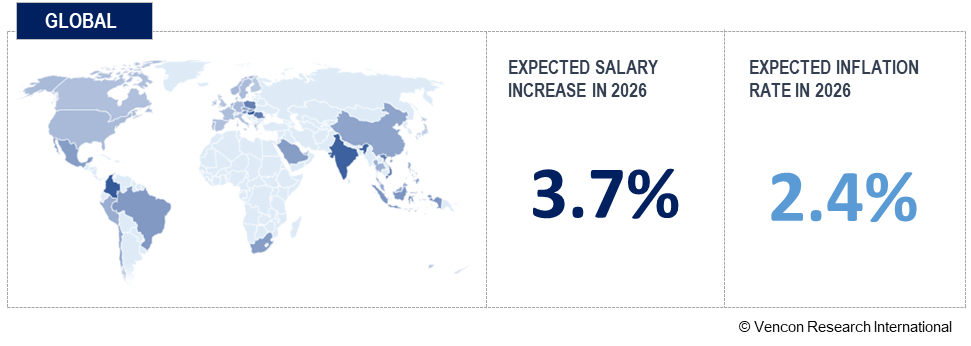
Globally, average salary increases in the consulting industry are projected at 3.7% in 2026, while inflation is expected to stand at 2.4%. This represents a clear slowdown compared with 2025, when salary growth was projected at 4.5%, reflecting a more cautious and targeted approach to pay management.
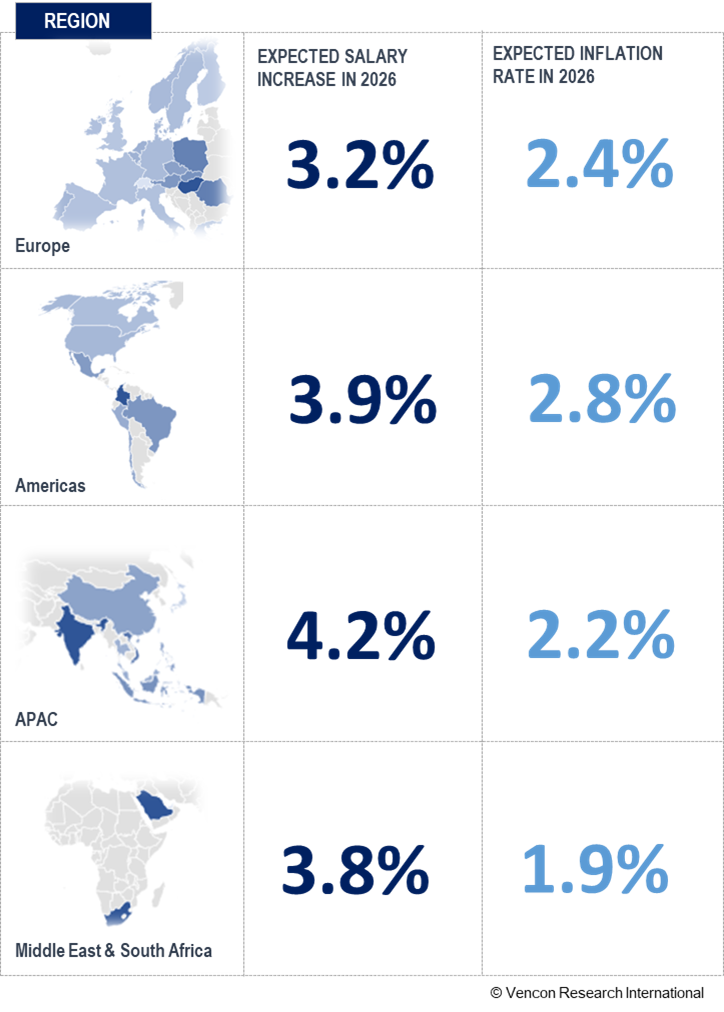
Regionally, the APAC region expects the highest salary increases, at 4.2%, while Europe is likely to see comparatively lower increases at 3.2%. Expected Inflation rates are highest across the Americas at 2.8%.
Expected Salary Growth: Europe
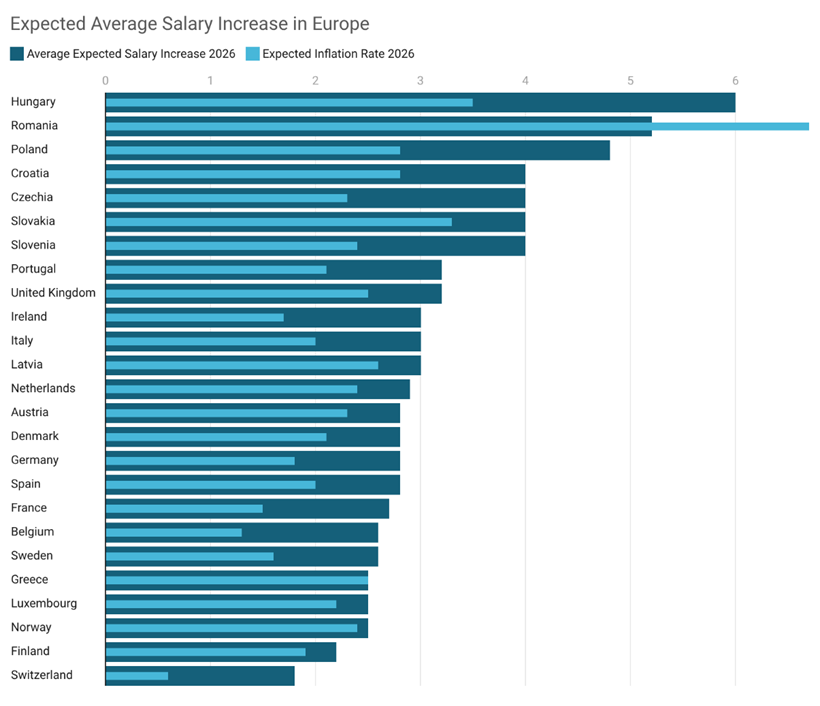
In Europe, salary increases are expected to range from 1.8% to 6%, broadly aligned with inflation levels that vary significantly by country. Core markets such as Germany, France, Spain, and the United Kingdom are projected to see moderate increases between 2.7% and 3.2%, while higher growth is anticipated in parts of Central and Eastern Europe, particularly Hungary and Romania, where inflationary pressures remain elevated.
Expected Salary Growth: Americas
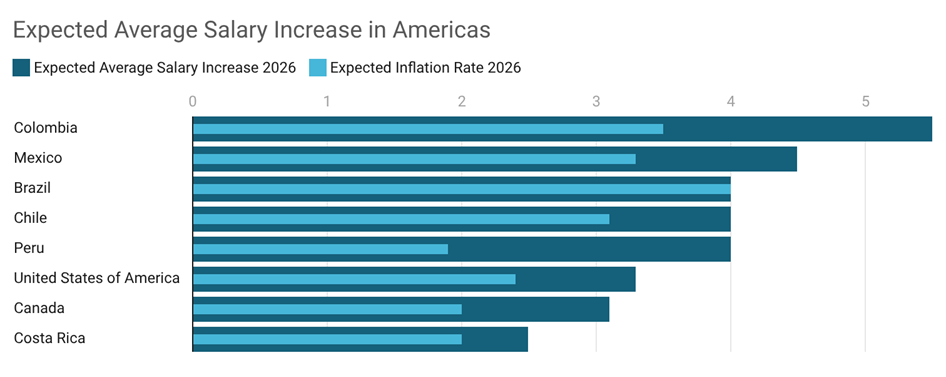
Across the Americas, average salary increases in 2026 are projected at 3.9%. Latin America continues to outpace North America, led by Colombia, Mexico, and Brazil, while salary growth in the United States and Canada is expected to remain moderate at just above 3%. Argentina has been excluded from regional averages due to ongoing inflation volatility.
Expected Salary Growth: APAC and MENA
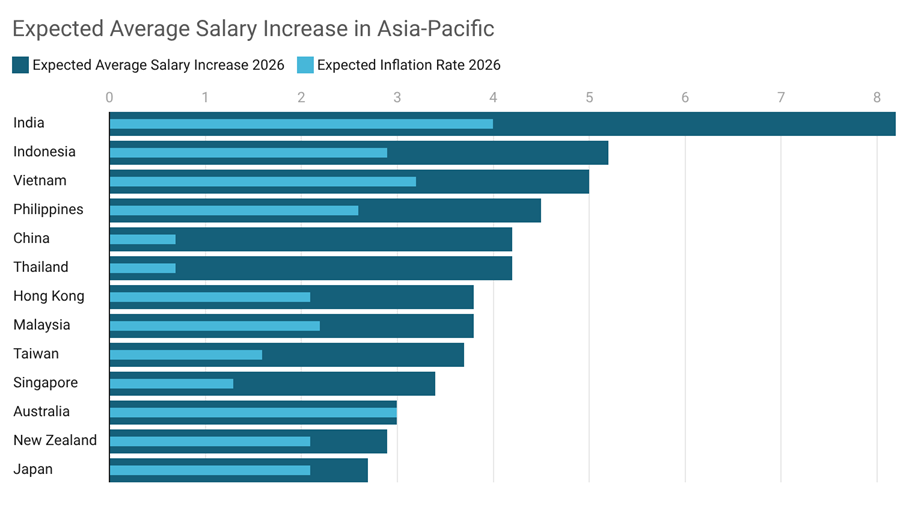
In APAC, salary growth is expected to remain robust and broadly in line with 2025 levels, ranging from 2.7% to 8.2%. India continues to stand out as the strongest growth market globally.
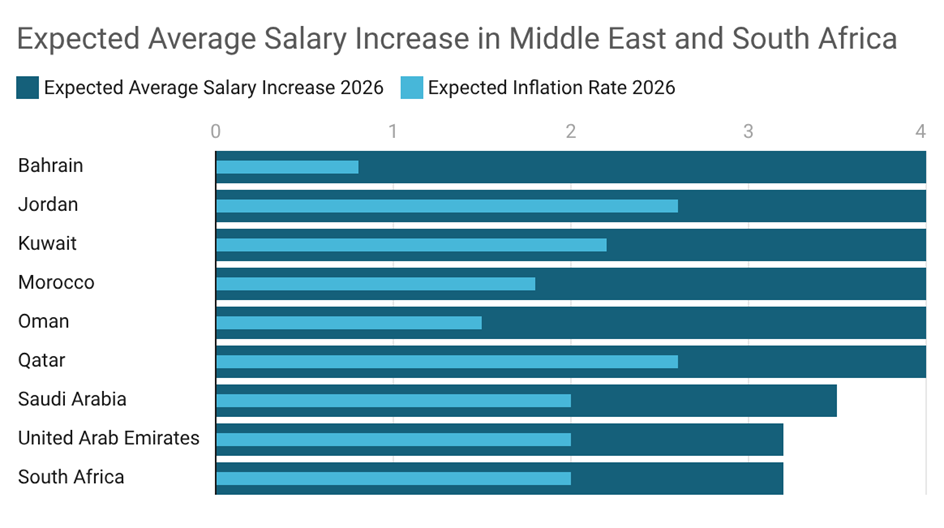
In the Middle East and Africa, salary increases are projected to soften compared with last year, with most major markets clustering around the low-to-mid 3% range.
Overall, the 2026 outlook points to a return to more normalized salary growth, with employers prioritizing flexibility, performance differentiation, and total rewards optimization over uniform pay increases.
Vencon Research provides consulting firms with precise, industry-specific compensation benchmarking, ensuring they stay competitive in a rapidly evolving market. Our research includes further detailed insights into salary increases for 2025 by country, line of business, and career level, helping firms understand pay trends and make informed compensation decisions.
Learn more about how Vencon Research can support your firm’s pay strategy.

HR Trends in Consulting for 2026
As consulting firms plan for 2026, HR leaders face a complex set of pressures. Economic uncertainty, regulatory change, persistent talent shortages and the practical integration of AI are all influencing how consulting firms design roles, manage costs and develop their people.
These challenges are cumulative rather than isolated. Pay and progression decisions are more transparent, workforce models are more varied, and expectations around productivity and performance continue to rise. HR strategy in consulting is increasingly central to sustaining competitiveness and executing business models.
Drawing on Vencon Research’s work with consulting firms globally, alongside selected external research, the following HR trends outline how people strategy in the consulting industry is evolving heading into 2026.
1. Pay Transparency and Regulation as Core HR Priorities in Consulting
Pay transparency is now a central consideration for consulting firms. Regulatory developments, including the EU Pay Transparency Directive and similar initiatives elsewhere, are accelerating the need for clearer pay structures, defined ranges and consistent progression criteria.
In practice, this places pressure on job architecture, levelling and job matching. Vencon Research frequently observes that transparency initiatives expose inconsistencies in role definitions that were previously less visible. For consulting firms operating across multiple geographies, aligning local practices with global frameworks adds further complexity.
As a result, pay transparency is shaping not only reward strategy, but also governance, communication and trust.
2. Workforce Planning in a Low-Growth, High-Volatility Consulting Market
Many consulting firms are entering 2026 with more cautious growth assumptions. Demand remains uneven across sectors and geographies, while cost discipline has become a sustained priority rather than a temporary response.
HR functions are placing greater emphasis on flexible workforce planning, redeployment and internal mobility. Hiring decisions are increasingly guided by near-term demand signals rather than long-range growth forecasts. Vencon Research sees firms investing more time in aligning capacity, skills and cost structures across practices.
Workforce planning is becoming a continuous, data-driven process rather than an annual exercise.
3. AI as a General-Purpose Capability in Consulting Firms
AI is increasingly embedded across consulting roles, grades and practices. By 2026, consultants are expected to use AI-enabled tools for research, analysis, drafting and insight generation as a standard part of their work.
This has implications for HR. Role profiles now assume baseline AI literacy, with differentiation driven by judgment, problem framing and client interaction rather than task execution. Vencon Research observes early incorporation of AI expectations into capability frameworks and performance evaluations.
AI is reshaping what effective consulting work looks like, even where job titles remain unchanged.
4. Evolving Consulting Operating Models Beyond the Pyramid
The traditional consulting pyramid is being supplemented by more diverse talent models. Core consultants increasingly work alongside subject-matter experts, delivery centres, contractors and alliance partners.
This evolution reflects both cost pressures and the growing need for specialised skills. However, it introduces challenges around performance management, engagement and equity. HR processes designed for homogeneous populations are being adapted to support differentiated talent segments without undermining cohesion.
Consulting firms are moving towards more modular and flexible operating models.
5. Rethinking Reward Beyond Utilisation and Billable Hours
Utilisation remains a critical metric in consulting, but it is no longer sufficient alone. As firms invest in intellectual property, platforms and reusable assets, they are exploring ways to recognise non-billable but value-creating contributions.
Vencon Research’s compensation benchmarking shows increasing variation in how firms reward asset development, reuse and broader client outcomes. These changes raise questions around measurement, attribution and fairness, particularly in team-based environments.
Reward strategy is becoming more closely tied to how firms create value, not just how hours are billed.
6. From Leveraged Labour to Asset-Enabled Consulting Models
Closely linked to reward is the shift towards more asset-enabled consulting. AI and automation accelerate this transition, but the underlying change is structural.
Roles increasingly combine client delivery with contributions to tools, methodologies and platforms. Vencon Research observes early differentiation between delivery-led roles and hybrid roles blending advisory, product and commercial responsibilities.
Over time, this trend will continue to influence career paths, grading structures and promotion criteria.
7. Reconfiguring Learning and the Consulting Apprenticeship Model
The widespread adoption of AI and digital tools has changed how junior consulting work is performed. Tasks traditionally used to build foundational skills are increasingly automated or augmented.
Consulting firms are rethinking how learning and development are structured, introducing more formal development pathways, earlier responsibility and clearer expectations around skill progression.
Preserving the strengths of the apprenticeship model while adapting it to new working patterns remains a central HR challenge.
8. Attracting and Developing Scarce and Interdisciplinary Talent
Skill shortages continue to affect consulting firms, particularly in areas such as data, technology, sustainability, risk and regulatory advisory. These roles often combine technical and strategic capabilities that do not align neatly with traditional consulting career models.
Vencon Research sees firms combining targeted hiring with greater emphasis on reskilling and internal mobility. Career frameworks are being adjusted to support deeper expertise alongside broader consulting development.
Talent strategy is increasingly shaped by scarcity rather than surplus.
9. Integrating Technology and AI Acquisitions into Consulting Firms
Acquisitions remain a key route for capability building, particularly in AI and digital services. Integration, however, remains challenging. Differences in culture, pace and reward expectations can create friction within partnership-led firms.
HR is playing a greater role in redesigning job families, performance frameworks and progression paths to accommodate hybrid consulting-technology roles. Organisational design is becoming as important as retention in determining success.
Integration is no longer viewed as a short-term issue, but an ongoing management challenge.
10. Governing AI as Part of Professional and Risk Standards
As AI becomes embedded in client delivery, consulting firms are formalising expectations around its use. Regulatory scrutiny, client expectations and reputational risk are driving clearer policies and accountability.
HR’s role includes embedding AI-related competencies into role profiles, supporting training and certification, and clarifying responsibility for appropriate use. In many firms, AI governance is treated as an extension of professional standards.
This reflects a broader shift towards explicit risk management in people strategy.
11. Leadership Capability in Hybrid and Distributed Consulting Firms
Hybrid working models are now well established, but their implications for leadership continue to evolve. Leading distributed teams requires new capabilities around performance management, coaching and engagement.
Research from organisations such as Gartner consistently highlights leadership development as a priority for CHROs. In consulting, effective leadership is increasingly linked to productivity, retention and culture.
Leadership capability is a critical lever in sustaining performance.
12. Re-Anchoring Culture and Learning in Hybrid Consulting Environments
With less reliance on physical proximity, consulting firms are taking deliberate steps to build culture and support learning. Informal knowledge transfer no longer happens by default.
Vencon Research observes increased investment in structured onboarding, coaching and hybrid collaboration practices. While flexibility remains a key attraction and retention factor, maintaining consistency and connection across the firm requires ongoing effort.
Culture and learning are increasingly treated as design challenges rather than by-products of co-location.
13. Building Talent for Sustainability, Climate and Resilience Practices
Demand for sustainability, climate, ESG and resilience-related advisory continues to grow across the consulting industry. Clients increasingly expect firms to combine strategic insight with technical and regulatory expertise, prompting many to scale dedicated practices or embed sustainability capabilities across service lines.
For HR, this creates challenges that do not fit neatly within traditional consulting models. Sustainability and climate roles often require interdisciplinary profiles, combining consulting skills with scientific, engineering, regulatory or data expertise. Firms are responding through a mix of targeted external hiring and structured reskilling of existing consultants.
As these practices mature, HR functions play a central role in defining job architecture, career paths and reward frameworks that support growth.
HR Trends in Consulting: Looking Ahead to 2026
These HR trends demonstrate a continued shift towards greater clarity, discipline and integration in people strategy. Regulatory change, evolving operating models and technology adoption reinforce the need for coherent job architecture, reward structures and development pathways.
For consulting firms, HR is no longer limited to support or compliance. It is central to shaping how consulting work is delivered, how talent is developed, and how value is created in a complex, competitive environment.
Contributors
- Erwin Harbauer - Managing Director / Partner
- Andy Klose - Associate Partner
- Shukhrat Iskandarov - Client Solutions Manager
Vencon Research works closely with consulting firms to translate these insights into practical decisions. Whether you are assessing your workforce model, reviewing reward frameworks, or designing career paths, our benchmarking and advisory services can provide the data, analysis and guidance needed to act with confidence. Contact us to discuss how we can support your HR strategy for 2026 and beyond.

EU Pay Transparency Becomes Law in 2026: What Compensation and HR Teams Should Expect
By Shukhrat Iskandar - Client Solutions
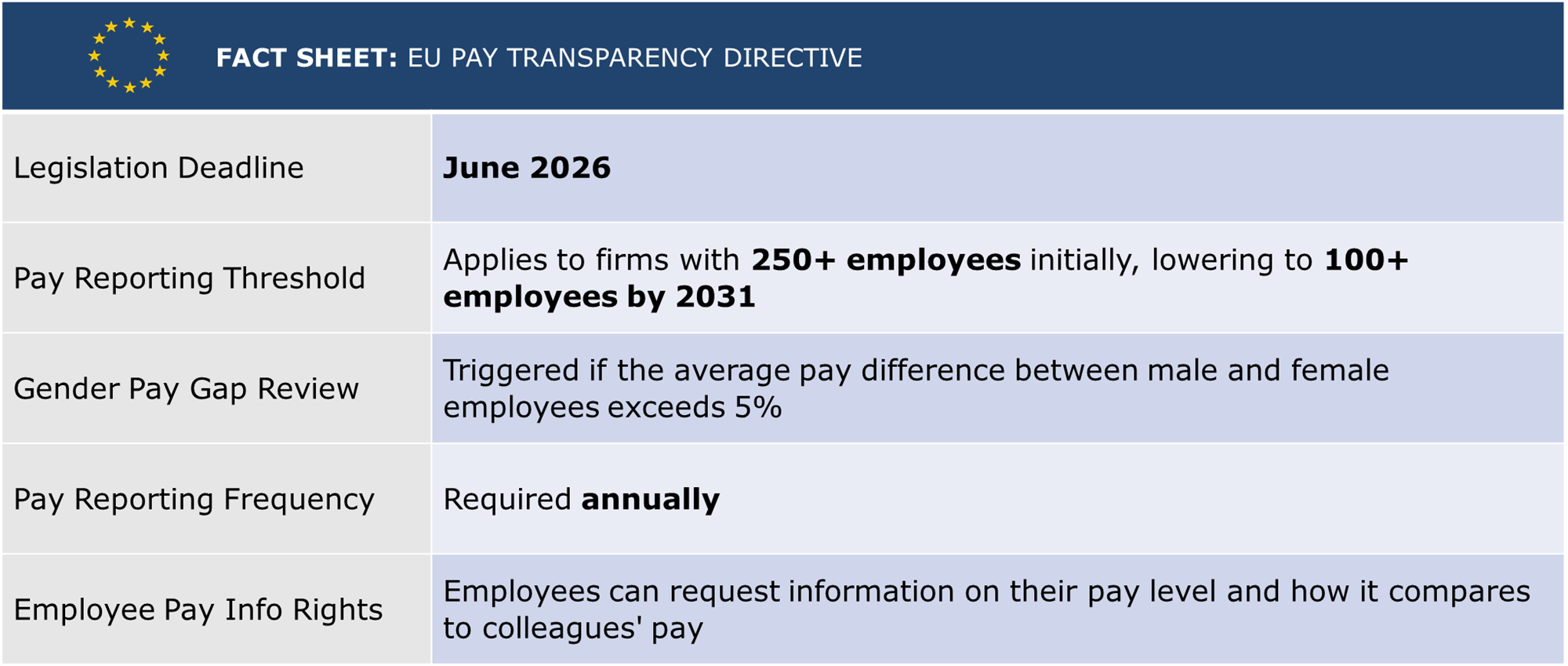
The EU Pay Transparency Directive moves into effect in 2026 and represents one of the most significant regulatory changes affecting compensation management in decades. From mid-2026, Member States are required to have transposed the Directive into national law, after which employers will face new, enforceable obligations around pay transparency, reporting, and employee rights to pay information. Designed to strengthen equal pay for equal work or work of equal value and to close persistent gender pay gaps across Europe, the Directive introduces legally binding measures that go beyond most existing national frameworks, reshaping how organisations define, structure, communicate, and justify pay.
Key Requirements of the Directive
Once transposed into national law, the Directive introduces a set of binding obligations for employers across the EU, including:
- Pay transparency in recruitment: Employers must disclose the starting salary or pay range in job advertisements or prior to the first interview, and may not ask candidates about pay history.
- Employee rights to pay information: Employees can request information on their own pay and on average pay levels for comparable roles, broken down by gender.
- Gender pay gap reporting: Employers with 250+ employees must report annually, with the first reports due in 2027. Employers with 150–249 employees will report every three years from 2027. Employers with 100–149 employees will be brought into scope later under phased national timelines.
- Mandatory corrective action: Where a gender pay gap of 5 percent or more cannot be objectively justified, employers must conduct a joint pay assessment and take remedial action.
- Broader discrimination coverage: The Directive explicitly covers intersectional discrimination, and affected employees are entitled to compensation.
EU Member States must transpose these requirements into national law by 7 June 2026, after which enforcement and reporting obligations will apply according to employer size.
Why the Directive Matters
Despite decades of policies aimed at promoting pay equity, the gender pay gap in the EU remains around 12 percent on average. Structural opacity in pay systems has made it difficult for employees to understand how pay is determined and for authorities to detect discrimination. By mandating transparency, the Directive seeks to transform pay equity from principle into practice.
Improved transparency has the potential to generate meaningful benefits. Research by labour unions suggests that even modest reductions in pay gaps could translate into significant annual earnings increases for many workers. Beyond compliance, transparent pay systems also foster trust with employees, strengthen employer brand, and enhance talent attraction.
Current Organisational Readiness
Recent surveys indicate that many organisations are still in the early stages of preparing for the Directive. A 2025 survey of HR professionals in Germany found that only one in three HR managers were familiar with the Directive’s details. Nearly half of respondents expected implementing the changes to take more than six months, and many cited concerns about additional workload and potential internal conflicts. At least ten EU Member States had taken no steps toward implementation by late 2025, while others were in draft or partial stages of preparation.
Implications for Compensation Teams
The Directive has several practical implications for compensation and HR teams:
- Compensation Structure Review and Redesign: Organisations must ensure that pay structures are defensible under transparency scrutiny. Broad pay grades and informal pay practices must give way to clearly documented, objective, and gender-neutral criteria. Pay decisions must align with job architecture and evaluation systems.
- Pay Gap Reporting and Analytics: Teams must collect, analyse, and report pay data by gender and pay category. This requires accurate, governed data, structured processes for analysis, and mechanisms to address pay gaps exceeding five percent without valid justification.
- Recruitment and Job Advertising: Salary transparency now requires organisations to include pay ranges in job postings or provide this information early in the hiring process. Compensation teams must carefully define salary bands to maintain internal equity once disclosed publicly.
- Talent Attraction and Employer Branding: Transparent pay practices can become a competitive advantage, attracting top talent and building trust with employees and candidates.
Practical Steps to Prepare
To meet the Directive’s requirements, organisations should begin preparations immediately:
- Educate HR, legal, finance, and executive teams about the Directive’s scope, timelines, and obligations.
- Audit pay data, job classifications, and pay bands to identify gaps or inconsistencies.
- Update job evaluation methodologies and pay policies to align with objective, gender-neutral criteria.
- Build repeatable processes for ongoing pay gap reporting and data governance.
- Prepare internal communication strategies to ensure transparency changes are understood and culturally supported.
- Consider technology solutions that automate data collection, reporting, and analytics to improve efficiency and accuracy.
Starting these steps early helps avoid rushed implementation and positions organisations for long-term compliance and pay governance improvements.
Challenges to Anticipate
Even with preparation, compensation teams will face challenges:
- Policy complexity as countries may interpret the Directive differently, creating a patchwork of requirements for multinational organisations.
- Incomplete or inconsistent pay data, which can make reporting difficult without strong governance.
- Sensitive internal discussions around pay transparency, requiring careful communication to maintain trust.
Non-compliance carries legal risk and can damage employer brand and employee trust.
Turning Compliance Into Advantage
While the EU Pay Transparency Directive introduces increased scrutiny and workload, it also offers an opportunity. Organisations that approach transparency strategically can strengthen pay governance, improve employee trust, and enhance employer branding. Clear, fair, and well-structured compensation systems will not only meet legal requirements but also provide a competitive edge in attracting and retaining talent.
For compensation teams, the Directive represents a clear mandate: transparency is coming, and the question is whether it arrives as a disruption or as a capability the organisation is ready to lead.
Supporting Pay Structures Under Increased Scrutiny
Vencon Research advises organisations on how to prepare pay structures for the practical realities of pay transparency. Using market-aligned benchmarking data, we help compensation teams test pay ranges, job matching, and progression frameworks against external practice and identify areas of potential exposure ahead of implementation.
Our advisory work goes beyond supplying data. We work with clients to interpret market evidence, assess pay gap risk, and ensure that pay decisions can be clearly explained to employees, leadership, and regulators once transparency requirements apply.
More information on our advisory services is available here.

Germany’s Consulting Market in 2025: Growth, Challenges, and Industry Shifts
By:
David Warren - Partner Emeritus
Erwin Harbauer - Managing Director
The German management consulting market remains one of Europe's most resilient and dynamic, continuing to reflect the country's position as the continent’s largest economy.
As of March 2025, the sector has continued its post-pandemic recovery, reaching an estimated market volume of € 47.7 billion, with a modest 1.1% growth rate, down from an average of 3% since 2020. Demand is largely driven by digital transformation, energy consulting, and sustainability initiatives, as businesses navigate stringent EU and local German environmental regulations and the shift to renewable energy. Industry leaders such as Roland Berger, McKinsey & Company, and Accenture dominate, leveraging their expertise to help companies manage geopolitical uncertainties and economic volatility.
Digital Services Take Centre Stage
Digitalization remains a core focus, with firms seeking advisory support to integrate AI, big data, and cloud computing to enhance operational efficiency and resilience amid supply chain disruptions and rising energy costs. Consulting firms are expanding digital service offerings through partnerships with tech giants and in-house innovations. Additionally, remote and hybrid work models—solidified during the pandemic—are reshaping service delivery, optimizing costs while maintaining client engagement.
Competition and Regulation Reshape the Market
Competition in the German consulting market is intensifying. Homegrown firms like Roland Berger and Simon-Kucher retain strong footholds, while global players such as BCG, Bain & Company, and the Big Four continue expanding. Niche consultancies specializing in ESG / EES and regulatory compliance are also gaining traction, particularly in response to EU directives like the Non-Financial Reporting Directive. However, challenges persist, including talent shortages and fee pressures, driving firms to ramp up recruitment efforts—evidenced by BCG and McKinsey’s plans to hire hundreds of consultants annually.
Outlook: Growth with Challenges Ahead
Looking ahead, the market is poised for continued growth, albeit retaining the current low rate, with projections suggesting it could reach € 50.2 billion by 2030. Key drivers include the ongoing digital and green transitions and the resilience of Germany’s industrial sector. However, risks such as inflation, geopolitical instability, and the country’s continued economic slowdown may temper expectations. To stay competitive, consulting firms are expected to deepen their focus on innovation, sustainability, and client-centric solutions, ensuring their relevance in this evolving business landscape.
Vencon Research specializes in compensation benchmarking for strategy consulting firms, providing data-driven insights to help firms make informed decisions on pay structures and market positioning. With a focus on accuracy and industry-specific analysis, Vencon Research ensures consulting firms stay competitive in an evolving market.
Stay Informed with the Latest Insights: For the most up-to-date market trends, benchmarking data, and strategic insights tailored to the consulting industry, explore Vencon Research’s latest reports. Contact us to learn how our data-driven approach can help your firm navigate the evolving consulting landscape.

Ensuring Accurate Salary Benchmarks: Defining and Comparing Remuneration Components
By Osas Ohenhen - Business Development Manager
A well-executed salary benchmarking process follows a structured approach to ensure meaningful comparisons. Previously, we outlined four key steps that contribute to accurate and actionable benchmarking results:
- Selecting the most relevant competitors
- Identifying the most applicable “line of business”
- Conducting accurate job matching
- Comparing the relevant components of remuneration
This article focuses on the final step: ensuring a clear understanding of remuneration components before making comparisons. Without alignment on these components, salary benchmarks can lead to misleading conclusions, impacting firms' ability to offer competitive and fair compensation.
The Importance of Defining Remuneration Components
For benchmarking data to be reliable, all participants must operate on a like-for-like basis when reporting compensation. This requires standardizing definitions to ensure consistency across firms, regions, and roles. Failure to do so can result in distorted comparisons, where compensation figures appear higher or lower due to differences in what is included rather than actual market trends.
Key Remuneration Components in Salary Benchmarking

Understanding the breakdown of compensation is critical when benchmarking salaries. Below are the key components that provide a complete view of an employee’s total remuneration:
1. Basic Salary
The contractually guaranteed cash component of an employee's pay, excluding any bonuses or variable elements. This figure is typically expressed as an annual amount. Example: In the United States, the basic salary is the fixed amount an employee receives before bonuses, stock options, or benefits.
2. Allowances
Additional fixed payments that supplement basic salary, often provided to account for region-specific costs such as housing, transportation, or meal expenses. These are not typically included in bonus calculations. Example: In India, allowances may cover travel, meals, and medical expenses, significantly affecting total pay.
3. Fixed Overtime
A predetermined overtime payment included in an employee’s remuneration regardless of actual overtime hours worked. This structure is common in certain markets with strict labour laws. Example: In Japan, many companies include a fixed overtime component as part of base pay.
4. Base Salary
The sum of basic salary and allowances, providing a more complete view of guaranteed cash compensation. Example: In Australia, base salary may also include mandatory employer superannuation contributions to retirement funds.
5. Bonus (Variable Compensation)
Bonuses may be reported in two ways:
- Target Bonus: The expected variable cash bonus, typically expressed as a percentage of basic salary.
- Actual Bonus: The most recent bonus paid, reflecting realized performance-based compensation.
Example: In many markets, bonuses are tied to individual and firm performance, making them a crucial part of competitive pay structures.

Target vs. Actual Compensation: In salary benchmarking, target compensation refers to the expected or projected amount an employee is set to receive, typically based on predefined salary structures or bonus plans. In contrast, actual compensation—sometimes referred to as achieved compensation—reflects the real amounts paid in the previous year, including any variations due to performance-based bonuses, adjustments, or other discretionary elements.

6. Total Cash Compensation (TCC)
The sum of base salary and actual bonus, representing an employee’s total earnings before benefits and employer contributions.
- Target TCC (t-TCC): Expected total cash compensation, including the target bonus.
- Actual TCC (a-TCC): Total cash compensation actually paid in the prior year.
Example: In Switzerland, TCC reflects both base salary and the variable bonus awarded based on company performance.
7. Total Cost-To-Company (CTC)
A broader measure that includes base salary, variable cash bonuses, and the employer’s cost of benefits such as pension contributions, health insurance, and other mandatory employer payments.
- Target CTC (t-CTC): The anticipated total employment cost to the firm.
- Actual CTC (a-CTC): The total cost incurred in the prior year.
Example: In South Africa, CTC includes employer contributions to retirement funds and medical aid, providing a more comprehensive view of total compensation.
Vencon Research’s Approach to Defining and Comparing Remuneration Components
Vencon Research ensures clarity and consistency by standardizing how remuneration components are defined and reported. Our benchmarking reports provide detailed data on all relevant compensation elements for both the current and previous years, allowing firms to track market trends accurately.
Why Vencon Research Stands Out
Vencon Research’s methodology offers consulting firms a significant advantage by ensuring robust and reliable salary benchmarks. Key differentiators include:
- Comprehensive Data Coverage: Our reports account for all major remuneration components, preventing inconsistencies that could skew comparisons.
- Year-over-Year Comparisons: We provide both current and historical data, helping firms analyse compensation trends over time.
- Tailored Insights for Consulting Firms: Our benchmarks are designed specifically for strategy consulting firms, ensuring relevance and accuracy.
- Market Intelligence Beyond Compensation: We offer insights into broader pay trends, helping firms align their compensation strategies with evolving market standards.
- Unmatched Expertise in Job Matching: Unlike many providers, Vencon Research prioritizes accurate job matching, ensuring that benchmarking comparisons are made between truly equivalent roles.
Agreeing on and properly comparing remuneration components is essential for effective salary benchmarking. Misalignment in definitions can lead to inaccurate market positioning and difficulty in attracting and retaining talent. By leveraging Vencon Research’s structured approach and industry-specific insights, consulting firms can ensure their compensation practices remain competitive, equitable, and aligned with market expectations.

Expanding Consulting Capabilities: Why More Firms Are Investing in Advisory Services
By Yao Tang - Business Development Manager
Companies across industries are expanding their consulting divisions through a mix of strategic acquisitions and internal growth. This trend is driven by the rising demand for integrated solutions, the pursuit of high-margin revenue, and the imperative to support clients through digital transformation. In this article, we explore the strategies behind these expansions, highlight key examples from various sectors, and discuss the HR challenges that arise when integrating consulting roles into existing compensation structures.
Expansion Across Sectors
The trend toward incorporating or expanding consulting capabilities is evident across a range of sectors—from technology to private equity, specialized industries, and traditional accounting—where companies are leveraging strategic acquisitions and internal growth to meet the rising demand for integrated, expert advisory services.
A. Technology Firms Moving Beyond IT Services
Technology companies are increasingly shifting from their traditional focus on IT services to broader consulting roles. For instance, NEC’s acquisition of ABeam Consulting in 2023 represents a strategic move to expand its advisory offerings. Similarly, in 2023, Accenture’s acquisition of InfinityWorks—a leader in agile digital transformation solutions—underscores the growing demand for integrated advisory services. In addition, other types of firms are also responding to this trend; for example, EY’s 2022 acquisition of Nuvalence has enhanced its digital transformation expertise, reflecting a broader industry move toward offering comprehensive, end-to-end consulting solutions.
B. Private Equity’s Interest in Consulting
Private equity firms are capitalizing on the high-margin revenue potential of consulting services. The ongoing discussions by Apax Partners to acquire a majority stake in CohnReznick, along with Inflexion’s 2025 acquisition of Baker Tilly Netherlands, reflect a broader trend of investing in professional services with established consulting practices. These moves are not only financial transactions but also strategic efforts to diversify revenue streams and build more resilient business models.
C. Specialized Industry Consulting
In specialized fields such as life sciences, biotech, and pharmaceuticals, targeted acquisitions have become a key strategy. Sia Partners’ 2022 acquisition of Latham BioPharm, for example, deepened its expertise in these sectors. By focusing on niche advisory services, firms can offer tailored solutions that address the specific regulatory and operational challenges inherent in these industries.
D. Accounting Firms Strengthening Their Advisory Services
Accounting firms have long offered professional advisory services, and many are now expanding these capabilities. PwC’s 2023 acquisition of Sagence boosted its data and digital transformation advisory, while Deloitte has expanded its digital consulting presence in both the U.S. and Europe. KPMG’s acquisition of Russell Reynolds Associates and Grant Thornton’s 2024 partnership with New Mountain Capital further underscore the trend of blending traditional accounting services with modern consulting approaches.
Key Drivers Behind the Expansion
Several factors are motivating firms to broaden their consulting capabilities:
- Digital and AI Expertise: The rapid adoption of technologies such as cloud computing, automation, and AI has created an urgent need for expert guidance. Consulting services now play a critical role in helping organizations navigate digital transformation.
- Revenue Diversification: Consulting provides recurring, high-margin revenue streams that complement other business areas. This diversification is particularly attractive in a volatile market environment.
- Client Demand for Integrated Services: Clients increasingly seek comprehensive, end-to-end solutions that combine strategic advice with practical implementation. Firms are responding by integrating consulting services into their broader offerings.
HR Challenges in Integrating Consulting Roles
Integrating consulting roles into established compensation structures presents several HR challenges:
1. Differing Compensation Structures
- Consulting Models: Often include performance-based bonuses, accelerated salary progression, and equity incentives at senior levels.
- Corporate Models: Typically rely on fixed salary bands and standardized annual raises.
- The Challenge: Balancing these models to avoid pay disparities while remaining competitive in both markets.
2. Incentives and Career Progression
- Consulting Firms: Employees expect rapid promotions and profit-sharing opportunities.
- Traditional Corporations: Generally emphasize structured career growth based on tenure.
- The Challenge: Designing career paths that attract top consulting talent without undermining traditional career progression models.
3. Recruitment and Retention
- Consulting Talent: Often drawn to project-based, performance-driven roles but tend to be more mobile.
- Corporate Talent: Typically prefer longer-term, specialized roles with predictable career paths.
- The Challenge: Crafting recruitment and retention strategies that effectively appeal to both types of professionals.
4. Accurate Benchmarking of Compensation
- Consulting Benchmarks: Usually compared against peer consulting firms.
- Corporate Benchmarks: Often aligned with industry-specific salary norms.
- The Challenge: Developing a hybrid benchmarking approach that reflects both consulting and corporate compensation standards to ensure internal equity and external competitiveness.
How Vencon Research Supports Compensation Strategy
Vencon Research plays a crucial role in helping firms navigate these HR challenges by providing detailed compensation benchmarking for consulting roles. With access to comprehensive market data, organizations can align their pay structures with industry standards while maintaining competitiveness and internal equity. Whether expanding a consulting division or restructuring compensation strategies, Vencon Research offers insights that support strategic growth and stability.
For more information on aligning your compensation strategy with industry standards, please contact Vencon Research to learn how our services can support your organization’s strategic objectives.


Données utiles et fiables
Pour prendre des décisions éclairées sur les packages de rémunération dans votre secteur, vous avez besoin des données les plus récentes à portée de main.